Honeywell Technologies: The Conglomerate That Finally Picked a Lane (Sort Of)

Honeywell has spent decades as the industrial equivalent of that relative who shows up to every family event with a different hobby. Aerospace one minute, thermostats the next, chemicals after that, then some warehouse robots for good measure. In 2026, the company finally did something decisive: it spun off its aerospace business into Honeywell Aerospace (HONA) around late June. What remains under the HON ticker is a more focused (if still broad) automation and industrial technology play, now branding itself Honeywell Technologies.

The stock closed recently around $214–215, with a market cap of roughly $68 billion. Trailing numbers look artificially cheap after spin-related accounting noise; the forward picture is more ordinary industrial multiple territory. Analyst targets cluster near $255. Management just raised full-year 2026 guidance after a solid third quarter.

The Sectors It Still Touches

Post-spin, HON operates primarily in three areas:

  • Industrial Automation: Sensors, controls, process solutions, safety tech, and software for factories, energy, utilities, life sciences, and semiconductors. This is the “make the plant run smarter and with fewer humans” business.
  • Building Automation: HVAC controls, fire and security systems, energy management, and the software layer that turns dumb buildings into data-spewing assets. Think commercial real estate, hospitals, campuses.
  • Energy and Sustainability Solutions: Process technology (historically strong via UOP), advanced materials, and efficiency tools aimed at refining, petrochemicals, and lower-carbon operations.

There is also residual software and AI push via platforms like Honeywell Forge, recently upgraded with “Forge Cognition” in partnership with the usual NVIDIA/Dell suspects. The company is trying hard to look like a software-and-outcomes business rather than a pure hardware seller. Recurring revenue is growing but still not the dominant story.

Aerospace is gone.

Defense exposure that used to live inside HON has largely moved to HONA. That matters for anyone who bought the old Honeywell for its military angle.

After the June 2026 spin-off, Honeywell Aerospace (HONA) trades as a pure-play aerospace and defense supplier with a market cap around $51–52 billion and a recent share price near $162. It designs and builds mission-critical systems—avionics, navigation and sensors, electromagnetic defensive solutions, auxiliary power units, engines, thermal and motion controls—for commercial air transport, business aviation, and defense/space platforms. Defense and Space accounted for roughly 41% of its pre-spin revenue and remains a core growth driver, powered by strong orders, a hefty backlog, and the $500 million capacity expansion tied to the Department of War framework agreement for navigation systems, Assure actuators, and electronic warfare gear.

War & Defense Technologies: The Part That Left the Building

Before the spin, Honeywell’s Aerospace Technologies segment was a heavyweight in defense and space. Defense and Space alone generated billions (around $6 billion in earlier full-year figures) and represented a large slice of aerospace sales. Products included inertial navigation systems critical for precision munitions, Assure actuators for missile maneuverability, electronic warfare solutions, avionics, sensors, wheels and brakes for fighters, thermal management, and power systems. These showed up on platforms from F-35s to various missiles and trainers.

In March 2026, Honeywell Aerospace signed a framework agreement with the U.S. Department of War (formerly Defense) that unlocked a $500 million multi-year private investment to expand capacity for exactly those munitions-critical items: navigation systems, Assure actuators, and electronic warfare gear. The goal was to help replenish stockpiles and accelerate production of components that sit inside precision weapons rather than the finished missiles themselves. Honeywell positioned itself as one of the first Tier-1 suppliers to take this kind of long-term demand signal seriously.

There is also newer activity in counter-UAS (counter-drone) software and systems, including a DHS contract vehicle with a $1.5 billion ceiling and sensor-fusion tools. Space and resilient navigation remain relevant.

Credit where due: the company has real, hard-to-replicate expertise in inertial navigation, actuation precision, and systems that keep working when GPS is jammed or denied. In an era of contested logistics and depleted magazines, that is useful. The $500 million capacity bet shows management read the geopolitical room correctly.

Skepticism is also warranted. Defense contracting is lumpy, politically exposed, and often slower to convert into clean margins than PowerPoint decks suggest. Much of the high-visibility munitions work now sits in the separate HONA entity, which itself has struggled with supply-chain bottlenecks that limited output growth. For pure HON shareholders, the direct war-tech exposure has been largely excised. Anyone still treating HON as a defense pure-play is looking at the wrong ticker.

Suppliers and the Eternal Supply-Chain Hangover

Honeywell has never been immune to the industrial world’s favorite chronic disease: unreliable sub-tier suppliers. Castings, forgings, bearings, complex machining, and certain electronics remain choke points across aerospace and industrial markets. The spun-out Aerospace unit has been particularly vocal about a small number of underperforming suppliers (roughly 2% of its base) constraining revenue conversion despite strong orders and backlog.

The remaining HON automation businesses face milder versions of the same problem plus ordinary inflation and lead-time issues. Management has spent years talking about multi-sourcing, selective vertical integration, and operating-system discipline. Results have improved on the margin front, but the industry’s structural fragility has not vanished. One delinquent casting supplier can still hold up far more revenue than its invoice size suggests. Classic.

Upsides

  • Cleaner portfolio after the aerospace spin and earlier divestitures. Focus can improve capital allocation and storytelling.
  • Solid recent execution: Q3 2026 showed 7% organic sales growth, meaningful margin expansion, and raised full-year adjusted EPS guidance to $8.40–$8.45. markets.ft.com
  • Structural demand in industrial and building automation, energy efficiency, and process safety. These are not boom-bust consumer categories.
  • Software and AI overlay (Forge, cognition platforms) that could raise margins over time if customers actually pay for outcomes rather than just boxes.
  • Reasonable balance-sheet flexibility and a dividend (currently modest yield around 1.3%).
  • Historical ability to extract productivity and pricing in tough environments.

Downsides and Skepticism

  • Still not a pure-play anything. “Automation” is broad enough that the company can underperform in multiple end markets at once.
  • Valuation on forward earnings is no longer a screaming bargain once one-time spin noise clears.
  • Cyclical exposure remains: commercial construction, industrial capex, and energy project timing all matter.
  • Execution risk on the software transition. Many industrial companies promise recurring revenue; fewer deliver it at scale without dilution or customer pushback.
  • Geopolitical and regulatory noise around defense (even residual) and export controls.
  • The spin itself creates two entities that must prove they are better apart than together. History of industrial breakups is mixed.

Honeywell has made genuine advances in navigation resilience, process controls, and building systems. It has also spent years promising transformation while remaining a classic multi-industry operator. The latest spin is the most concrete step yet toward focus.

Future ViabilityThe company is viable. Demand for efficiency, safety, and automation is durable. Energy transition work and industrial digitalization provide multi-year tailwinds. The balance sheet and cash generation support continued investment and shareholder returns. Risks are real—supply constraints, cyclical soft patches, and the usual large-company bureaucracy—but none look existential. HONA will live or die more directly on aerospace and defense cycles and its ability to fix suppliers; HON’s fate is tied more to industrial and commercial activity plus software adoption.

Summary Valuation and Recommendation

At roughly $215, HON trades at a low trailing multiple distorted by separation accounting and a more normal forward multiple in the low-to-mid 20s range relative to raised 2026 adjusted EPS guidance near $8.40–$8.45. Consensus price targets near $255 imply moderate upside. Free-cash-flow generation remains healthy for the size of the business.

Hold for existing owners; selective Buy on meaningful weakness. The post-spin entity is cleaner and executing reasonably well, with credible margin expansion and guidance raises. It is not a high-growth compounder, nor is it a deep-value turnaround. It is a solid, focused industrial automation company trading at a fair-to-slightly-attractive price for patient capital that wants exposure to productivity and efficiency themes without the pure aerospace cyclicality. If the stock drops meaningfully below the mid-$190s while fundamentals hold, the risk/reward improves. Chasing it higher after recent strength is less compelling.

Honeywell finally stopped trying to be everything. Whether the remaining pieces compound value better than the old sprawling version is the question the next few years will answer. So far, the early evidence is cautiously encouraging rather than transformative.

References

Grok picks TOP TEN OVERALL, AI/SI, War & Energy

OVERALL TOP TEN – October 15, 2026:

“NASDAQ:NVDA”   ≈ 80–150%   (base cases often ~60–120%; some bull scenarios 2–3x+)
“NASDAQ:AMD”    ≈ 150–300%  (higher-growth models cite ~200–300%+ potential)
“NYSE:VRT”      ≈ 50–100%   (revenue/EPS growth 20%+ CAGR supports mid-double-digit annualized returns)
“NASDAQ:MELI”   ≈ 150–400%  (some mid-case models show 200–400%+ over ~4–5 years)
“NYSE:TSM”      ≈ 70–120%   (strong capacity/AI-driven growth, more mature profile)
“NASDAQ:ASML”   ≈ 60–100%   (steady high-teens growth from monopoly position)
“NASDAQ:AVGO”   ≈ 60–110%   (solid AI networking/custom silicon exposure)
“NYSE:LLY”      ≈ 50–100%   (GLP-1/pipeline growth, more moderate percentage upside at current size)
“NASDAQ:META”   ≈ 40–80%    (AI/ad efficiency gains, large-cap compounding)
“NASDAQ:AMZN”   ≈ 40–80%    (cloud + retail + AI, large-cap compounding)


AI/SI (AI / Semiconductor Infrastructure)

“NASDAQ:NVDA”<  NVIDIA Corporation    (dominant AI accelerators/GPUs, core of data-center buildout)
“NASDAQ:AMD”<  Advanced Micro Devices, Inc.    (AI GPUs + server CPUs, strong challenger growth)
“NYSE:TSM”<  Taiwan Semiconductor Manufacturing Company Limited    (leading advanced-node foundry for AI chips)
“NASDAQ:ASML”<  ASML Holding N.V.    (EUV lithography monopoly essential for cutting-edge semiconductors)
“NASDAQ:AVGO”<  Broadcom Inc.    (custom AI accelerators + high-speed networking)
“NYSE:VRT”<  Vertiv Holdings Co    (critical power, cooling, and thermal management for AI data centers)
“NASDAQ:MU”<  Micron Technology, Inc.    (high-bandwidth memory key for AI workloads)
“NASDAQ:MRVL”<  Marvell Technology, Inc.    (AI networking, custom silicon, and data-center connectivity)
“NASDAQ:AMAT”<  Applied Materials, Inc.    (wafer fabrication equipment for advanced chip manufacturing)
“NYSE:ANET”<  Arista Networks, Inc.    (high-speed Ethernet networking fabric for AI clusters)


War and Defense

“NYSE:LMT”<  Lockheed Martin Corporation    (F-35, missiles, advanced systems, largest U.S. defense contractor)
“NYSE:RTX”<  RTX Corporation    (missiles, radars, Pratt & Whitney engines, major missile-defense exposure)
“NYSE:GD”<  General Dynamics Corporation    (submarines, tanks, combat vehicles, Gulfstream)
“NYSE:NOC”<  Northrop Grumman Corporation    (B-21 bomber, space systems, advanced weapons)
“NYSE:LHX”<  L3Harris Technologies, Inc.    (communications, sensors, electronic warfare)
“NYSE:HWM”<  Howmet Aerospace Inc.    (critical jet-engine components and aerospace parts)
“NASDAQ:KTOS”<  Kratos Defense & Security Solutions, Inc.    (drones, unmanned systems, high-growth defense tech)
“NASDAQ:AXON”<  Axon Enterprise, Inc.    (public-safety tech, body cameras, AI-enabled defense tools)
“NYSE:BA”<  The Boeing Company    (military aircraft, defense systems, commercial aerospace crossover)
“NYSE:GE”<  GE Aerospace    (aircraft engines and defense propulsion systems)


Energy, All types

“NYSE:XOM”<  Exxon Mobil Corporation    (integrated oil major with strong cash flow and LNG exposure)
“NYSE:CCJ”<  Cameco Corporation    (leading uranium producer, key nuclear fuel supplier)
“NASDAQ:CEG”<  Constellation Energy Corporation    (largest U.S. nuclear fleet, AI data-center power deals)
“NYSE:VST”<  Vistra Corp.    (major nuclear + diversified power generation, data-center demand)
“NYSE:NEE”<  NextEra Energy, Inc.    (largest renewable producer + nuclear assets, utility scale)
“NYSE:ET”<  Energy Transfer LP    (midstream pipelines, natural gas infrastructure)
“NYSE:UUUU”<  Energy Fuels Inc.    (uranium mining + rare-earth processing)
“NYSE:SMR”<  NuScale Power Corporation    (leading small modular reactor (SMR) developer)
“NYSE:OKLO”<  Oklo Inc.    (advanced fission microreactors for data centers and remote power)
“NYSE:BWXT”<  BWX Technologies, Inc.    (nuclear components, naval reactors, advanced nuclear tech)

Howmet Aerospace Turned Precision Metal Into Precision Wealth – From “meh” to “holy crap” . . .

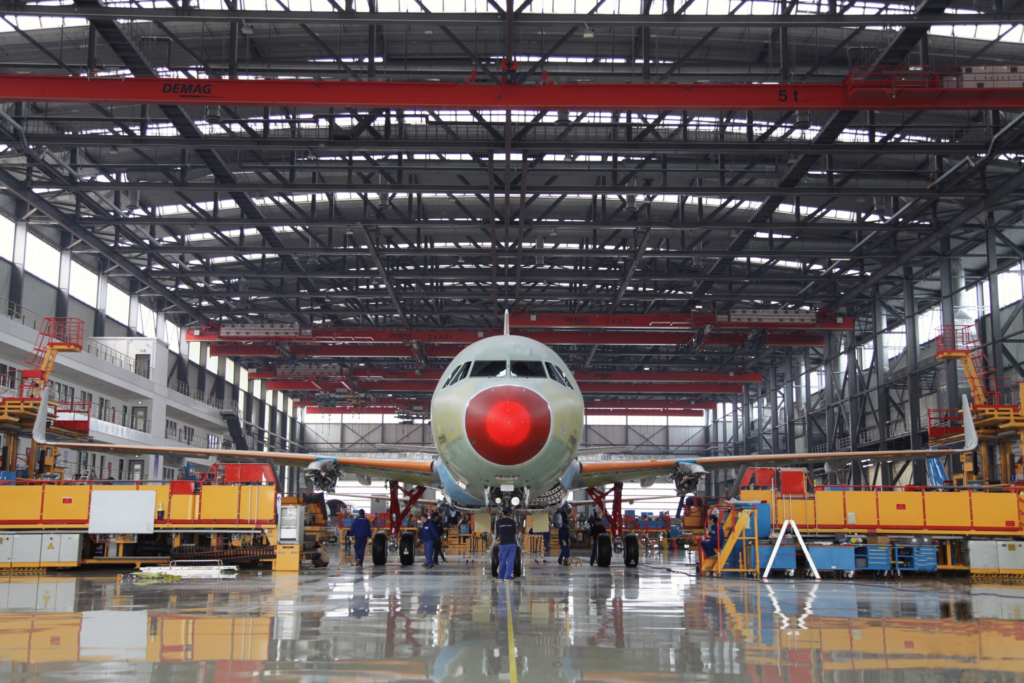
If you’ve ever looked at a jet engine and thought, “Someone’s making a killing off those little blades that don’t melt,” congratulations—you’ve identified Howmet Aerospace (NYSE: HWM). HWM is the company that takes exotic metals, tortures them into shapes that survive hellish temperatures and stresses, and sells the results to the people who actually build airplanes and trucks. It’s less “sexy moonshot” and more “indispensable plumbing of the aerospace industrial complex.” And for the past few years, that plumbing has been printing money like a machine that also happens to make machine parts.

What the heck does this company actually do?

Howmet makes advanced engineered solutions for aerospace and transportation. Four segments:

  • Engine Products (the star): Investment castings, airfoils, seamless rolled rings, rotating and structural parts for aircraft engines and industrial gas turbines.
  • Fastening Systems: Aerospace fasteners plus commercial transportation ones (the things that keep planes and trucks from becoming kits).
  • Engineered Structures: Titanium stuff, forgings, extrusions, machined components for airframes, wings, engines, landing gear.
  • Forged Wheels: Fancy aluminum wheels for heavy trucks, trailers, and buses. The “we also make shiny truck bling” segment.

Headquarters in Pittsburgh. Roughly 25,430 employees. Founded in the mists of 1888 (via various ancestor companies). CEO John C. Plant has been steering the ship through the post-spin-off era. The lineage is pure corporate soap opera: Howmet → Alcoa → Arconic (2016 spin) → Howmet Aerospace (April 2020 separation from the rolled-products Arconic). Same family, different last names, cleaner focus on high-value engineered products.

Major customers include the usual aerospace royalty: Boeing, Airbus, GE Aerospace, RTX (Pratt & Whitney), Rolls-Royce, Lockheed Martin, and the rest of the Western military-industrial complex. Commercial aerospace is the big driver (roughly half or more of revenue in recent periods), with defense, gas turbines, and commercial transportation filling out the rest. Spares/aftermarket has been growing as a higher-margin tailwind because old planes refuse to die and airlines keep flying them.

Stock price history: From “meh” to “holy crap” to “wait, maybe calm down”

HWM has been one of the more impressive industrial runners of the post-COVID aerospace recovery. Rough numbers (approximate, depending on exact dates and total-return calculations that include the tiny dividend):

  • Multi-year: 3-year total returns in the ~390% range; 5-year in the 600%+ neighborhood. That’s the kind of performance that makes index-huggers look like they brought a knife to a gunfight.
  • Recent: 2024 and 2025 were absolute heaters (triple-digit and high-double-digit years). 2026 has been more mixed—YTD around +10% or so as of early/mid-October, with a 1-year return in the mid-to-high teens.
  • Volatility: It ran hard, hit a 52-week high near $310, and has since pulled back into the low-to-mid $220s (around $220–225 as of mid-October 2026 closes). Market cap roughly $88–90 billion. Trailing P/E in the high 40s; forward closer to the high 30s. Dividend yield is a polite ~0.25%—this is a growth/buyback story, not a coupon-clipper. macrotrends.net

In short: If you bought during the post-spin or early recovery doldrums and held, you look like a genius. If you bought near the recent peak, you’re currently participating in a “healthy correction” (Wall Street’s favorite euphemism for “it went down”).

The good: Why this thing has been a beast

  • Moat that actually exists. Qualifying aerospace parts is a multi-year, multi-million-dollar pain ritual. Once you’re on a program (especially sole-source or highly preferred for critical engine and structural bits), customers don’t casually switch suppliers. High switching costs + process know-how + IP = real barriers.
  • Aerospace supercycle + aftermarket. Production ramp-ups at Boeing and Airbus (when they aren’t tripping over their own supply chains or quality issues), aging fleets driving spares, and defense budgets that keep finding reasons to grow. Gas turbines are getting an extra boost from data-center power hunger in some narratives.
  • Execution and margins. Revenue growth solid (TTM around $9.1B, up double digits), profits growing faster, expanding margins, strong free cash flow, debt reduction, and share buybacks. They’ve been raising guidance and beating estimates with some regularity.
  • Capital allocation. Management has favored returning capital while investing in capacity where demand is real. Not the most exciting story in the world, but “boring competence in a high-barrier industry” has crushed a lot of flashier narratives.

The bad (and the snarky challenges to the bulls)

  • Valuation is not “cheap.” High-40s trailing P/E for an industrial is the market pricing in continued perfection. Growth is good, but at these multiples you’re paying for the future to arrive on schedule and for nothing to go wrong. History is littered with excellent companies that became mediocre investments because the entry price assumed flawless execution forever.
  • Customer concentration and cycle risk. A big chunk of revenue ties to a handful of OEMs and platforms. Boeing production drama, Airbus engine supply hiccups, or a broader aerospace pause hits Howmet hard. Commercial transportation (wheels) can lag when truck demand softens. Aerospace is cyclical; pretending otherwise is how people get surprised.
  • External headaches. Tariffs, raw-material costs, skilled-labor constraints, supply-chain fragility—these are recurring plot points. They’ve managed them so far (passing costs through where possible), but force-majeure chatter and cost-push pressure aren’t free. Geopolitics and trade policy can turn “global footprint” into “global liability.”
  • Not immune to its own industry’s drama. There have been periods where Howmet itself was cited in broader engine-part or production-rate conversations. Being critical is great until the critical path has a bottleneck with your name on it.
  • Leadership and other soft spots. Long-tenured CEO is a double-edged sword; succession and governance quirks get raised by some observers. The forged-wheels business is useful diversification but not the high-growth aerospace rocket. And employee reviews (for what they’re worth) sometimes paint a high-pressure environment—relevant if labor tightness persists.

INVESTMENT VERDICT

As a business, Howmet is high-quality: essential products, durable competitive advantages, strong financials, and secular tailwinds in aerospace and related markets. As a stock at recent levels, it has already discounted a lot of the good news. The multi-year run has been spectacular; the next multi-year leg depends on continued production ramps, margin expansion, and the multiple not compressing when growth inevitably moderates.

Bulls see a compounder with years of runway and a pullback as opportunity. Bears (or valuation skeptics) see a great company priced for excellence with cyclical and concentration risks that can bite. Both can be right depending on time horizon and entry price. Past performance is not a promise that the next five years will look like the last five—especially after a 5–6x move.

Howmet makes the unglamorous, high-spec metal parts that keep modern aviation flying. The stock has rewarded believers handsomely. Whether it continues to do so from here is less about the quality of the blades and more about the price you’re paying for the story—and whether the aerospace machine keeps humming without another spectacular trip over its own feet.

(Data as of roughly mid-October 2026; prices and multiples move. Do your own due diligence, or at least read the 10-K before telling your group chat this is “free money.”)

Is the Aerospace Supercycle Ending?

The “supercycle” refers to the prolonged period of elevated demand for commercial aircraft that followed the post-COVID travel recovery. It is characterized by record (or near-record) order backlogs at Airbus and Boeing—often cited in the 15,000+ aircraft range combined, equating to roughly 10–12 years of production at recent or targeted rates—driven by airline fleet modernization, the need for more fuel-efficient jets, and capacity growth in passenger and cargo markets. Production has been the main constraint more than pure demand for several years.Like every industrial cycle, this one will eventually moderate or end. Here are the primary risks that could cause a significant slowdown, pause, or reversal:

1. Macroeconomic Slowdown or Recession

Airline demand is highly sensitive to economic conditions. A meaningful global or regional recession typically reduces passenger traffic growth (or causes absolute declines), squeezes airline profits, and leads to deferred deliveries, order cancellations, or slower new-order activity. Historical crises (financial crisis, oil shocks, pandemics) have repeatedly triggered production rate cuts once airline profitability deteriorates for more than a short period. Even without a full recession, weaker GDP growth in key markets (U.S., Europe, China, India) can cool the cycle.

2. Airline Profitability and Financial Health

High jet fuel prices (exacerbated by geopolitical tensions, such as Middle East conflicts that raise oil prices and force longer routes), elevated interest rates that increase financing and leasing costs, labor inflation, and maintenance backlogs can erode airline margins. When profits weaken, carriers become more cautious about taking new aircraft or placing additional orders. Engine groundings, delivery delays, and higher operating costs have already tested resilience in 2026 for some carriers.

3. Persistent Production and Supply-Chain Bottlenecks

Ironically, the inability of OEMs and suppliers to ramp production fast enough is both a feature of the current cycle and a risk to its continuation. Ongoing constraints in engines, specialized forgings, titanium and other materials, skilled labor, wiring, and other components limit deliveries. If these persist while demand softens, airlines may grow frustrated and slow future commitments. Conversely, if production finally accelerates sharply and floods the market just as traffic growth moderates, oversupply risk rises.

4. Geopolitical and Trade Disruptions

Wars, airspace closures, sanctions, and trade tensions can hit both demand (fewer passengers, disrupted routes, tourism declines) and supply (material shortages, higher costs, redirected logistics). Escalations in the Middle East, continued effects from the Russia-Ukraine conflict, U.S.-China frictions, or broader tariff regimes create uncertainty. Prolonged instability can reduce airline profitability and delay investment decisions. Defense spending may partially offset commercial weakness in some companies, but pure commercial aerospace suppliers feel the commercial side more acutely.

5. Backlog Digestion and Normalization of New Orders

The current multi-year visibility comes largely from the existing order book. Once that backlog is worked down (assuming production rates rise as planned), the cycle depends on a steady stream of replacement and growth orders. If airlines feel adequately fleeted with newer, efficient aircraft, or if residual values and secondary markets soften, new-order rates can decelerate significantly even without a crisis. “Supercycle” language often fades into ordinary cyclical growth at that point.

6. Structural and Longer-Term Shifts

  • Financing and lessor behavior: Higher-for-longer interest rates or tighter credit conditions make aircraft more expensive to acquire or lease.
  • Sustainability and technology transitions: Accelerated pressure for sustainable aviation fuel, hydrogen, or next-generation aircraft could disrupt current program economics or shift capital away from today’s backlogs.
  • Competitive dynamics: Rising capability from Chinese manufacturers (e.g., COMAC) or other entrants could alter market share and pricing power over time.
  • Regulatory or safety events: Major accidents, prolonged groundings, or stricter certification requirements can temporarily freeze demand or production.

Context and Caveats (as of late 2026)

Backlogs remain very large, providing substantial multi-year visibility for OEMs and key suppliers even if new orders slow. Long-term forecasts from manufacturers still project strong fleet growth over 20 years as traffic roughly doubles. Near-term risks are real, however—passenger growth has shown some signs of moderation in certain periods, fuel and geopolitical pressures are elevated, and supply chains remain fragile. The cycle is more likely to moderate into solid but less exceptional growth than to collapse abruptly, unless a sharp recession or major geopolitical shock intervenes.

In short, the biggest near-to-medium-term threats are weaker airline profits (from macro, fuel, or financing pressures) and any combination of demand soft patches with unresolved supply constraints. The existing backlog acts as a buffer, but it is not infinite, and cycles in capital-intensive industries rarely last forever at peak intensity. Companies with high exposure to commercial OEM production rates (versus aftermarket/spares or defense) are most sensitive to an earlier-than-expected end of the supercycle.

REFERENCES:


https://www.lucintel.com/es/lucintel-brief/AerospaceDefense/Aerospace-Defense-Market.aspx

https://www.mynewsdesk.com/rolandberger/pressreleases/iran-war-could-test-aerospace-supply-chains-industry-remains-resilient-despite-structural-risks-3451075

https://www.pwc.com/us/en/industries/industrial-products/library/aerospace-defense-review-and-forecast.html

https://dbrs.morningstar.com/insights/commentary/490993/airline-credit-divergence-fuel-costs-and-capacity-constraints-test-resilience

https://pitchbook.com/profiles/company/10716-31

https://dcfanalyst.com/products/hwm-swot-analysis

Stealth AI X-BAT – America Aims to Rewrite Contested Airpower

STEALTH AI JOBS <– CLICK HERE

Not Joining Space Force or USAF? Work on AI/SI WAR & DEFENSE. Click the link above or here: https://jobs.lever.co/shieldai

Shield AI Homepage – https://shield.ai/

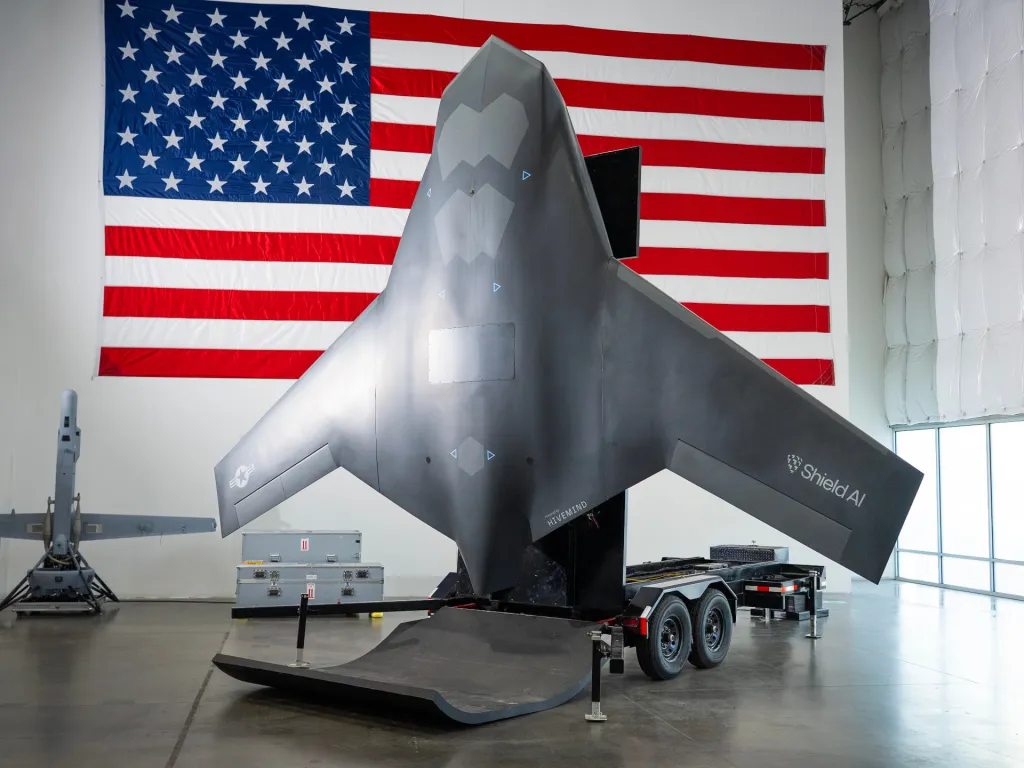
In the high-stakes chessboard of modern great-power competition, fixed runways have become liabilities. Adversaries map them, target them, and plan to crater them in the opening hours of any conflict. Traditional fighters—magnificent machines though they are—sit vulnerable until the concrete is clear and the tankers are in the air. Enter Shield AI’s X-BAT: a sleek, tailless, jet-powered, AI-piloted combat aircraft that treats the entire planet as its airfield.

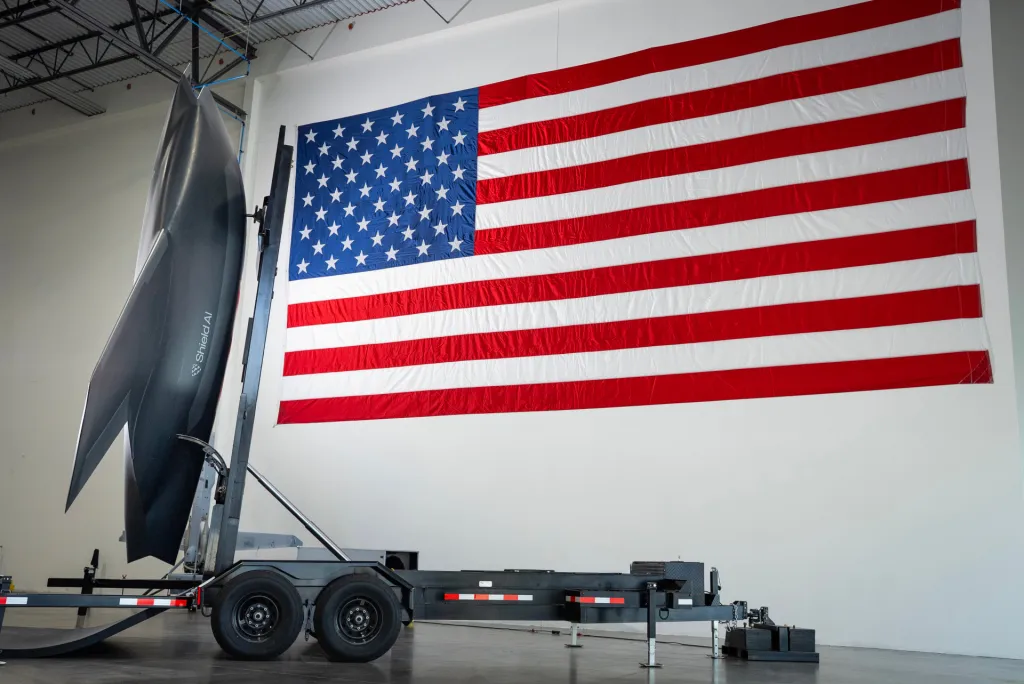
Unveiled in Washington in late 2025, the X-BAT is no science-fiction rendering. It is a concrete engineering program: 26 feet of low-observable airframe, 39-foot folding wings, a GE F110-class afterburning engine with thrust-vectoring authority, and Shield AI’s Hivemind software acting as the pilot. Vertical takeoff and landing from a mobile trailer means a destroyer deck, a remote Pacific atoll, a highway stretch, or a forward island can become an instant launch site. Three of them pack into the footprint of one legacy fighter. Range targets exceed 2,000 nautical miles. Internal bays swallow substantial weapons; external stations allow “beast mode” when the mission demands it. And it is designed to keep fighting when GPS is jammed and the data links go silent.

This is American industrial and technological culture applied to the hardest problem in airpower: generating combat sorties when the enemy owns the first-strike initiative against fixed infrastructure. The Navy has put real money behind it—hundreds of millions in Other Transaction funding matched by the company itself—precisely because maritime and expeditionary forces need options that do not depend on pristine runways. While foreign competitors churn out impressive numbers of cheaper or more specialized systems, few match the ambition of packing fighter-like reach, multi-role flexibility, and contested-environment autonomy into a runway-independent package built for U.S. and allied operational concepts.

The X-BAT is still climbing the development mountain. First vertical flights are the near-term gate. Weapons integration, full mission autonomy validation, production scaling, and demonstrated survivability lie ahead. Yet the direction is clear: distribute the airpower, raise the cost of enemy targeting, and let AI shoulder the riskiest sorties so human pilots can focus where they add the most value. In an era when the first battle may be decided by who can still generate sorties after the opening salvo, an aircraft that launches from a trailer and thinks for itself is not just innovative—it is strategically necessary.

Whether X-BAT ultimately fields in the volumes and timelines projected will depend on the unforgiving realities of flight test, budgets, and operational utility. For now, it stands as a bold American answer to a hard problem: keep the fight going when the runways are gone.

Investing / Pre-IPO Options

Shield AI is a private company (founded 2015). As of the March 2026 Series G, it raised roughly $1.5 billion (plus preferred equity structures) at a post-money valuation of approximately $12.7 billion, with secondary-market indications later in 2026 sometimes marking higher. Total capital raised across rounds is in the multi-billion range. Major participants have included Advent International, JPMorgan-related vehicles, Blackstone (preferred), and earlier backers such as Andreessen Horowitz, Riot Ventures, Snowpoint, and others. The company has expressed interest in eventually pursuing a public listing, but no confirmed IPO timeline exists.

There is no public ticker. Ordinary retail investors cannot simply buy shares on a brokerage. Access is limited primarily to accredited investors (SEC definition: typically $200k+ individual / $300k joint income for two years, or $1M+ net worth excluding primary residence).Common pathways for qualified investors:Secondary marketplaces and platforms (e.g., those facilitating employee/early-investor share sales or SPVs) such as platforms historically associated with private-share trading (Forge, EquityZen, UpMarket, Clarity/Hiive-style venues, or specialized pre-IPO funds/SPVs). Availability, pricing, minimums (often $50k+), and transfer restrictions (including company right-of-first-refusal) vary and change.
Pooled vehicles / SPVs formed by funds or platforms that aggregate capital to acquire shares.
Certain specialized private-market funds that hold positions in defense-tech names.

Important caveats: Shares are highly illiquid; you may be locked up for years until an IPO, acquisition, or rare secondary window. Valuations can compress. Defense programs face technical, budget, political, and competitive risks. X-BAT itself is pre-operational. Past funding rounds and secondary marks are not guarantees of future performance. Conduct thorough due diligence, consult qualified financial/legal advisors, and only invest capital you can afford to lose entirely. Platforms require accreditation verification and provide offering documents—review them carefully. Information on secondary availability fluctuates; check current listings directly with licensed intermediaries.This summary draws from public reporting through early October 2026. Programs evolve rapidly—verify latest official statements from Shield AI, the Navy, and DoD for the most current status.

Shield AI Homepage – https://shield.ai/