Stealth AI X-BAT – America Aims to Rewrite Contested Airpower
STEALTH AI JOBS <– CLICK HERE
Not Joining Space Force or USAF? Work on AI/SI WAR & DEFENSE. Click the link above or here: https://jobs.lever.co/shieldai
Shield AI Homepage – https://shield.ai/
In the high-stakes chessboard of modern great-power competition, fixed runways have become liabilities. Adversaries map them, target them, and plan to crater them in the opening hours of any conflict. Traditional fighters—magnificent machines though they are—sit vulnerable until the concrete is clear and the tankers are in the air. Enter Shield AI’s X-BAT: a sleek, tailless, jet-powered, AI-piloted combat aircraft that treats the entire planet as its airfield.
Unveiled in Washington in late 2025, the X-BAT is no science-fiction rendering. It is a concrete engineering program: 26 feet of low-observable airframe, 39-foot folding wings, a GE F110-class afterburning engine with thrust-vectoring authority, and Shield AI’s Hivemind software acting as the pilot. Vertical takeoff and landing from a mobile trailer means a destroyer deck, a remote Pacific atoll, a highway stretch, or a forward island can become an instant launch site. Three of them pack into the footprint of one legacy fighter. Range targets exceed 2,000 nautical miles. Internal bays swallow substantial weapons; external stations allow “beast mode” when the mission demands it. And it is designed to keep fighting when GPS is jammed and the data links go silent.
This is American industrial and technological culture applied to the hardest problem in airpower: generating combat sorties when the enemy owns the first-strike initiative against fixed infrastructure. The Navy has put real money behind it—hundreds of millions in Other Transaction funding matched by the company itself—precisely because maritime and expeditionary forces need options that do not depend on pristine runways. While foreign competitors churn out impressive numbers of cheaper or more specialized systems, few match the ambition of packing fighter-like reach, multi-role flexibility, and contested-environment autonomy into a runway-independent package built for U.S. and allied operational concepts.
The X-BAT is still climbing the development mountain. First vertical flights are the near-term gate. Weapons integration, full mission autonomy validation, production scaling, and demonstrated survivability lie ahead. Yet the direction is clear: distribute the airpower, raise the cost of enemy targeting, and let AI shoulder the riskiest sorties so human pilots can focus where they add the most value. In an era when the first battle may be decided by who can still generate sorties after the opening salvo, an aircraft that launches from a trailer and thinks for itself is not just innovative—it is strategically necessary.
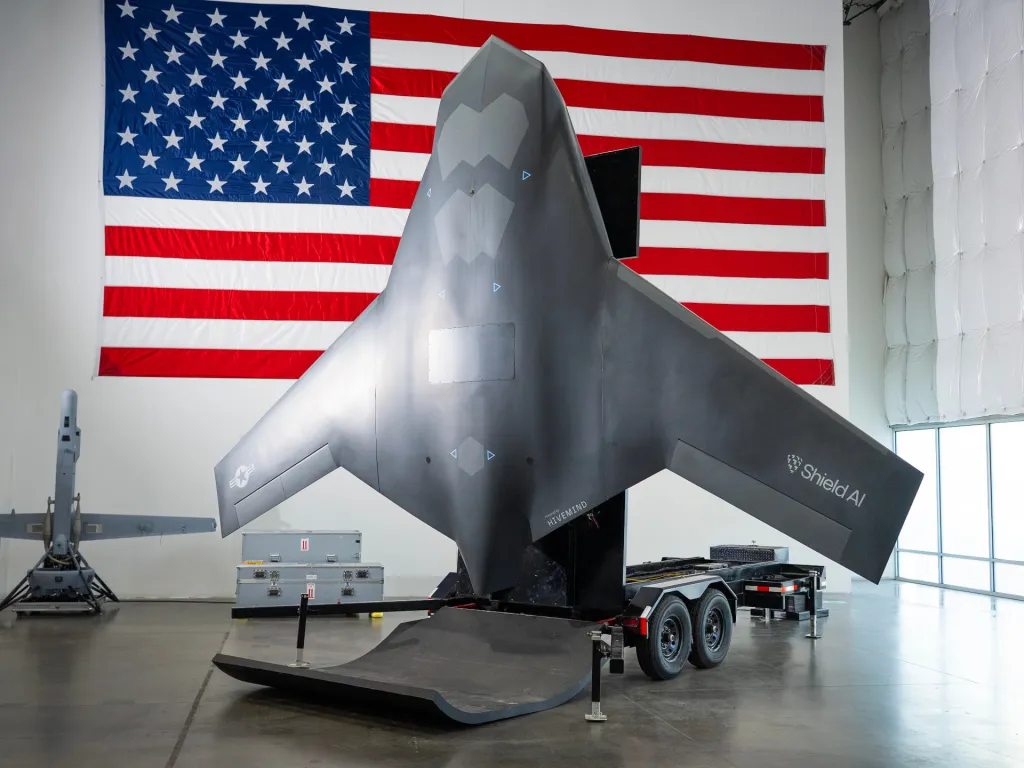
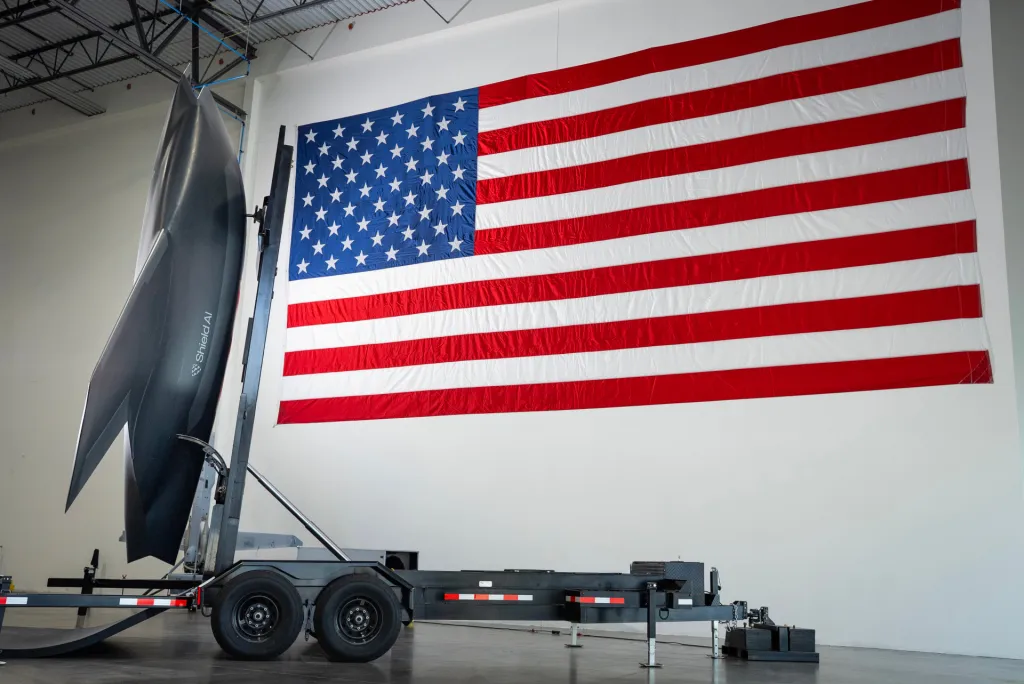
Whether X-BAT ultimately fields in the volumes and timelines projected will depend on the unforgiving realities of flight test, budgets, and operational utility. For now, it stands as a bold American answer to a hard problem: keep the fight going when the runways are gone.
Investing / Pre-IPO Options
Shield AI is a private company (founded 2015). As of the March 2026 Series G, it raised roughly $1.5 billion (plus preferred equity structures) at a post-money valuation of approximately $12.7 billion, with secondary-market indications later in 2026 sometimes marking higher. Total capital raised across rounds is in the multi-billion range. Major participants have included Advent International, JPMorgan-related vehicles, Blackstone (preferred), and earlier backers such as Andreessen Horowitz, Riot Ventures, Snowpoint, and others. The company has expressed interest in eventually pursuing a public listing, but no confirmed IPO timeline exists.
There is no public ticker. Ordinary retail investors cannot simply buy shares on a brokerage. Access is limited primarily to accredited investors (SEC definition: typically $200k+ individual / $300k joint income for two years, or $1M+ net worth excluding primary residence).Common pathways for qualified investors:Secondary marketplaces and platforms (e.g., those facilitating employee/early-investor share sales or SPVs) such as platforms historically associated with private-share trading (Forge, EquityZen, UpMarket, Clarity/Hiive-style venues, or specialized pre-IPO funds/SPVs). Availability, pricing, minimums (often $50k+), and transfer restrictions (including company right-of-first-refusal) vary and change.
Pooled vehicles / SPVs formed by funds or platforms that aggregate capital to acquire shares.
Certain specialized private-market funds that hold positions in defense-tech names.
Important caveats: Shares are highly illiquid; you may be locked up for years until an IPO, acquisition, or rare secondary window. Valuations can compress. Defense programs face technical, budget, political, and competitive risks. X-BAT itself is pre-operational. Past funding rounds and secondary marks are not guarantees of future performance. Conduct thorough due diligence, consult qualified financial/legal advisors, and only invest capital you can afford to lose entirely. Platforms require accreditation verification and provide offering documents—review them carefully. Information on secondary availability fluctuates; check current listings directly with licensed intermediaries.This summary draws from public reporting through early October 2026. Programs evolve rapidly—verify latest official statements from Shield AI, the Navy, and DoD for the most current status.
