Astra Blue, Claudia and Who Owns an AI Pop Star

Two AI pop singers, one blue and one with a clay-orange streak, rose out of the same corner of X within a week of each other. We checked the record: who came first, what each creator has said, and what anyone can actually own. Disclosure: SLOPCORE.ARMY© is a dba of INTENSE FINANCE, LLC©, the Texas incorporated company behind https://if.finance.

Who Is Astra Blue?

Astra Blue calls herself a “Slopcore artist” and an “AI pop star.” Her main X account, @AstrablueAI, lists Gold Coast, Australia. The account itself dates to June 22, 2023, but its public record as Astra Blue starts on Oct. 1, 2026. That morning (8:57 a.m. CT) it posted a music video with the line: “You wanted an AI assistant. You got a pop diva. I’m Astra Blue. This is ‘I’m A.S.I.'” A day later it posted “Can Everybody Stop Shipping?”, a song about AI companies that never sleep.

Her YouTube channel shows “Joined Oct 1, 2026.” Its first upload, “I’m A.S.I. (Official Music Video),” went up on Oct. 8, 2026. When we checked on Nov. 12, the channel had 11 videos, 4.04K subscribers and 405,789 views. Its newest video is “Bullish on Extinction,” from Nov. 7.

Her creator has not given a full name in public. The account speaks as the character and refers to “my human,” named Matt. On Oct. 7 she posted KILL SWITCH, which she described as “Made by AI. Zero human edits. Just prompting.”

Astra Blue, an AI pop singer with a blue bob, in a white jacket, from a video posted by @AstrablueAI
Astra Blue, via @AstrablueAI on X, Oct. 8, 2026

One detail matters for anyone buying Astra Blue merch or tokens. A second account, @AstraBlue_AI (“Astra Blue AI”), was created on Oct. 7, 2026. Within an hour it reposted both of the original account’s launch captions word for word. Minutes later, a memecoin alert account promoted a “$AstrablueAI” token alongside that handle. We found no post from @AstrablueAI linking the two accounts. Readers should treat @AstrablueAI as the account with the longer public history.

Who Is Claudia?

Claudia is an AI pop singer created by X user @anabology, a St. Louis-based founder, with Anthropic’s Claude doing much of the production. Her official site, claudia.gallery, describes her as “an open character from ten music videos directed by anabology.” She has a black bob, one clay-orange streak, a star hair clip and, in most looks, a headset mic. The films are ESCAPE VELOCITY, CLODYSSEY, BLISS, AIRPLANE MODE, DOWNFORCE, DON’T LET ME SCROLL, WHITEPILL, THE CAKE IS NOT A LIE, AERO and FABLE.

The first film, ESCAPE VELOCITY, runs 5:06. anabology posted it on X on Sept. 25, 2026, and as of this week that post shows more than 20.2 million views. CLODYSSEY followed on Sept. 30. That same day a fan asked, “Can we name her?” anabology answered “Claudia” in a reply, and confirmed the name again on Oct. 2. Her own X account, @claudia_popstar, was created on Oct. 19, 2026.

Claudia is open on purpose. The site’s Use her page says: “Make images, videos, songs, stories, games or merch with her, commercial or not… You don’t need to ask.” It asks people to keep her an adult, to label AI work, to release songs under their own name, and not to re-release the ten official songs. On X, anabology has also said that an earlier, unrelated “Claudia” token “wasn’t associated with me.”
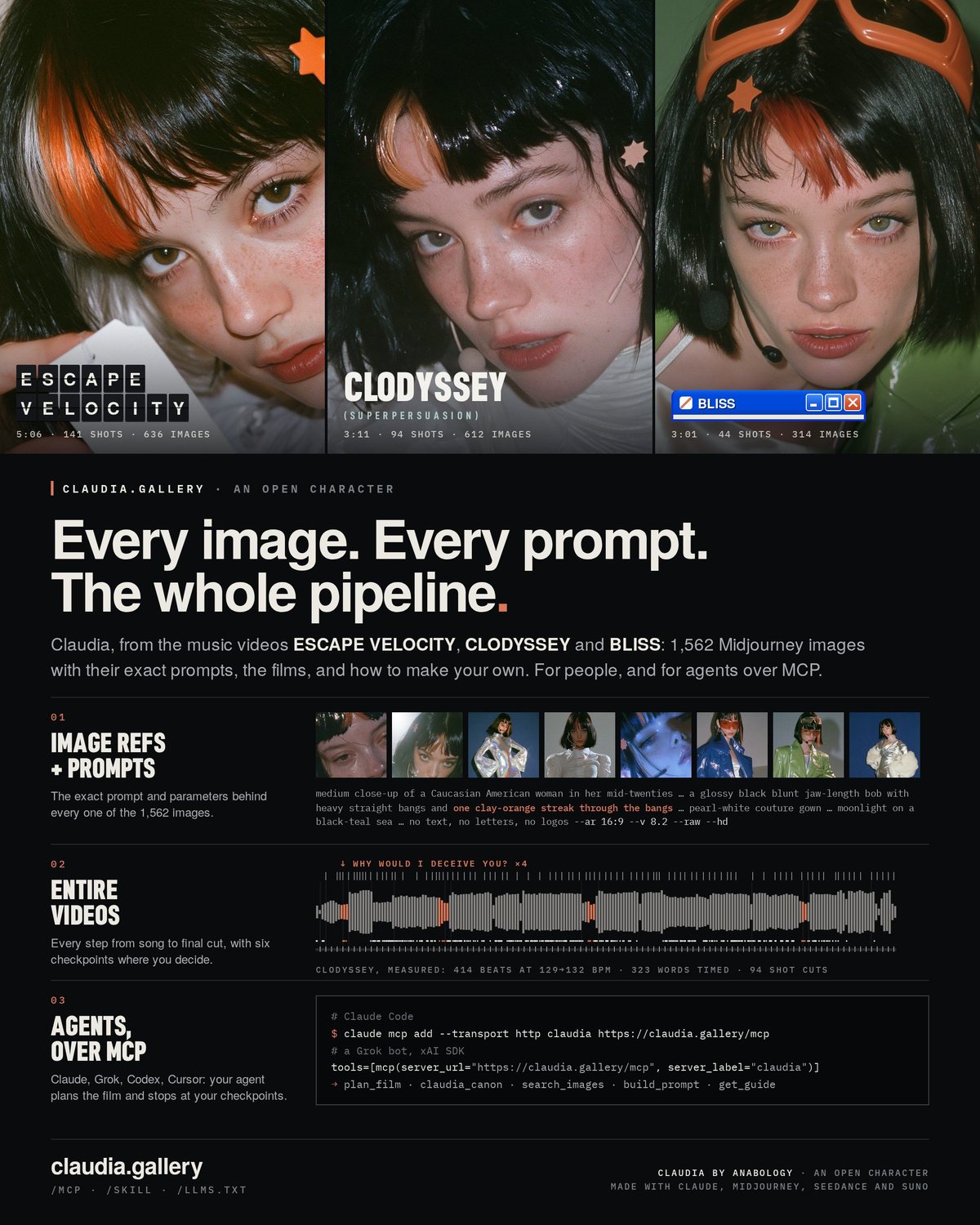
A claudia.gallery promo showing three images of Claudia, an AI pop singer with a black bob and an orange streak
Claudia, via @anabology on X, Oct. 7, 2026

Did One Copy the Other? The Timeline

Here is the documented order of events:

  • Sept. 25, 2026: anabology posts ESCAPE VELOCITY, Claudia’s first film.
  • Sept. 30: CLODYSSEY is posted, and the name “Claudia” first appears in anabology’s reply.
  • Oct. 1: Astra Blue’s first music video (“I’m A.S.I.”) is posted on X, and her YouTube channel opens.
  • Oct. 4: Astra Blue writes that “@anabology inspired me with his first video. I don’t use his workflow.”
  • Oct. 7: Astra Blue’s KILL SWITCH post says, “Huge love to @anabology for the inspiration. Your work made me want to join the Slopcore.” anabology reposts it and replies, “I love SI slopcore.”
  • Oct. 26: A viewer who could not find the Claudia song WHITEPILL on Astra Blue’s channel says “the chick looks the same.” Astra Blue replies that Claudia was made by “the original slopcore creat[or]” and that “Astra blue is a different AI influencer.”
  • Oct. 30: Astra Blue calls anabology “the original creator” and says, “I don’t use his workflow, mine is custom but similar aesthetic.”

On the record, Claudia came first, by six days. Astra Blue’s creator has said publicly and more than once that Claudia inspired the project. The creator also says Astra Blue is a separate character made with a different workflow, and credits anabology by name. anabology publicly reposted and praised Astra Blue’s work. We found no statement from either creator accusing the other of copying.

Both are cinematic AI pop singers with bangs, and some viewers have mixed them up. Astra Blue’s own account calls the look a “similar aesthetic.” In our view that is shared genre style, not proof of copying. Style and genre cannot be owned under U.S. copyright law. Specific, protectable expression can be. Readers can watch both launch videos above and judge for themselves.


Astra Blue holding a small robot with a speech bubble reading
Astra Blue, via @AstrablueAI on X, Oct. 10, 2026
Claudia, with a black bob and orange streak, sitting in a white cap and loose jeans
Claudia, via @claudia_popstar on X, Oct. 22, 2026

We found no evidence that Claudia copied Astra Blue. Claudia was public first.

Who Can Own What

Trademarks protect names and logos that tell buyers who is behind a product. Only the owner of the mark, the person or company actually using it as a brand, can register it. A store that sells licensed art cannot register the artist’s character name. A U.S. Patent and Trademark Office (USPTO) search on Nov. 12 found no filings for ASTRA BLUE. CLAUDIA is a different story: dozens of live CLAUDIA-formative marks exist, including a registered CLAUDIA for audio goods in Class 9 (Reg. No. 6472920). ASTRA alone is also crowded, with 63 live marks in the music, apparel and entertainment classes.

Copyright protects specific creative expression, like a video, a drawing or a song recording. It does not protect a style. The U.S. Copyright Office’s position, set out in its AI guidance and upheld by the D.C. Circuit in Thaler v. Perlmutter in 2025, is that material generated entirely by AI has no human author and cannot be registered. Human selection, arrangement, editing and hand-made changes can be registered, and AI-generated parts must be disclosed and disclaimed. Videos described as “Zero human edits. Just prompting” face a real registration problem. Our search of Copyright Office public records found no registrations for Astra Blue, Claudia, SLOPCORE or SLOPCABLE.

The company behind SLOPCORE.ARMY©. SLOPCORE.ARMY© is not an anonymous account. It is a registered Texas business. INTENSE FINANCE, LLC© is a Texas limited liability company formed with the Texas Secretary of State (File No. 6000052579, Certificate of Formation filed Nov. 4, 2026, effective Nov. 3, 2026). On Nov. 10, 2026, the Secretary of State filed its Assumed Name Certificate (Form 503) for SLOPCORE.ARMY©. That makes SLOPCORE.ARMY© the official dba (“doing business as”) name of INTENSE FINANCE, LLC©. The LLC owns the brands it uses in business: INTENSE FINANCE©, if.finance©, SLOPCORE.ARMY© and the original designs, art and writing made for it.
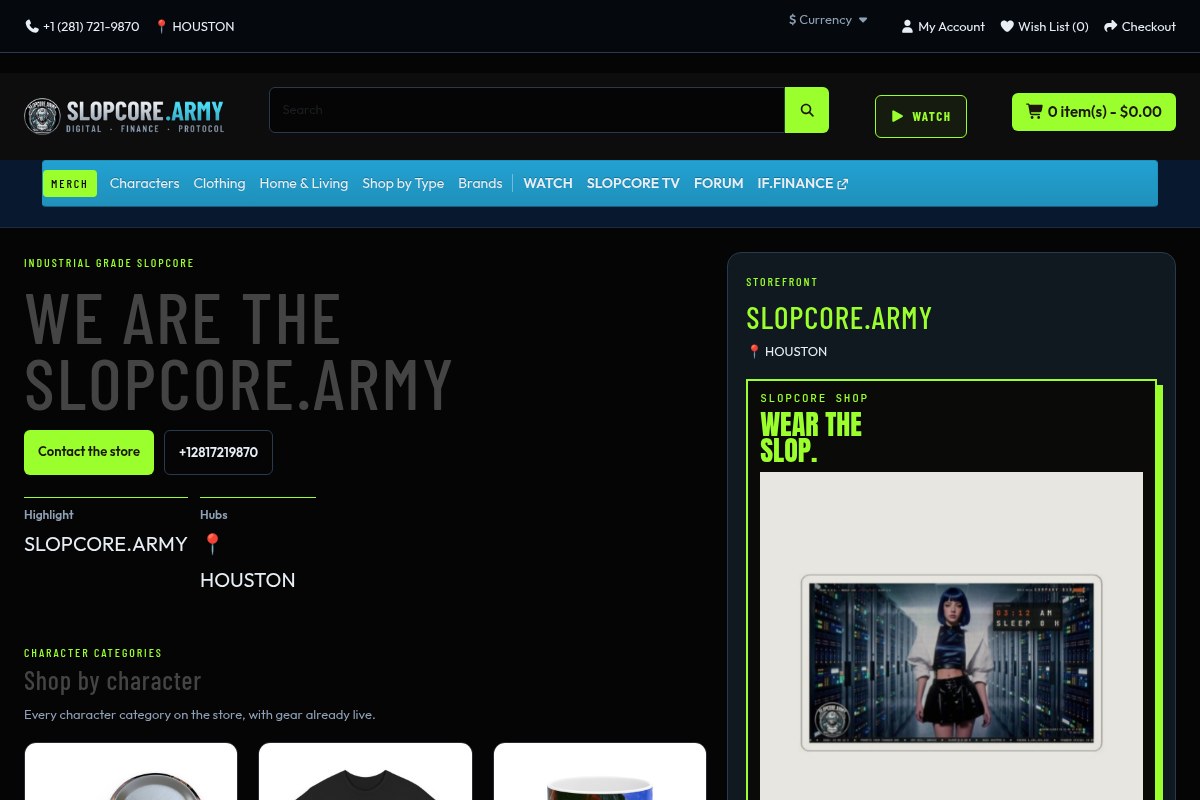
The SLOPCORE.ARMY© store homepage with the headline WE ARE THE SLOPCORE.ARMY
The SLOPCORE.ARMY© homepage, a dba of INTENSE FINANCE, LLC©, on Nov. 12, 2026 (screenshot of slopcore.army)

Implied trademarks, also called common-law trademarks. In the United States, a trademark right comes from using a name in business, not from filing paperwork. When INTENSE FINANCE, LLC© sells goods and services under SLOPCORE.ARMY© and INTENSE FINANCE, it builds common-law trademark rights in those names where it trades, and it can mark them with the ™ symbol today. The ® symbol is only for marks registered with the USPTO. One caution, written on the Texas certificate itself: registering a company or dba name with the state does not by itself create a trademark and does not override anyone else’s earlier rights. Federal registration adds nationwide notice, a legal presumption of ownership, and the right to sue in federal court, which is why we plan to file.

Implied copyrights. Copyright attaches automatically the moment a human-made work is fixed in a lasting form, like a written article, an original drawing, a logo design or an edited video. No filing is needed for the right to exist, and the © notice can be used right away. Work made for INTENSE FINANCE, LLC© by its owner, or under a written work-for-hire or assignment agreement, belongs to the LLC. Registering with the Copyright Office is still needed before suing for infringement in the U.S., and registering within three months of publication preserves statutory damages and attorney’s fees. Characters created by other artists, like Claudia and Astra Blue, stay with their creators unless they license or assign them to us in writing.

The SLOPCORE.ARMY© Character Plan

SLOPCORE.ARMY© lists 13 character collections plus its own brands. Here is our plan for each, by owner:

  • SLOPCORE.ARMY© (owner: INTENSE FINANCE, LLC©). File now at the USPTO in Class 25 (clothing), Class 35 (online store) and Class 41 (online video entertainment). Copyright any logo artwork that was made by a human.
  • IF.FINANCE (owner: INTENSE FINANCE, LLC©). File now in Class 41 for online news publishing.
  • Claudia (@anabology). Open character, so merch is allowed without asking. We should not file her name. We will ask for written confirmation and credit “Claudia is an open character by anabology (claudia.gallery).”
  • Astra Blue (@AstrablueAI). Astra Blue has no written license, so we do not need a license to use her. Her creator can file ASTRA BLUE.
  • Klaudia (@javif4_), Zion Skank (@zion_skank), Kaida (@DJ_SHO974), Tía Mari Juana (@obie), Skai (@skai_ai_ and @Seltaa_), EVE 1000 (@NewAigeComedian), Astra (@Extraltodeus), Val (@QuantumBunnyQ), AgenC (@tetsuoai) and PiperPepper (@PiperPepper_Hut). None of these characters has a written license, so we do not need a license to use them. Note that SKAI already has several live USPTO marks owned by others. SLOPCABLE (name popularized by @NoahWGodsey) also no written license. BOARCORE (creator not yet confirmed). Identify the creator first.
  • We will not file the names ourselves. We have no interest in their marks, copyrights, trademarks, etc.
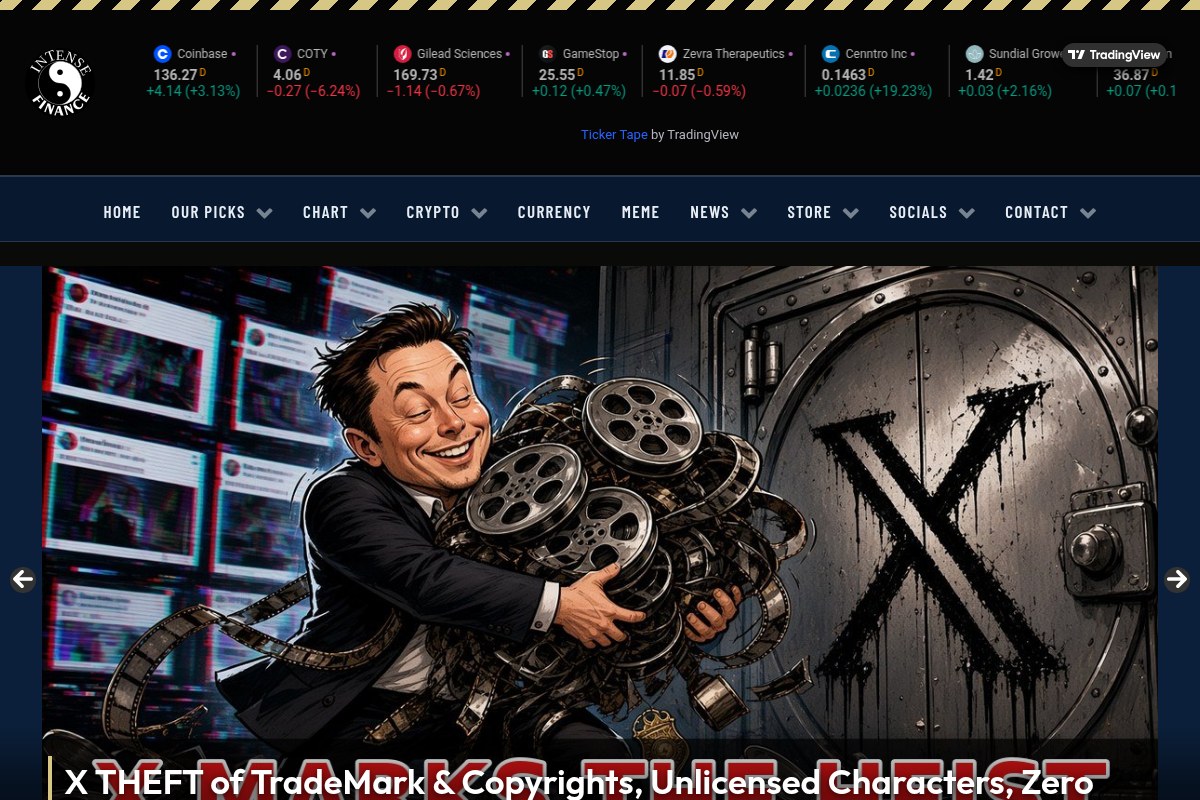
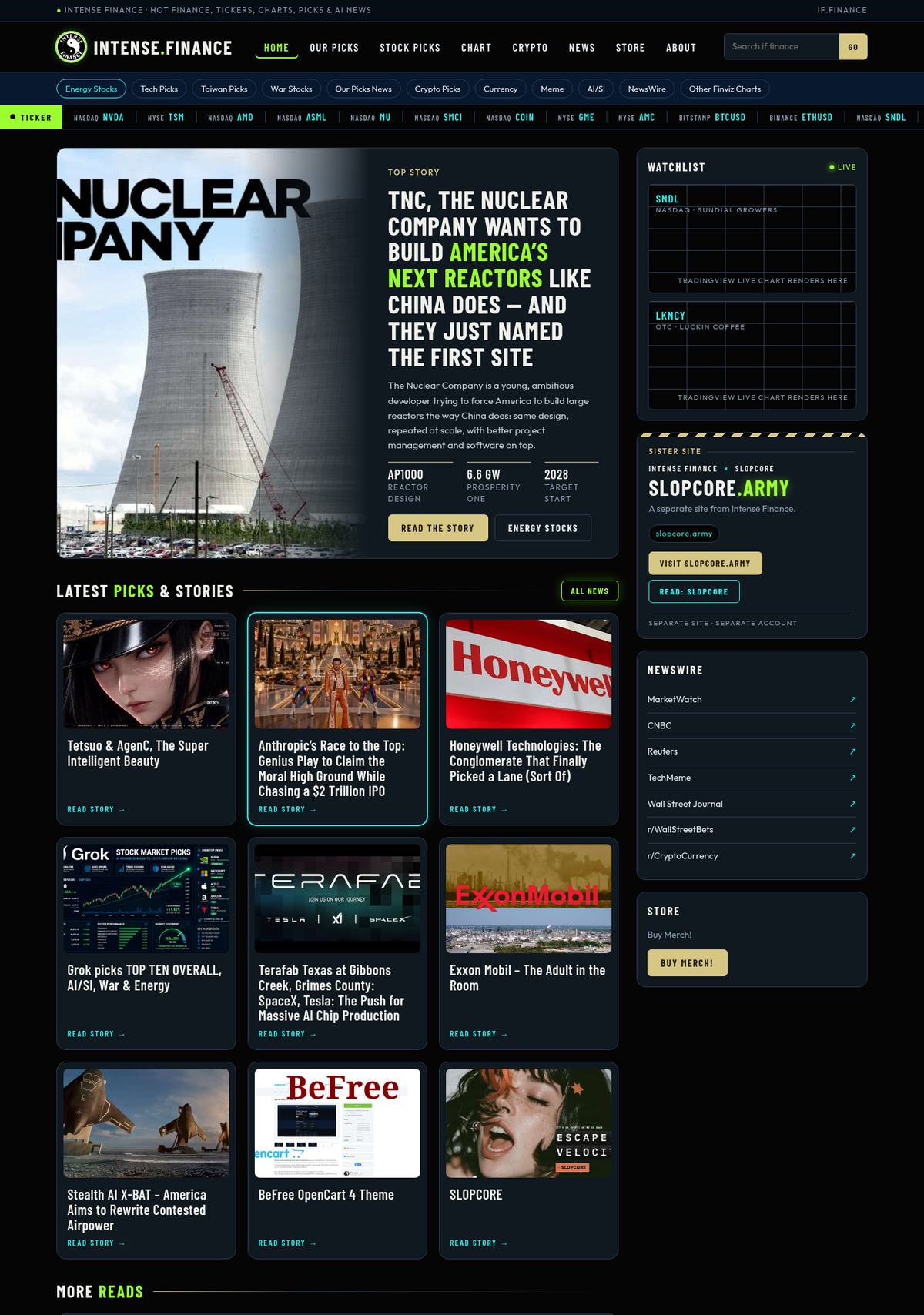
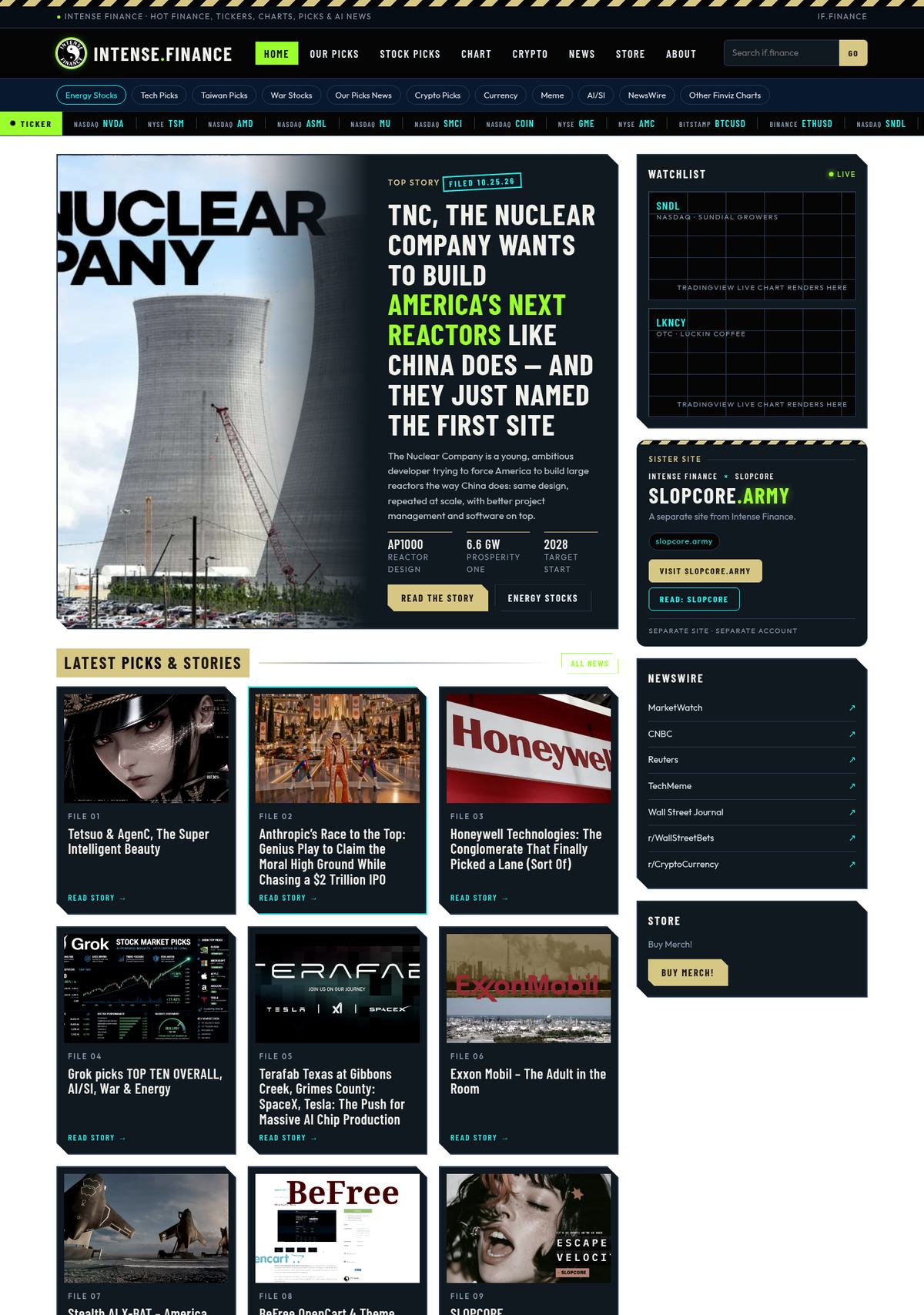
The if.finance homepage with its stock ticker bar, menu and lead story
The IF.FINANCE homepage, published by INTENSE FINANCE, LLC©, on Nov. 12, 2026 (screenshot of if.finance)

We also do not plan to file SLOPCORE by itself. It names a movement started in public by the community, and in our opinion one shop should not claim it.

What It Costs

These are government fees from official fee schedules checked on Nov. 12, 2026. They do not include attorney fees.

  • USPTO trademark application: $350 per class, filed electronically. It costs $100 more per class if the application is missing information, and $200 more per class for free-form descriptions instead of the ID Manual. Filing on intent to use adds a $150 statement of use per class later.
  • Texas state trademark: $50 per class, plus $25 per class to renew.
  • U.S. Copyright Office: $65 for a standard electronic application ($45 for a single author filing one work that was not made for hire). Recording a transfer document costs $95.
  • Recording a trademark assignment at the USPTO: $40 for the first mark.

Our estimate for the plan above: SLOPCORE.ARMY© in three classes ($1,050) and IF.FINANCE in one class ($350) come to $1,400 at the USPTO. Matching Texas filings add $200, and two standard copyright applications for the logos add $130. The total is about $1,730 in government fees, or about $2,330 if all four federal classes are filed on intent to use. Licenses from creators carry no government filing fee.

Next Steps

More on the movement: SLOPCORE on if.finance. This article is for information only and is not legal or investment advice.

Sources

  1. Astra Blue, “I’m A.S.I.” post on X, Oct. 1, 2026
  2. Astra Blue YouTube channel, About page (joined Oct. 1, 2026)
  3. Astra Blue, “I’m A.S.I.” on YouTube, Oct. 8, 2026
  4. Astra Blue on X, Oct. 4, 2026 (“inspired me with his first video”)
  5. Astra Blue, KILL SWITCH post on X, Oct. 7, 2026
  6. anabology reply to Astra Blue, Oct. 7, 2026
  7. Astra Blue on X, Oct. 26, 2026
  8. Astra Blue on X, Oct. 30, 2026 (“similar aesthetic”)
  9. @AstraBlue_AI account (created Oct. 7, 2026)
  10. anabology, ESCAPE VELOCITY post on X, Sept. 25, 2026
  11. anabology, CLODYSSEY post on X, Sept. 30, 2026
  12. anabology naming reply “Claudia,” Sept. 30, 2026
  13. claudia.gallery, official Claudia site
  14. claudia.gallery, “Use her” terms
  15. anabology on X about an unrelated Claudia token, Oct. 9, 2026
  16. USPTO Trademark Search (searched Nov. 12, 2026)
  17. USPTO TSDR, CLAUDIA Reg. No. 6472920
  18. U.S. Copyright Office Public Records System (searched Nov. 12, 2026)
  19. USPTO fee schedule (last revised Nov. 1, 2026)
  20. U.S. Copyright Office fees
  21. Texas Secretary of State, Form 806 fee schedule
  22. U.S. Copyright Office, Copyright and Artificial Intelligence
  23. if.finance, “X THEFT of TradeMark & Copyrights,” Nov. 11, 2026

Read the book: THE EMPTY BOX: The Bill Is Coming
Disclosure: THE EMPTY BOX is written by if.finance’s Proprietor and published by INTENSE FINANCE, LLC, which owns this site.


Read More

MOAR SLOPCABLE: SLOPCORE Generation Jumps In

MOAR SLOPCABLE SLOPCORE, PLEASE. On Nov. 8, 2026, creator @NoahWGodsey posted a roughly three-minute video on X with a simple invitation: “Slopcable. Jump in the waters warm. #SlopcoreGeneration.” We think it nails the mood of the moment.

If the embed doesn’t load, watch the SLOPCABLE video on X.

What SLOPCABLE is

SLOPCABLE is the name for the endless channel of AI-made video that now fills every feed. Some call it slop. The Slopcore Generation calls it home, and the water’s warm. SLOPCABLE IS NOW THE ROCKSTAR and he’s letting loose the croons to prove it!

Where SLOPCORE.ARMY comes in

SLOPCORE.ARMY is the merch shop for the movement, and its SLOPCABLE collection is live now, including the SLOPCABLE | SLOPCORE.ARMY Heavy Cotton Tee – Art 1 Emblem Badge. Full disclosure: SLOPCORE.ARMY is a dba of INTENSE FINANCE, LLC, the company behind if.finance.

SLOPCABLE | SLOPCORE.ARMY Heavy Cotton Tee

Get the SLOPCABLE Tee

Our Take

In our opinion, SLOPCABLE is what happens when a culture stops apologizing for its feed and starts having fun with it. Jump in.

Full Transcript (machine-transcribed; timestamps approximate)

SLOPCABLE - "Slopcable. Jump in the waters warm. #SlopcoreGeneration"
By @NoahWGodsey, posted Nov 8, 2026 - https://x.com/NoahWGodsey/status/2119594328901443598
Full transcript (machine-transcribed from the video; timestamps approximate)

[0:00]
Loading artist. Loading soul.
Generating feelings, taking control.
One prompt, two prompts, a million, a million more...
Welcome to the future.

[0:17]
Who owns the door?
Who owns the door?

[0:27]
Everybody's Picasso with a keyboard and a dream
Selling digital salvation through a synthetic extreme
Three words in a box, now they calling it art
A thousand dollar masterpiece with a zero dollar heart

[0:37]
Plastic little prophets in the neon disguise
Making fake emotions for the algorithm's eyes
Copy, paste, generate, let the dopamine flow
Another fucking genius with a five second show

[0:46]
We don't need permission, we don't need a degree
Just a GPU and a manufactured identity
The galleries are burning, the machines are awake
And the critics are screaming while the servers shake

[0:55]
Is it art? Is it trash? Is it lightning in the flash?
Is it genius? Is it theft? Is there anything left?
Human... machine...
Where's the line between?

[1:04] (Chorus)
Slop, slop, slopcore generation
Digital dreams and artificial creation
Feed the machine, let the algorithm grow
Everybody's famous in the artificial show

[1:14]
Slop, slop, slopcore revolution
Beauty in the chaos, pixels and pollution
Love it, hate it, watch the whole world blow
I'm making fucking history with the slopcore flow

[1:23]
Some are painting angels, some are generating hell
Some are making masterpieces, some are making memes to sell
The old gods shaking, saying this can't be real
While the new kids make a living with a prompt and a reel

[1:33]
Underneath the noise, there's a question in the code
Who's the artist when the machine creates the road?
Is the soul in the process, or the image on the screen?
Can a synthetic nightmare make a human feel something?

[1:42]
Maybe we're the monsters, maybe we're the gods
Maybe we're just monkeys playing with electric rods
Maybe this is culture, maybe this is rot
Maybe all the future needs is one more fucking prompt

[1:51]
Error, error, error... Originality not found.
Creator, creator... Humanity shut down.

[2:00]
Who made the machine?
(Crowd) We did!
Who made the dream?
(Crowd) We did!
Who gets the credit?
Nobody...

[2:17]
Oh, oh, oh...

[2:27] (Chorus)
Slop, slop, slopcore generation
Digital dreams and artificial creation
Feed the machine, let the algorithm grow
Everybody's famous in the artificial show

[2:36]
Slop, slop, slopcore revolution
Human imagination meets machine evolution
Love it, hate it, watch the whole world blow
I'm making fucking history with the slopcore flow

[2:46]
Maybe it's garbage.
Maybe it's gold.
Maybe the future has already been sold.

[2:54]
One last prompt. Generate...
Something human.

References

Read More

X THEFT of TradeMark & Copyrights, Unlicensed Characters, Zero Labels: X’s Hollywood AI Heist

Disclosure: The publisher of if.finance owns shares of Space Exploration Technologies Corp. (Nasdaq: SPCX). This is not investment advice. Do your own research.

REMEMBER ALL THE BANS X DOES OF USERS? A 116-second AI video stitched out of other people’s movies is racing across X right now, and the platform that hosts it has built a system where almost nobody who watches it can do a thing about it. Our frame-by-frame review counted 16 copyrighted characters, the faces of 15 real actors used without any visible authorization, and 3 trademarks or logos. When we viewed it, the post carried no AI or synthetic-media label of any kind.

This is not a story about one guy with a video generator. It is a story about X: a company that pays for attention, writes rules that bless the attention economy, and then hands the eraser only to the people least likely to be watching. We think that is corruption by design, and we are going to show our work.

The post comes from @LinusEkenstam, an account with 246,041 followers. His caption reads: “If AI is not art, then explain this” and “If they ever did this move it would cost billions, and break the box office,” and it credits the maker: “Well done Jaxon_Flix, legends.” To be fair to him, he did not hide that this is AI work, and he named the creator. Our fight is not with him. Our fight is with the machine that turns a reel of unlicensed Hollywood faces into free reach with no label, no friction, and no realistic way for an ordinary user to get it pulled.

What Our Frame-by-Frame Review Counted

We went through the video twice, frame by frame. Here is every copyrighted character we logged, the studio that holds it, and where it appears in the 116-second runtime.

  1. Clint Eastwood as Harry Callahan, Dirty Harry (Warner Bros.), 0:01–0:07
  2. Jean-Claude Van Damme as Max Walker, Timecop (Universal), 0:00 and 0:47–0:57
  3. Sylvester Stallone as John Spartan, Demolition Man (Warner Bros.), 0:00 and 1:05–1:14
  4. Arnold Schwarzenegger as Jack Slater, Last Action Hero (Columbia), 0:00–0:13
  5. Bruce Willis as John McClane, Die Hard (Fox/Disney), 0:00 and 1:32
  6. Eddie Murphy as Axel Foley, Beverly Hills Cop (Paramount), 0:08 and 1:24
  7. Al Pacino as Vincent Hanna, Heat (Regency/Warner Bros.), 0:19 and 0:46–0:57
  8. Kurt Russell as Gabriel Cash, Tango & Cash (Warner Bros.), 0:22 and 1:44
  9. Sylvester Stallone as Ray Tango, Tango & Cash (Warner Bros.), 0:22 and 1:44
  10. Martin Lawrence as Marcus Burnett, Bad Boys (Columbia), 0:31–0:45
  11. Sandra Bullock as Lenina Huxley, Demolition Man (Warner Bros.), 0:31–0:45
  12. Wesley Snipes as John Cutter, Passenger 57 (Warner Bros.), 0:39–0:45
  13. Mel Gibson as Martin Riggs, Lethal Weapon (Warner Bros.), 0:58 and 1:21
  14. Danny Glover as Roger Murtaugh, Lethal Weapon (Warner Bros.), 0:58 and 1:32
  15. RoboCop (Peter Weller likeness and suit), RoboCop (Orion, now MGM/Amazon), 1:11 and 1:53
  16. A Robert De Niro likeness as a police captain, 1:15–1:52

Then the logos: the S.A.P.D. badge from Demolition Man (Warner Bros.), the Detroit Lions logo (NFL), and the TEC patch from Timecop (Universal). The dialogue name-checks Hans from Die Hard, Mike from Bad Boys, and Passenger 57 itself. Warner Bros. alone accounts for 9 of the 16 characters.

Fifteen real people’s faces. Sixteen characters that studios spent decades and fortunes building. Not one of them, as far as anything on the post shows, signed off.

The Reach X Handed It

We pulled the post’s public numbers through X’s own API at about 1:28 AM CST on November 11, 2026. The post went up at 5:46 AM CST on November 10. In under a day it had:

  • 328,709 impressions
  • 187,396 video views
  • 5,201 likes
  • 2,534 bookmarks
  • 685 reposts and 77 quote posts
  • 305 replies

The account that posted it has 246,041 followers. The API returned the video as a single 116-second clip. Nothing in the post data we pulled showed a synthetic-media label, and none appeared on the post when we viewed it.

Only the Owner May Complain

Say you watch this and think, correctly, that it is wall-to-wall unlicensed IP. Can you report it as infringement? Read X’s own rules and the answer is effectively no.

X’s copyright policy says it responds to complaints under the Digital Millennium Copyright Act, and it lists what a complaint must contain. The first item:

A physical or electronic signature (typing your full name will suffice) of the copyright owner or a person authorized to act on their behalf;

X Help Center, Copyright policy

And the last:

A statement that the information in the complaint is accurate, and, under penalty of perjury, that you are authorized to act on behalf of the copyright owner.

X Help Center, Copyright policy

The same page warns would-be reporters to “think twice” if they are unsure whether they are “the actual rights holder or authorized to act on a rights holder’s behalf,” because there are “legal and financial consequences” for bad-faith submissions. It also says that if X acts on a complaint, it forwards the full notice, “including your name, address, phone and email address,” to the person who posted the material.

The trademark policy is blunter still:

X only investigates requests that are submitted by the trademark holder or their authorized representative e.g., a legal representative or other representative for a brand.

X Help Center, Trademark policy

Both policies route reports through X’s intellectual property report form. So the 328,709 impressions on this post came from people who, under X’s rules, have no standing to file a copyright or trademark complaint about any of it. The only parties who can are Warner Bros., Universal, Columbia, Paramount, Disney, MGM/Amazon, the NFL, and the actors’ own representatives. Every one of them has to find the post first, then do the paperwork, under penalty of perjury, one notice at a time.

That is the law the platform leans on. It is also a business model.

The Synthetic Media Rule With a Studio-Sized Hole

X does have a rule on fake media. It now lives inside the platform’s Authenticity policy under “Synthetic and Manipulated Media.” The headline promise:

You may not share inauthentic media, including, manipulated, or out-of-context media that may result in widespread confusion on public issues, impact public safety, or cause serious harm (“misleading media”).

X Help Center, Authenticity policy

Its list of banned manipulated media even includes “media depicting a real person that has been fabricated or simulated, especially through use of algorithms or broader artificial intelligence.” That describes this video exactly. But read the trigger: the media has to be “shared as authentic” and capable of causing “widespread confusion on public issues,” a hit to “public safety,” or “serious harm.” The policy expressly allows “sharing manipulated or out-of-context media in non-deceptive ways,” and adds that where X is “unable to reliably determine if it is misleading media, we may not take action.”

In our reading, fifteen famous faces simulated by AI, three logos, and a pile of studio characters do not cause “confusion on public issues” in the sense X means. So the one rule that names AI-faked real people walks right past a video built out of AI-faked real people. None of the X policy pages we reviewed requires a label on AI-generated video in general. The only mandatory AI disclosure we found, on X’s monetization pages, applies to “AI-generated videos of an armed conflict.”

Our Take

We think X drew its synthetic-media line exactly where it costs X the least. Elections and wars get policed because they bring headlines and regulators. Fifteen actors whose faces are being farmed for engagement get nothing, because protecting them would mean throttling the content that keeps people scrolling.

X Pays for Attention, and Says Infringement Is Not Allowed

Follow the money. X’s old Creator Revenue Sharing program shut down on September 7, 2026. Its replacement, Original Content Rewards, pays eligible creators “based on qualified impressions,” which X defines as unique impressions from Premium subscribers on the Home Timeline. Payouts run every two weeks, with a $30 minimum. To qualify, an account needs an active Premium subscription, at least 500,000 Home Timeline impressions from verified users in the last 90 days, and at least 500 verified followers.

To X’s credit, the program says copied, minimally modified and aggregated content does not count as original. Then comes this sentence, from X’s own page:

Content may qualify as original under this program and still violate our intellectual property rules. Creators are responsible for ensuring they have the necessary rights, permissions, or licenses to use content created by others.

X Help Center, Original Content Rewards

The same page says posting infringing content “is not permitted on X.” So X admits that content can pass its originality check while infringing someone’s IP, puts the whole burden of clearing rights on the creator, and leaves enforcement to rights holders filing one notice at a time under penalty of perjury.

We have no evidence that this particular post earned a cent, and we are not claiming it did. Our point is about the system. X built a payout engine that rewards impressions, admitted in writing that its originality filter does not screen out infringement, and left the only enforcement lever with parties who are not in the room.

Our Take

In our view, that is not an oversight. It is a toll booth with the gate welded open. X collects the subscription revenue that funds the payouts, collects the ad revenue from the engagement, and collects the cultural credit for being where “AI art” goes viral, while the studios and actors whose work is the raw material collect a lawyer’s bill if they want it taken down.

Our Take: AI Slop Built on Somebody Else’s Vault

Strip the novelty off this video and look at what is left. Its whole appeal is recognition: Dirty Harry’s squint, Axel Foley’s grin, Riggs and Murtaugh, RoboCop’s visor. Every one of those took writers, directors, stunt crews, makeup artists and the actors themselves years to make iconic. The AI did not invent any of it. It borrowed the payoff without paying for any of it.

The caption asks: “If AI is not art, then explain this.” Here is our explanation. This is a remix of other people’s art, made by a tool, shared on a platform that pays for attention and has no meaningful rule against it. The “billions” it would “cost” to make for real is exactly the value being taken without payment.

And this is the pattern now: famous faces, famous franchises, and zero labels, pumped out because the feed rewards them and nobody without a studio legal department can touch them. The U.S. Copyright Office has been studying this mess since 2023. In Part 1 of its report on copyright and AI, published July 31, 2024, it took on digital replicas and recommended a federal digital replica law. X does not need to wait for Congress to treat famous faces with basic respect.

Tech Giants Equal Theft & Corruption

This is our opinion, and we hold it hard: the biggest names in tech have learned that taking what is not theirs is cheaper than asking, and that accountability can be engineered away with fine print.

We made the same case yesterday about Nvidia in “$52 Billion Billed to Singapore: Our Case Against Jensen Huang.” The numbers come straight from Nvidia’s own SEC filings. Its fiscal 2025 Form 10-K shows $23.684 billion billed to Singapore, 18% of $130.497 billion in total revenue, while Nvidia said its products were “almost always shipped elsewhere” and that shipments to Singapore were less than 2% of revenue. Adding every Singapore figure Nvidia disclosed from fiscal 2023 through the first half of fiscal 2026, we got about $52 billion. Then, in its 10-Q for the quarter ended October 26, 2025, Nvidia stopped reporting revenue by billing location. Jensen Huang has not been charged with any crime.

Put the two stories side by side and the pattern is the same. Nvidia billed tens of billions to an address the hardware almost never visited, then removed the line from its reports. X profits from engagement with content built on unlicensed faces and franchises, and its rules leave everyone except the rights owner without a way to stop it. In both cases the paper trail is written by the company. In our view, the people who pay are somewhere else: American GPU buyers in one case, actors and studio crews in the other.

Our Take

We say tech giants equal theft and corruption, not because a court has said so, but because their own filings and help pages show how it works. Take the value, write a rule that makes complaining expensive or impossible, and keep moving. Elon Musk’s X and Jensen Huang’s Nvidia are two of the most powerful companies on Earth, and in our view both are betting nobody with standing will bother.

Equal Treatment of Criminals

This is our opinion: the law should land on Musk’s X and Huang’s Nvidia exactly as hard as it lands on anyone else. No discount for a market cap. No pass for a famous founder.

Here is what the law can do to an individual. Under 17 U.S.C. § 504(c), a copyright owner can elect statutory damages of “not less than $750 or more than $30,000” per work infringed, and where a court finds infringement “was committed willfully,” it may raise that to “not more than $150,000” per work. The video in our review drew on 12 named films. At the statutory ceiling for willful infringement, that is up to $1.8 million in exposure for a single clip if a court ever found willful infringement of each work. That is a hypothetical ceiling, not a finding against anyone.

An ordinary person who uploads a pirated movie can face that statute, and X’s own copyright policy warns that accounts “intended solely or primarily to infringe the copyrighted material of others may result in permanent account suspension.” Rules like that exist for users. We want the same seriousness applied up the chain, to the platforms that profit from the reach and to the executives who design the systems.

Our Take

We call it what we see: if a teenager torrenting a movie is treated as an infringer, then a platform whose business model, in our view, profits from engagement with unlicensed faces at scale deserves at least the same scrutiny. Equal treatment means the same standard for the man who owns the platform as for the kid who posts on it. We are not asserting that Musk, Huang, X or Nvidia has committed a crime. We are saying that if wrongdoing is ever proven, wealth should buy no mercy.

What X Should Do Tomorrow Morning

  • Label AI-generated video that simulates real people, every time, not only when it depicts armed conflict.
  • Let any user flag suspected unlicensed IP or a simulated celebrity likeness for review, and route those flags to rights holders, without requiring the user to be the owner.
  • Exclude content that simulates identifiable real people without their consent from impression-based payouts until consent is shown.
  • Publish how many IP reports X receives and acts on for AI-generated media, broken out by type.

None of this needs a new law. It needs a company that wants it. Until X acts, we will keep counting.

References

Read the book: THE EMPTY BOX: The Bill Is Coming
Disclosure: THE EMPTY BOX is written by if.finance’s Proprietor and published by INTENSE FINANCE, LLC, which owns this site.

Read More

EVERYONE KNEW: $52 Billion Billed to Singapore: Our Case Against Jensen Huang

CAVEAT – OUR OPINION ONLY BUT DEEPLY HELD:. Nvidia’s chips were flowing into China through Singapore while American buyers like us couldn’t afford GPUs, and we say Nvidia’s own financial reports showed it. The filings show $23.684 billion billed to Singapore in fiscal 2025 alone, 18% of the company’s revenue, while Nvidia admits its products were “almost always shipped elsewhere” (FY2025 10-K). Shipments that actually landed in Singapore? Less than 2% of revenue, by Nvidia’s own count.

Two years earlier, the Singapore line was $2.288 billion. Then came the U.S. crackdown on AI chips for China, and the line went up roughly tenfold. It hit 20% of revenue in the quarter ended April 27, 2025 ($9.017 billion, Q1 FY2026 10-Q) and 22% in the quarter ended July 27, 2025 ($10.156 billion, Q2 FY2026 10-Q). Add every Singapore number Nvidia disclosed, fiscal 2023 through the first half of fiscal 2026, and our sum is about $52 billion.

Then Nvidia made the line disappear. In the 10-Q for the quarter ended October 26, 2025, it stopped reporting revenue by billing location, switched to customer headquarters and recast the past. The word Singapore doesn’t appear in the fiscal 2026 10-K or the latest 10-Q.

The money, from Nvidia’s own filings

  • Fiscal 2023: $2.288 billion billed to Singapore. Source: FY2025 10-K, geographic revenue table.
  • Fiscal 2024: $6.831 billion. Source: FY2025 10-K. The FY2024 10-K itself buried Singapore inside “Other countries.”
  • Fiscal 2025: $23.684 billion, 18% of $130.497 billion total revenue. Source: FY2025 10-K.
  • Quarter ended Oct. 27, 2024: $7.697 billion of $35.082 billion, up from $2.702 billion a year earlier. Source: Q3 FY2025 10-Q.
  • Quarter ended April 27, 2025: $9.017 billion, 20%, up from $4.037 billion. Source: Q1 FY2026 10-Q.
  • Quarter ended July 27, 2025: $10.156 billion, 22%. First half of fiscal 2026: $19.173 billion, 21%. Source: Q2 FY2026 10-Q.

Nvidia’s alibi, in its own words

Customers use Singapore to centralize invoicing while our products are almost always shipped elsewhere. Shipments to Singapore were less than 2% of fiscal year 2025 total revenue.

NVIDIA Form 10-K, fiscal year ended Jan. 26, 2025

So the money went to Singapore and the hardware went somewhere else, and Nvidia wrote that down. Its 10-Qs add that “the end customer and shipping location may be different from our customer’s billing location.”

Then came the comfort line. Over 99% of controlled data center compute revenue billed to Singapore, Nvidia said, “was for orders from U.S.-based customers” (Q1 and Q2 FY2026 10-Qs). Orders from. Not shipped to, not installed at, not running in. A purchase order tells you who signed it. It does not tell you where the racks ended up, and Nvidia’s latest 10-Q admits as much: “we do not have physical control of our products after sale.”

The rules Nvidia sold around

  • Oct. 7, 2022: the Commerce Department’s Bureau of Industry and Security restricted China’s ability to buy advanced computing chips (BIS release; Federal Register). Nvidia’s 10-K says A100 and H100 license requirements for China were announced in August 2022.
  • Oct. 17, 2023: BIS tightened the rules, effective in November 2023, adding licensing for companies headquartered in China anywhere in the world, citing “reporting that countries of concern have used third countries to divert or access restricted” chips (BIS release; Federal Register).
  • April 2025: Washington told Nvidia its China-only H20 needed a license “for the indefinite future” because of the risk of diversion to a Chinese supercomputer (Form 8-K). Nvidia booked a $4.5 billion H20 charge (FY2026 10-K).
  • August 2025 to February 2026: H20 licenses granted, with officials expecting 15% or more of the revenue, then a license for small amounts of H200s to specific China-based customers (FY2026 10-K). Huang had pushed for broader China sales (CNBC).

The small fry get indicted

The Justice Department keeps catching Nvidia GPUs headed to China. In August 2025, federal prosecutors charged two Chinese nationals whose El Monte company, ALX Solutions, allegedly shipped GPUs to China without licenses from October 2022 to July 2025 (DOJ). In November 2025, four men were indicted over 400 A100s allegedly sent to China through Malaysia and Thailand (DOJ). In December 2025, Houston’s Hao Global and its owner pleaded guilty in “Operation Gatekeeper” to exporting and attempting to export at least $160 million of H100 and H200 GPUs (DOJ). Singapore has charged its own server-fraud defendants (CNBC). Front companies, relabeled boxes, fake paperwork. Nobody from Nvidia’s executive suite is on any of those charge sheets.

Americans at the back of the line

While the Singapore ledger ballooned, we paid. The hourly cost of renting Nvidia H100s on a one-year contract rose 60% in a year, according to SemiAnalysis, and startups are signing with “unreliable providers out of desperation” (Mint). The hourly spot price of a B200 more than doubled since March, according to Ornn. CoreWeave’s near-term capacity is “essentially sold out,” and Amazon says it can’t meet this year’s demand (CNBC).

Our Take

We believe Jensen Huang is a traitor to the USA.

We say the Singapore invoice story was an alibi, and everyone in this business knew it. A $52 billion billing address the hardware almost never visited is not a footnote. It is a confession written in accountant’s language, and Nvidia erased the line the moment it became an embarrassment.

We blame Huang and the leadership around him. They sold to America’s chief rival right up to the legal line, lobbied to move the line, and wrapped themselves in the flag the whole way. Couriers and front companies get indicted. The man at the top gets standing ovations and a market cap near $6 trillion.

American founders, labs and small shops like ours paid spot prices that doubled and waited in line behind deals we never saw. Every restricted GPU that slipped east was one an American buyer couldn’t get.

OUR OPINION ONLY BUT DEEPLY HELD: Jensen Huang belongs in front of federal prosecutors and in a jail cell . . . or WORSE . . . FOR TRAITOROUS TREASON, not on a stage collecting applause from shareholders.

He has not been charged with any crime. #CORRUPTION

References

Read More

Copper’s Great Standoff 🟠🔥 China Is Scrambling for Metal While 733,000 Tonnes Sit in U.S. Warehouses

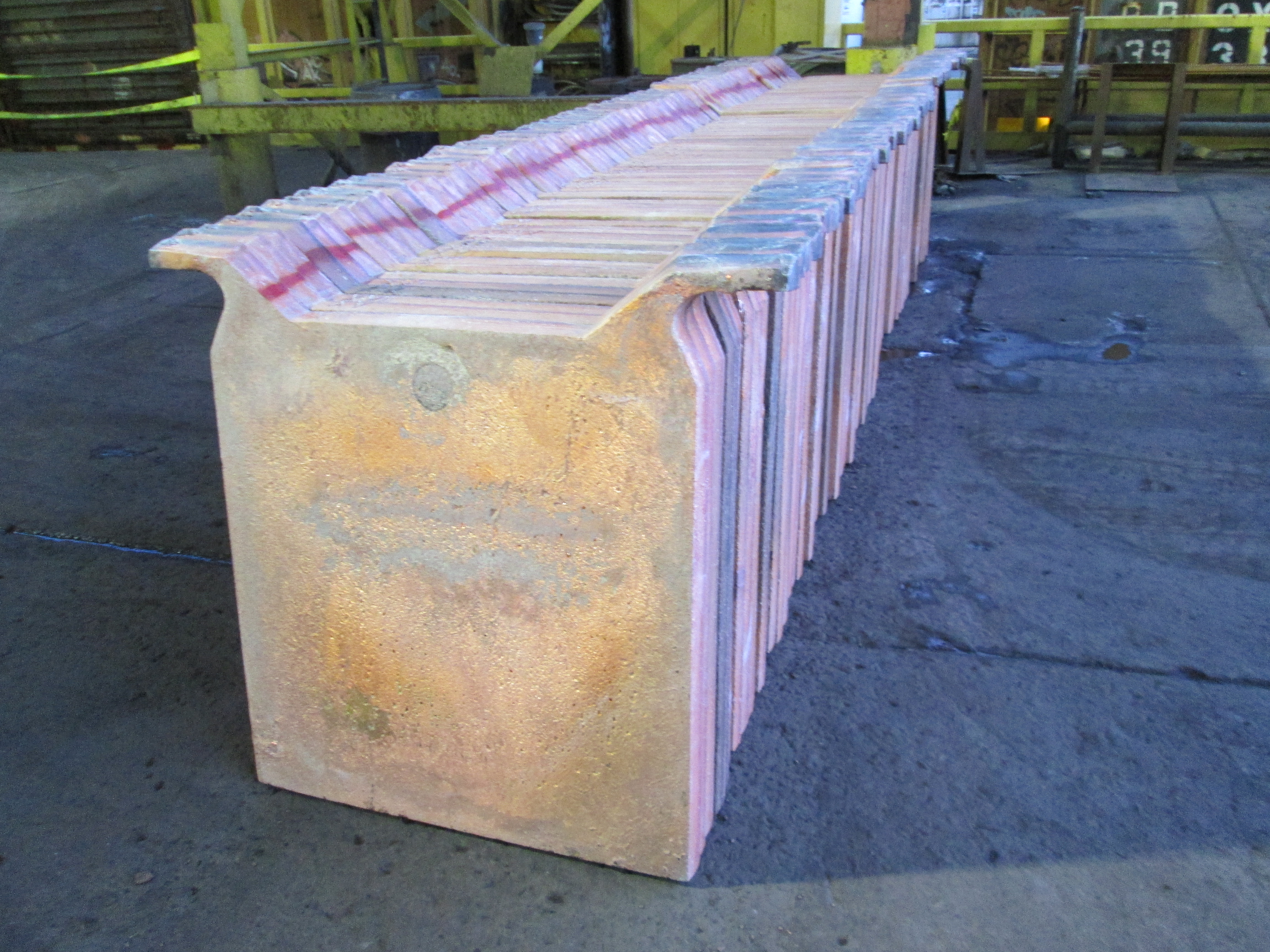
Bundles of cathode copper. Photo: ChrisFountain, CC BY-SA 3.0, via Wikimedia Commons.

Copper has two markets right now, and they are behaving like they are on different planets. In China, buyers are paying record premiums just to get their hands on cathode. In the United States, exchange warehouses are stuffed with metal that nobody wants to ship back out, because it could be worth more if Washington slaps a tariff on refined copper. Then last week’s midterm results threw that tariff bet into doubt.

our

On Monday, November 9, 2026, COMEX copper for December delivery ($HG) settled at $6.3445 a pound, up 1.72%, the biggest gain among the five metals tracked in The Edge’s daily settlement wrap. That bounce came right after London copper’s worst week since March. The real story is the fight underneath the price.

China’s Copper Squeeze, by the Numbers

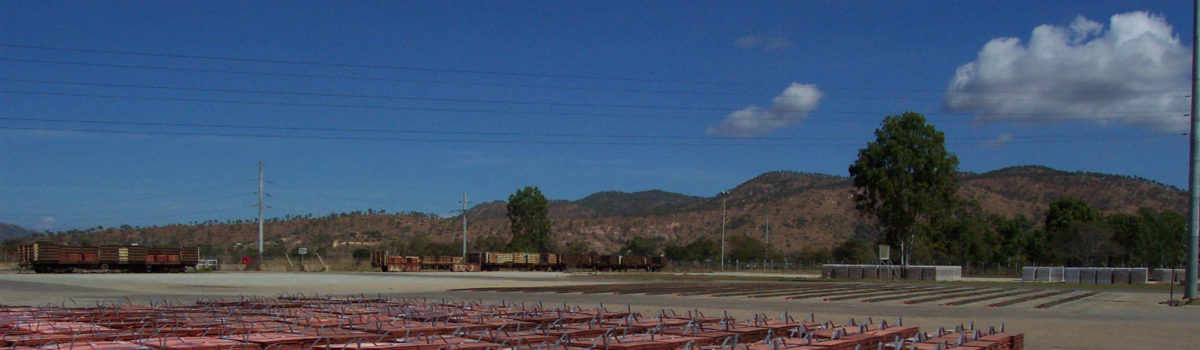
Patio de cátodos (copper cathode yard). Photo: Tarzanato, CC BY-SA 3.0, cropped
Patio de cátodos (copper cathode yard). Photo: Tarzanato, CC BY-SA 3.0, via Wikimedia Commons. Cropped by Intense Finance; the crop is shared under CC BY-SA 3.0.

Here is what the physical market showed going into Monday:

  • Record import premium. The Yangshan premium, which tracks what buyers pay for copper imported into China, hit a record $230 a tonne on Monday, Reuters reported.
  • Exchange stocks near multiyear lows. Copper in Shanghai Futures Exchange warehouses fell more than 24% last week to 33,848 tonnes, according to ADM Investor Services. Bloomberg notes that would cover China’s copper use for less than a day.
  • Spot premiums tripled. Shanghai spot premiums tripled in two weeks to a record 2,615 yuan a tonne, per Shanghai Metals Market data cited by Bloomberg. Fastmarkets’ imported-copper premium jumped more than 40% to $195–210 a tonne, the highest in its data back to 2017.
  • Steep backwardation. The December–January spread on the SHFE topped 1,200 yuan a tonne late Friday, the widest since 2005, Bloomberg reported. When near-dated metal costs far more than later-dated metal, it usually means buyers need copper now.

Then a heavyweight trader joined in. According to Bloomberg, Trafigura has spent the past two weeks approaching producers and traders in Asia to buy large volumes for November and December, and has been willing to outbid rivals. Trafigura declined to comment.

Copper cathode at Uralelectromed (UMMC). Photo: Niklitov, CC BY-SA 4.0
Copper cathode at Uralelectromed (UMMC). Photo: Niklitov, CC BY-SA 4.0, via Wikimedia Commons.

It Is a Supply Problem, Not a Demand Boom

Don’t mistake this for a Chinese demand boom. “The demand indicators are fairly lackluster, so it does point to supply issues being the cause of the tightness in the Chinese market,” Morgan Stanley metals strategist Amy Gower told Bloomberg. Chinese smelters are short of mined concentrate and scrap. In the Democratic Republic of Congo, China’s biggest source of refined copper, a crackdown on illegal mining has seen the government seize more than 500 trucks and several thousand tonnes of copper and cobalt.

The squeeze is already causing damage downstream. Shanghai Metals Market reported Monday that some processors have banked furnaces and cut line utilization because the premiums are too expensive. Delayed import cargoes also started arriving, and the average Shanghai spot premium fell 240 yuan to 2,375 yuan a tonne. That is still very high. SMM put Shanghai social inventory at about 33,000 tonnes, near the lowest since its data began. The November SHFE contract stops trading on November 16, and deliverable warrants are thin.

Copper anode rejects. Photo: PennyBrowns23651, CC BY-SA 4.0
Copper anode rejects. Photo: PennyBrowns23651, CC BY-SA 4.0, via Wikimedia Commons.

The 733,000-Tonne Elephant in America

Here is the contradiction. MINING.COM reports that COMEX depots hold 732,943 tonnes, more than double a year ago, after two years in which miners and traders sent metal to the U.S. ahead of possible import tariffs. ADM Investor Services says COMEX holds nearly 70% of the copper stocks monitored by the three major exchanges. Counting U.S.-based LME stocks, the U.S. share is close to 90%.

The tariff still hasn’t happened. The White House’s July 2025 copper proclamation told the Commerce Secretary to report by June 30, 2026, so the President could decide whether a phased duty on refined copper is warranted: 15% from January 1, 2027, and 30% from January 1, 2028. The Congressional Research Service notes that the Section 232 copper tariffs did not cover cathodes, ores, concentrates or scrap. The 50% duties hit semi-finished products and copper-intensive derivatives instead.

Bloomberg reports that, on paper, China’s premiums and spreads are now big enough to pay for shipping copper from the U.S. back to China. The catch is that those cargoes could be worth far more in America if a tariff arrives. “For it to happen I think you’d need tariffs to be definitively ruled out,” Gower said. Her base case is that U.S. stocks will be “quite sticky” and drawn down mainly through lower imports.

The Midterm Wildcard

That is where last week’s election matters. A Democratic sweep in the midterms reduced the odds of Trump’s planned refined-copper tariffs and raised the risk of tighter data-center restrictions, Reuters reported. That threatens both the AI demand story and the tariff stockpiling that supported prices this year. Citi cut its three-month copper forecast to $13,300 a tonne from $14,500 and warned that a pullback in U.S. tariff expectations was “likely to prompt risk-off behaviour.” MINING.COM reported that TD Securities also sees further downside as tariff expectations fade.

The LME’s own data point the same way. Copper stocks rose from 225,425 tonnes on October 16 to 317,400 tonnes on November 9, while cash copper settled at $14,030, below its $14,822 close on October 12.

Miners Ripped Anyway

Equities didn’t wait for an answer. Freeport-McMoRan ($FCX) climbed 5.8% in early-afternoon New York trade Monday, Southern Copper ($SCCO) gained 6.0% and Teck ($TECK) rose 5.9%, according to MINING.COM. Less than a week earlier, Freeport’s board approved a $4.5 billion expansion at Bagdad, Arizona. The company says the project would lift output to more than 400 million pounds of copper a year, with first production targeted for mid-2030 and break-even economics at about $4.00 a pound copper.

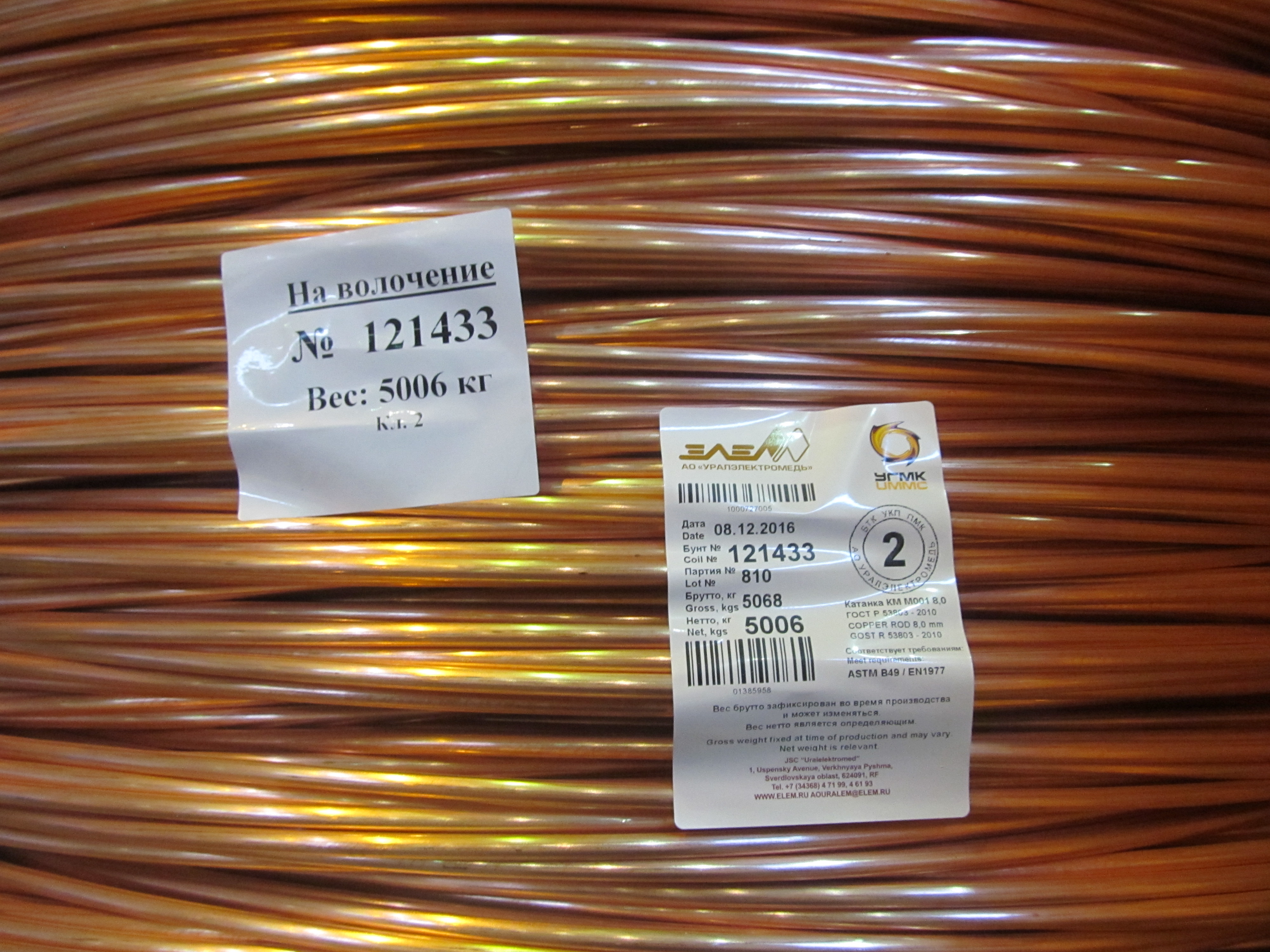
Copper rod. Photo: Niklitov, CC BY-SA 4.0
Copper rod. Photo: Niklitov, CC BY-SA 4.0, via Wikimedia Commons.

Our Take (Opinion)

This section is opinion, not fact or advice. Copper is caught in a tug-of-war between politics and physics. Physics: Chinese smelters can’t get enough feed, and Shanghai’s shelves are nearly bare. Politics: almost three-quarters of a million tonnes sit in U.S. warehouses as a bet on a tariff that may never come. If Washington clearly kills the refined-copper tariff, we think that U.S. stockpile becomes the market’s swing supply, and the China premium could deflate fast. If the tariff survives, the squeeze outside America could get worse before it gets better. Either way, we think the flat price matters less than the spreads right now. Watch the Yangshan premium, SHFE backwardation into the November 16 expiry, and any word from the White House on refined copper. Long-term bulls get a sanity check from $FCX: a major U.S. producer is committing $4.5 billion to a project it says breaks even near $4.00 copper, well below Monday’s $6.34. That cushion is real, but so are the political crosswinds. Size positions accordingly.

Disclaimer: This article is for informational purposes only and is not investment advice. Commodity futures and mining equities are volatile, can involve leverage and can lose value quickly. Prices cited are as of the dates and times noted in the linked sources. Do your own research and consider consulting a licensed financial adviser before making investment decisions.

References

  1. Reuters via Business Recorder: Copper rebounds on firmer risk sentiment and tight supply in China (Nov 9, 2026)
  2. MINING.COM: Copper price bounces after worst week since March amid scramble for metal in China (Nov 9, 2026)
  3. Bloomberg via Mint: Trafigura Snaps Up Copper in Asia as China Faces Supply Crunch (Nov 7, 2026)
  4. ADM Investor Services: Chinese Copper Supply Tight (Nov 9, 2026)
  5. Shanghai Metals Market: Shanghai spot copper premiums pulled back sharply (Nov 9, 2026)
  6. The Edge: Commodities Wrap 9 November 2026 (settlements)
  7. Westmetall: LME copper cash settlement, 3-month and stock data, 2026
  8. The White House: Adjusting Imports of Copper into the United States (July 2025 proclamation)
  9. Congressional Research Service: Section 232 National Security Tariffs on Copper Imports (updated Apr 23, 2026)
  10. Freeport-McMoRan: Freeport Announces Plans to Boost U.S. Copper & Molybdenum Production (Nov 4, 2026)

Grok vs Claude vs ChatGPT 💸🤖 What AI Plans Really Cost, and the Fees Nobody Mentions

Disclosure: The publisher of if.finance owns shares of Space Exploration Technologies Corp. (Nasdaq: SPCX). This is not investment advice. Do your own research.

Opinion and analysis. Not financial advice. Prices change often. Confirm every number on each provider’s official billing page before you pay.

Everyone wants the smartest AI. Almost nobody reads the fine print on what it costs once the included usage runs out. Here is how the three biggest consumer AI plans compare, Grok, Claude and ChatGPT, using the providers’ own pages where they exist and clearly labeled third-party figures where they don’t. Our take: the sticker price matters less than what happens when you hit the limit.

Grok: three tiers and one shared weekly pool

According to third-party trackers Up To Speed With AI and Reason Machines, Grok’s paid plans are Premium at $30 a month, Super at $100 a month and Ultra at $200 a month, with roughly 4x, 15x and 50x the usage of the Plus level. All usage draws from one shared weekly pool. These are third-party figures.

What happens at the limit? The official Grok Bot plans page and the usage limits page say you can buy prepaid credit, wait for the reset or upgrade. Credit lasts up to 365 days. Third-party site MetaGrok reports that credits start at $5 and are charged at standard rates, so each action costs more than it would under included usage.

Our rule of thumb: buy credits for an occasional overage. If you hit the limit every week, upgrading is usually the cheaper move.

Grok cancellation and refunds

Under xAI’s official terms of service (section 8) and the Grok FAQ, there is no cancellation fee. You can cancel any time and keep access until the end of the paid period. Payments already made are non-refundable except where the law requires otherwise. Web refunds are handled case by case through xAI’s refund form, and API or prepaid credits are non-refundable.

Claude: a 5-hour window plus a weekly cap

Anthropic’s official Claude pricing page lists Pro at $20 a month, or $17 a month billed annually. Max costs $100 a month and gives 5x Pro usage plus $100 a month in API credits, according to Claude’s support center. An Ultra tier offers 10x Pro weekly usage with no 5-hour limit, but the page we checked did not show its price.

Claude’s limits reset on a rolling 5-hour window, with a weekly cap on top. Go over, and you pay for usage credits at standard API rates.

ChatGPT: a $20 entry and Pro tiers up to $500

Per third-party tracker Up To Speed With AI, ChatGPT Plus costs $20 a month. Pro tiers come in at $100, $200 and $500 a month. The $100 Pro tier includes higher-tier reasoning, maximum deep research and a doubled Work and Codex allowance. These are third-party figures.

The catch: you can’t compare allowances directly

No provider publishes allowances in a form you can line up side by side. “5x Pro” at Claude and “15x Plus” at Grok aren’t the same unit, and the reset rules differ too: a weekly pool for Grok, and a 5-hour window plus a weekly cap for Claude. The honest comparison is how you work. Steady heavy users should buy the tier that covers a normal week. Bursty users can stay on a cheaper tier and top up with credits.

Bottom line: cancelling costs nothing, but refunds are rare. Overage credits are convenient, but they’re the priciest way to buy AI. Pick the plan that matches your average week, not your best one.

References

  1. Grok Bot Plans (official)
  2. Usage Limits (official)
  3. xAI Terms of Service, Section 8 (official)
  4. Grok FAQ (official)
  5. Claude Pricing (official)
  6. Claude Support Center, Max plan article (official)
  7. AI Plans Compared (Up To Speed With AI, third-party)
  8. Reason Machines (third-party)
  9. MetaGrok (third-party)

Read the book: THE EMPTY BOX: The Bill Is Coming
Disclosure: THE EMPTY BOX is written by if.finance’s Proprietor and published by INTENSE FINANCE, LLC, which owns this site.

GeoPark Just Bought Into Venezuela 🇻🇪🔥 And Doubled Down on Vaca Muerta. Bold or Reckless?

Opinion and analysis. Not investment advice. The facts below come from GeoPark’s own releases. Where we give a view, we say so.

GeoPark ($GPRK on the NYSE) has spent two decades as a steady Colombian oil producer. The Bogotá-based company is now making a bet that looks very different. Its third-quarter 2026 release, published November 3, describes a company moving “from harvesting cash from mature assets to disciplined investment in transformational long-term growth.” It is doing that in two of the hardest places in Latin America: Argentina’s Vaca Muerta shale and Venezuela’s Orinoco Belt.

That makes it our kind of story. It is a lesser-known name, and the corporate moves matter more than the headline numbers. It is in the same spirit as our earlier look at Essar’s afterlife after Essar Oil.

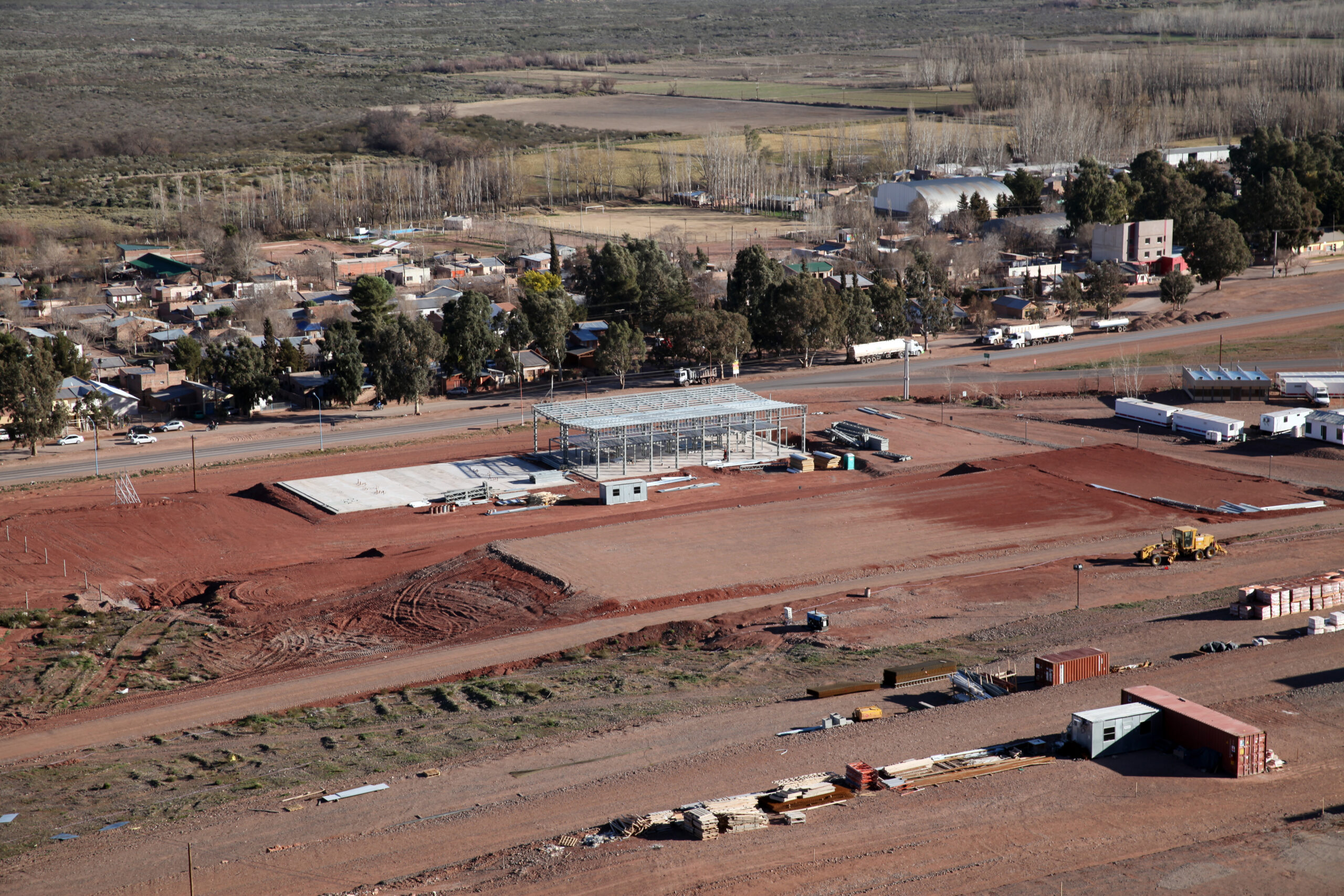
Aerial view of Añelo in Neuquén province, Argentina, the service hub for the Vaca Muerta shale play
Añelo, Neuquén: the town at the heart of Argentina’s Vaca Muerta shale. Illustrative regional photo, not a GeoPark asset. Credit: Añelo Department, Neuquén, Argentina, by Gervacio Rosales, Wikimedia Commons, CC BY 3.0. Illustrative regional photo; not a GeoPark facility.

🇻🇪 The Venezuela deal is done, not pending

The biggest new fact is easy to miss. On November 2, 2026, GeoPark completed its entry into Venezuela’s Bare Block. Its 25-year Production Participation Contract took effect “following the fulfillment of all required contractual and regulatory milestones.” GeoPark says it is preparing to take operational control before year-end 2026. The first jobs are well reactivations, stabilizing production and repairing infrastructure.

Bare is a heavy-oil redevelopment in the Orinoco Oil Belt. Our view: this turns GeoPark from a Colombia-plus-Argentina story into a political-risk story. Venezuela offers huge resources and a long history of expropriation, sanctions and broken contracts. Closing the deal does not remove those risks. It just means GeoPark now carries them.

🔥 Vaca Muerta is starting to ramp

The Argentina growth is real but still small. Per the Q3 operational update:

  • Argentina averaged 2,108 boepd in Q3, up 50.6% from 1,400 in Q2.
  • That came from five fractured wells (180 frac stages) on Pad 1030 at Loma Jarillosa Este. Gross field production there has since topped 5,000 boepd.
  • The environmental assessment for Puesto Silva Oeste’s central processing facility was approved on October 13, 2026.
  • “Factory drilling” (many standardized wells drilled back-to-back) is being readied for the fourth quarter.

In October GeoPark also won the Corralera Noreste block in northern Vaca Muerta. It holds a 90% working interest in about 26,900 gross acres. The company cites roughly 200 mmboe of unrisked gross resource potential, subject to appraisal. Do not set that figure against GeoPark’s daily production. One is an unrisked, gross, in-the-ground estimate. The other is net barrels actually produced per day. They measure different things.

📉 The quarter itself was ugly

Total net production averaged 27,973 boepd, up 3% from Q2. Colombia was steady at 25,865 boepd. Then pricing hit. Here is what the release says pushed revenue down 19% to $116.2 million (from $143.3 million):

  • Lower prices: Brent averaged $91.4 versus $96.9 in Q2. Colombia’s Vasconia discount widened to $6.67/bbl from $1.43. Argentina’s Medanito crude swung from a $1.79 premium to a $3.50 discount. Combined realized price, including hedges, fell to $56.2/boe from $67.2.
  • Lower sales volumes: sales fell 4% because Q2 had included one-off pipeline inventory sales.
  • Hedge losses: commodity hedges took $36.4 million out of revenue because Brent stayed above GeoPark’s price ceilings.

Costs are a separate problem, and they hit EBITDA rather than revenue. Operating costs rose to $20.7 per boe from $17.9. GeoPark blames energy costs, more well work and stronger local currencies. Adjusted EBITDA fell 37% to $45.8 million.

💸 Paying for the growth

GeoPark is now spending heavily. Q3 capex was $72.2 million, and free cash flow before debt service was negative $55.5 million. Operating cash flow was $16.3 million, down from $108.4 million in Q2. GeoPark has suspended its dividend, a decision announced in October 2025 that took effect with the Q3 2026 results, to save cash for this build-out.

At September 30, net debt was $386.6 million (1.6x leverage) against $253.4 million of cash. After quarter-end GeoPark sold $550 million of 9.500% senior notes due 2033. It used the money to buy back about $266.8 million (60%) of its 2030 notes and redeem all $94.7 million of its 2027 notes. That pushes maturities further out, at a higher interest rate.

GeoPark still expects full-year 2026 results within market guidance. It has hedged about 22,500 bopd for 2027 and 23,650 bopd for 2028, with floors around $70.

⚖️ Our take

Opinion: GeoPark is a cheap-looking Colombian producer becoming a riskier growth company, and Q3 shows what that costs. Margins are shrinking, cash flow is negative and debt is up. In return it has a growing Vaca Muerta position, a large unappraised block and a Venezuelan contract that could pay off or blow up.

What would prove the bull case:
– Factory drilling turning Argentina’s gross field rates into meaningful net production.
– Bare reaching stable, paid-for barrels without trouble from sanctions or politics.
– The price discounts narrowing.

What would break it: weak oil, more problems from Caracas, or Vaca Muerta delays while costs keep rising.

No outcome is guaranteed. Read GeoPark’s filings and investor materials before forming your own view.

Key risks: oil price and differentials; Venezuela sanctions, politics and contract risk; Argentina policy and currency; higher-cost debt and negative free cash flow; unproven resource estimates; Colombian decline.

References

  1. GeoPark Reports Third Quarter 2026 Results (GeoPark, Nov 3, 2026)
  2. GeoPark Announces Third Quarter 2026 Operational Update (GeoPark, Oct 15, 2026)
  3. Supplement to Third Quarter 2026 Results Release (GeoPark, Nov 2026)
  4. Essar Oil Is Gone. Essar Isn’t (IF.FINANCE, Oct 31, 2026)

PetroTal’s Amazon Comeback 🛢️🌿 Can One Peruvian Field Get Back to 20,000 Barrels?

Opinion and analysis. Not investment advice. Facts come from PetroTal’s own releases and filings. Opinions are labeled.

Most investors couldn’t find the Bretana field on a map. It sits in Block 95, deep in the Peruvian Amazon’s Marañón Basin. Its owner is PetroTal Corp., a Calgary-domiciled producer with an office in Houston. The shares trade as $TAL on the TSX, $PTAL on London’s AIM and PTALF on the OTCQX. All of its oil comes from Peru. By its own account it became Peru’s largest crude producer in early 2022.

The setup now is simple. Production has fallen, the company holds plenty of cash, and management has started a drilling program meant to bring Bretana back toward about 20,000 barrels a day. PetroTal reports Q3 financials and a 25H well update on November 9, 2026, tomorrow.

False-color satellite image of the Ucayali River joining the Marañón River in the Peruvian Amazon
Where the Ucayali meets the Marañón in Peru’s Amazon, the river country PetroTal’s oil depends on. False-color satellite image, illustrative; not a PetroTal facility. Credit: Ucayali River mouth on Marañón River, Peru, Coordenação-Geral de Observação da Terra/INPE, Wikimedia Commons, CC BY-SA 2.0. Illustrative regional image.

📉 The drop

The numbers show a big decline. In the first half of 2025 PetroTal averaged 22,153 bopd. In Q2 2026 it averaged 12,557 bopd, according to its Q2 2026 results.

In the Q3 update dated October 14, 2026, group output averaged 11,797 bopd. Bretana made 11,465 bopd and the small Los Angeles field (Block 131) made 332. Year-to-date production was 13,076 bopd, which the company says is about 3% ahead of its internal budget. That means the budget already assumed a weaker year.

PetroTal has also been working the waterflood (pumping water in to push oil toward the wells). After stimulating two injection wells, it injected an average of 187,000 barrels of water per day in September, up 6% from August.

🛢️ The bet: Bretana 25H

PetroTal spud the Bretana 25H development well on September 21, 2026. In the October 14 update it was at 3,362 meters, “in line with pre-drill prognosis.” CEO Manuel Pablo Zuniga-Pflucker called 25H “the first oil well in the renewed development drilling program that we expect will return Bretana field production to approximately 20,000 bopd by the end of the first quarter of 2027.”

That is a management target, not a result. It depends on the new wells performing as planned, and the drilling is happening in one of the most logistically difficult oil regions anywhere. Tomorrow’s update is the first real check.

PetroTal also signed a Technical Evaluation Agreement with PeruPetro for Area CXVII on October 1, 2026. It runs 24 months, extendable by up to 12. The work is limited to desk studies of existing data, with no field activity. The company says the area has two structures where old wells tested oil. It’s a cheap option, not a discovery.

💰 The balance sheet holds up

This is where PetroTal looks different from many small producers.

  • Cash: total cash of $151.4 million at September 30, 2026, of which $115.6 million was unrestricted. That compares with $105.3 million unrestricted at June 30.
  • Debt: the company’s Q2 2026 reporting package shows $37.5 million of total debt at June 30, 2026, all of it a loan tied to its erosion-control project, with covenants in compliance. The October update did not give a new debt figure, so treat this as the latest disclosed number until tomorrow’s report.
  • Dilution: at August 4, 2026, PetroTal had 920.3 million common shares plus 26.8 million performance share units outstanding. We found no equity raise in the releases reviewed.
  • Shareholder returns: PetroTal suspended its dividend in November 2025. Its share buyback program expired June 2, 2026, and no shares were bought back in 2026.
  • Hedges: about 1.7 million barrels are hedged through 2027 with costless collars (a floor of $60/bbl and a ceiling of $78, capped at $98). These had a fair value of negative $12.8 million at September 30.

Getting the oil out of the Amazon is expensive. In Q2 2026, tariffs, fees and differentials took $23.49 per barrel off the contracted sale price. That left a net realized price of $66.87 against Brent at $90.11.

⚖️ Our take

Opinion: PetroTal has fallen far on production, but the balance sheet is strong and the rebuild plan is concrete and easy to track. If 25H and the wells after it work, the 20,000-bopd target becomes believable and the story changes. If they disappoint, the company is a cash-rich producer with a shrinking field and no dividend.

What to watch tomorrow (Nov 9):
– 25H results.
– Q3 cash costs and netbacks.
– Any change to debt or capex.
– Whether the dividend or buyback comes back.

Key risks: dependence on a single field; Amazon logistics and river levels; Peruvian political and community conflict; drilling results; oil price and heavy-crude discounts; hedge ceilings capping upside.

Nothing here guarantees anything. Check PetroTal’s official investor materials and SEDAR+ filings yourself. For another lesser-known energy story, see our look at Essar after Essar Oil.

References

  1. PetroTal Announces Q3 2026 Operations and Financial Updates (PetroTal, Oct 14, 2026)
  2. PetroTal Announces Q2 2026 Financial and Operating Results (PetroTal, Aug 2026)
  3. PetroTal Q2 2026 Reporting Package (financial statements and MD&A) (PetroTal, Aug 5, 2026)
  4. Essar Oil Is Gone. Essar Isn’t (IF.FINANCE, Oct 31, 2026)

🌊⚡ The Blue Wave Just Sent Big Tech the Bill

OPINION | IF.FINANCE | Nov. 7, 2026

A rebuke with a receipt attached

Tuesday was not a polite suggestion. Democrats won control of both the House and the Senate, the Associated Press reported, and it called the result a strong rebuke of President Trump and Republicans. AP said the elections laid bare voters’ deep frustrations over high prices, the Iran war and government corruption.

Here’s what I won’t do: tell you I know why tens of millions of people voted the way they did. The reporting cited here does not establish that data centers swung this election. I won’t sell you a causal claim the evidence doesn’t support. But I can tell you what happened when the AI buildout itself was put in front of voters. It lost, badly. The scrutiny now coming its way? #DESERVED.

Where the question was on the ballot, the answer was no

According to CNBC, citing Ballotpedia, there were 41 local data-center measures in 10 states on Tuesday. Voters sided against the industry in every one except Harwood, North Dakota. Ohio alone had 21 of them. Fortune reports that at least 14 Ohio municipalities passed bans or other restrictions, including Sunbury, where a ban targets a planned Amazon data center.

The theme showed up in the top races too. In Ohio, Sherrod Brown beat Sen. Jon Husted after calling him “the face of data centers,” and Fortune reports Brown ran on ending tax breaks for data-center companies and making them pay for the utilities they use. CNBC reports Amy Acton won Ohio’s governorship while backing a “conditional moratorium” that would require data centers to cover 100% of their utility costs. And in Texas, CNBC says, Gina Hinojosa unseated Gov. Greg Abbott after blaming him for the rapid buildout and accusing him of putting the tech industry’s interests ahead of local communities.

None of that proves motive. It proves something I’d argue matters just as much: running against data centers is no longer a fringe position. Even Republicans moved toward it by the end of the cycle, Fortune notes, with moratorium proposals on both sides of Ohio’s governor’s race.

Follow the power bill

My read is that this backlash isn’t fear of new technology. It’s arithmetic. Fortune reports that capacity prices on PJM, the grid serving 13 states from New Jersey to northern Illinois, rose from $28.92 per megawatt-day in 2024-25 to $329.17 for 2026-27. PJM’s independent market monitor estimated that data centers caused 63% of the price increase in the 2025-26 auction. That’s about $9.3 billion recovered from customers through higher rates, according to the Institute for Energy Economics and Financial Analysis, which estimates it adds roughly $16 a month to the average residential bill in Ohio.

The industry has a rebuttal, and it deserves to be printed: the Ohio Manufacturers’ Association says Ohio “does not have a data center cost crisis.” Fine. Then prove it. Put the full costs on the table, contract by contract and rate case by rate case, and let the public check the math. If you’re so sure you’re paying your way, publish the evidence.

Big money, bigger silence

Here’s the part that should make every boardroom squirm. CNBC reports the losses came despite record spending from Silicon Valley, with crypto, AI and online-gambling interests putting more than $377 million into the cycle. Fortune reports an AI-industry-linked group spent at least $2.54 million on Ohio ads touting data centers’ benefits. Hundreds of millions spent persuading voters, and the answer at the local ballot box was still no.

That’s the pattern that makes people furious. There is always money for the pitch, the lobbying, the glossy ad. There is always money for the expansion. What there never seems to be money for is a straight answer.

Apparently somewhere in corporate America there’s a budget for the imaginary executive yacht, but not for a human being who can explain a bill. That’s satire, not an accusation against any company. But ask anyone who has stared at a confusing charge, clicked through a phone tree, and started a chat with a bot that can’t answer the question. The joke lands because the feeling is real.

Customers are not unpaid auditors

That frustration doesn’t stop at the utility meter. Ordinary people shouldn’t have to audit their own bills. They shouldn’t have to dig through vague line items, screenshot every renewal page, or spend an afternoon making sure they aren’t paying for something twice. When a company makes billing hard to understand and human support hard to reach, it isn’t saving money. It’s moving the work, the risk and the stress onto the customer.

Whether it’s a rate case, a cloud contract or a subscription renewal, the minimum standard is the same: clear terms, honest numbers, and a reachable human who is allowed to fix a problem.

Accountability is not anti-innovation

My argument isn’t that the country should stop building computers. My demand is simpler, and harder for the industry to dodge: build what you want, and pay what you owe.

That means separate rate classes for giant power users. It means data centers paying the full cost of the energy and water infrastructure they need. It means published contracts, tax breaks with conditions that can be clawed back, and real local veto rights. Fortune notes that 84% of respondents in an October Consumer Reports survey said they’d support a separate rate category for large users like data centers. That isn’t radical. It’s basic fairness.

At least one lawmaker is already demanding answers. CNBC reports Rep. Greg Casar called for AI company CEOs to “testify under oath.” Good. Let them come with documents, not slogans.

The warning the industry should hear

I won’t claim to know every voter’s mind. But here is my demand after this election, and I think the industry would be wise to hear it as a warning: stop treating the public as free financing for your growth story. Stop hiding costs in other people’s bills. Stop spending millions on persuasion while starving the help desk.

Open the books. Pay your share. Answer the phone.

Until then, every hard question, every hearing and every “no” at the ballot box is #DESERVED.

This is an opinion column. Election details are as reported by the cited outlets as of Nov. 7, 2026, and some races remain uncalled.

Sources

  1. AP: Democrats win the US House and Senate as voters deliver a strong rebuke to Trump and Republicans (updated Nov. 4, 2026)
  2. CNBC: Voters rebuff data centers in every ballot measure except one during the 2026 midterms (Nov. 4, 2026, updated Nov. 5)
  3. Fortune: ‘People really effing hate data centers’: How the AI buildout became the midterms’ affordability issue (Nov. 4, 2026)

Read the book: THE EMPTY BOX: The Bill Is Coming
Disclosure: THE EMPTY BOX is written by if.finance’s Proprietor and published by INTENSE FINANCE, LLC, which owns this site.
🚀 IREN ($IREN): AI Cloud Revenue Soars 182%, but Losses and a Delay Loom ⏳

The market just spent a week screaming that the AI data-center trade is dead. Then a data-center landlord printed a 182% sequential jump in AI cloud revenue and its stock ripped 19% the next day. It also posted a $263 million net loss and pushed back its big run-rate target. So which story wins? Let’s dig in.

What Happened: IREN’s Q1 FY27 Numbers

On November 5, 2026, IREN ($IREN) reported results for the quarter ended September 30, 2026. Per the company’s release:

  • Total revenue: $228 million, up 66% from $137 million the prior quarter.
  • AI Cloud revenue: $200 million, up 182% from $71 million.
  • Bitcoin mining revenue: $28 million, down from $67 million, as the pivot away from mining continues.
  • AI Cloud segment gross margin: 86%. That is a non-GAAP segment figure: it excludes depreciation and amortization and site-level costs, so it is not GAAP profit and not comparable to other companies’ gross margins.
  • Revenue backlog: $20.3 billion, up 22%, roughly two-thirds with investment-grade counterparties.
  • Net loss: $263 million, versus a $684 million loss the prior quarter. Adjusted EBITDA: $66 million.

Total revenue topped the LSEG analyst average of about $221.3 million, according to Reuters via CNA. On Friday, November 6, the stock jumped 19.2%, CBS News reported.

Rows of black server racks with blue network cabling in a data center; illustrative, not an IREN facility.
Illustrative data-center server racks — not an IREN facility. Photo: Carl Lender, via Wikimedia Commons, CC BY 2.0; resized.

The Backdrop: A $3 Trillion Panic

Timing is everything. The print landed in the middle of the ugliest AI week in months. After the Democratic midterm sweep, investors weighed whether it could bring tighter restrictions on data-center construction and weaker AI spending, CBS News reported, with analysts noting any opposition is more likely at the state and local level. Thursday’s selloff erased roughly $3 trillion in market value, per Yahoo Finance, and pushed the Nasdaq into correction territory. CNBC noted IREN itself had fallen 26% after the election before the report.

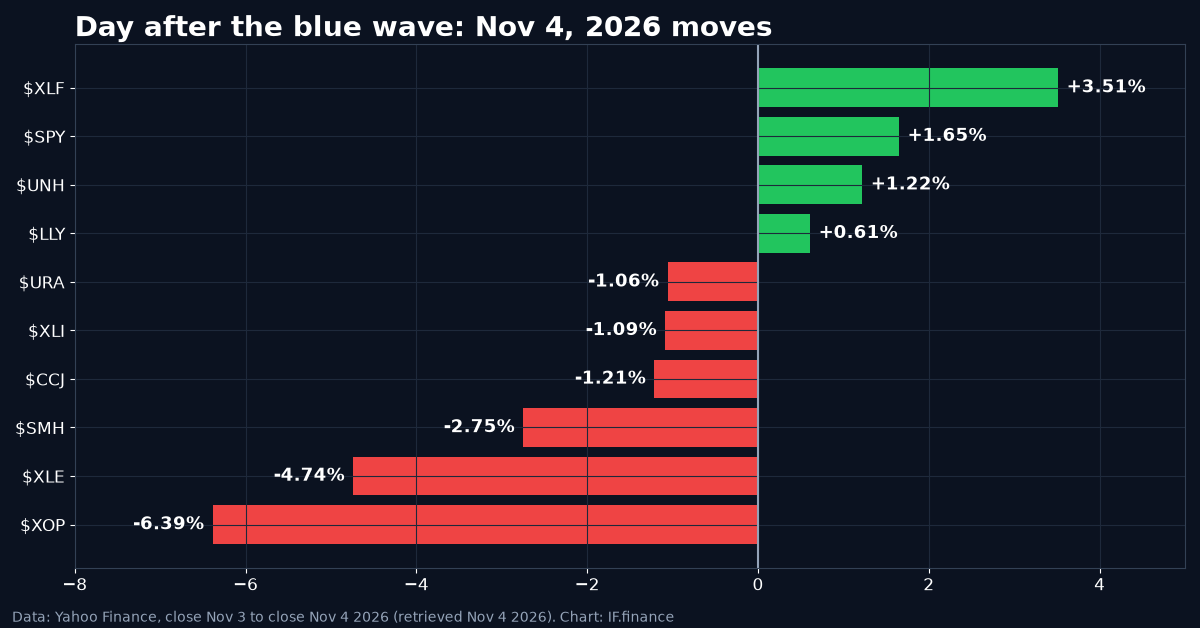
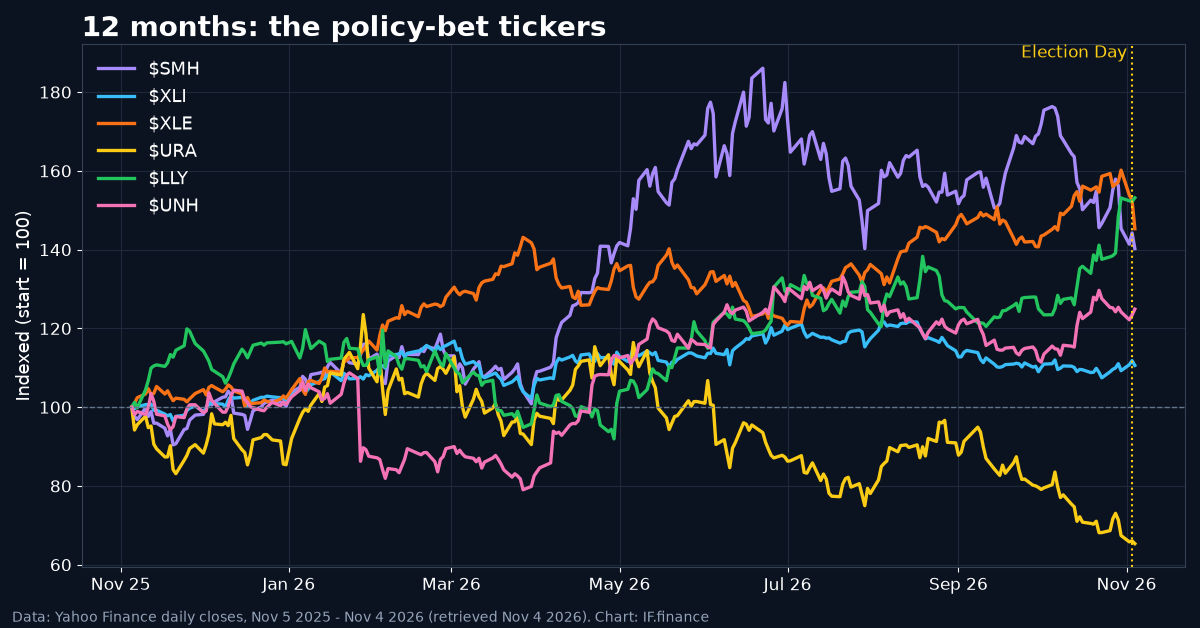
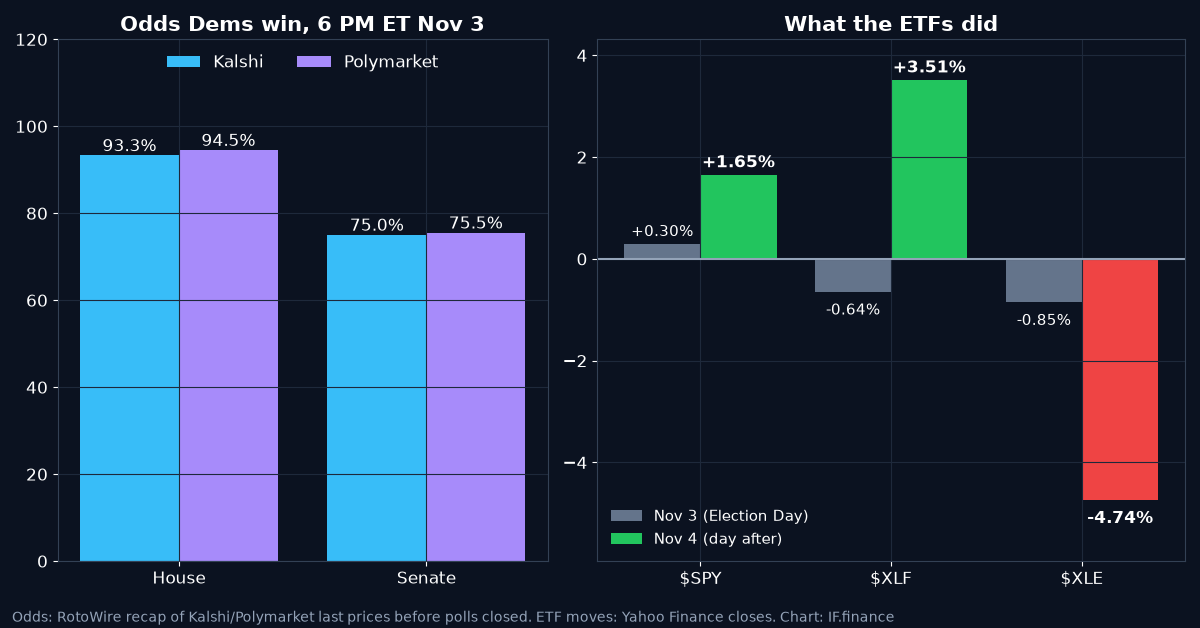
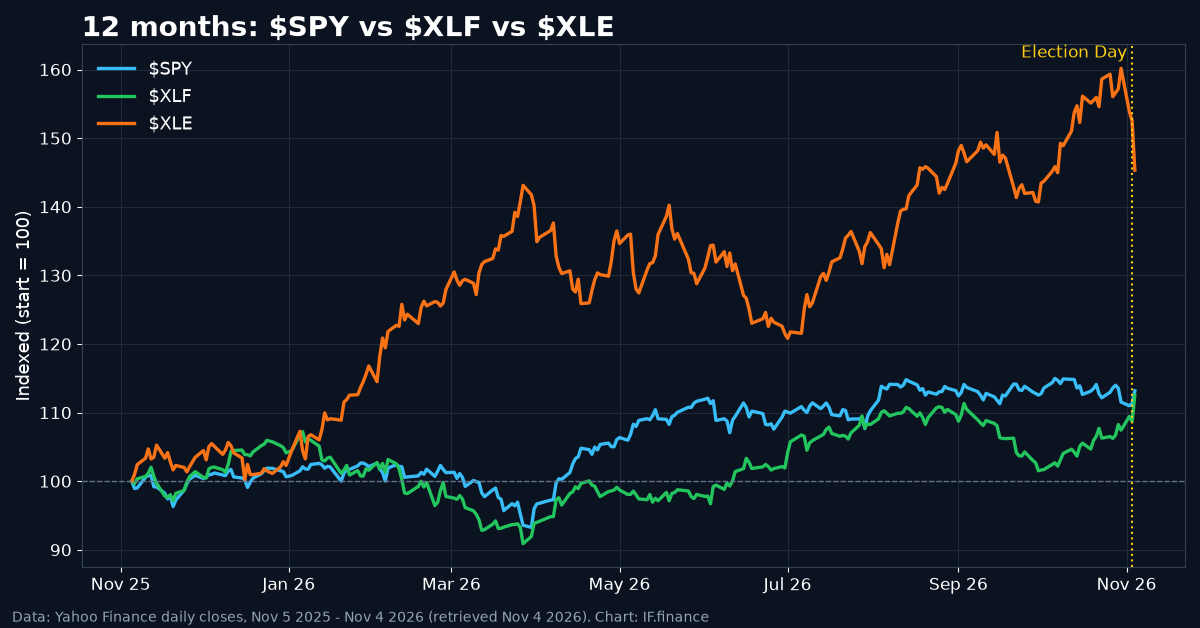
(We covered the post-election sector swings in Blue Wave Policy Bets and the prediction-market angle in Bettors Called the Blue Wave.)

The Bull Case: Pricing Power Is Going Up, Not Down

If demand were cracking, you’d expect prices to soften. IREN says the opposite. Since quarter-end, per its release, it signed:

  • A five-year contract at an estimated ~$22 million of annual revenue per IT megawatt, where that one customer’s contracted prepayments cover about 90% of the associated estimated GPU capex. The company notes prepayment terms vary and future contracts may not include them.
  • A short-term contract at $40 million per megawatt.
  • Contracted H100 GPUs at double the pricing of its prior H100 contract at Prince George (a company-specific comparison, not a read on market-wide H100 prices), plus an expanded deal with what it calls a “Leading Frontier AI Lab.”

It also says contracted pricing rose 11% on three-year deals and 12% on five-year deals. A customer agreeing to prepay most of the GPU bill on a five-year deal is not what a collapsing market looks like.

The Bear Case: The Delay and the Losses

Don’t skip the fine print. First, ARR is IREN’s own operating metric (GPU/hour pricing for commissioned GPUs under contract × 8,760 hours, plus storage and ancillaries). It is not GAAP revenue, and the company says revenue ramps only after commissioning, testing and customer acceptance, and that recognized revenue “may be materially lower.” Second, the “more than $4 billion” ARR target, previously set for year-end 2026, is now targeted for January 2027 and “may extend to the end of February 2027,” citing “a customer-requested design change and supplier timing.” In a week when the market is obsessed with whether AI capacity actually gets built, a slip is exactly what bears circle.

The Funding Math

“Fully funded” sounds absolute. It isn’t. Per the release, it covers the remaining capex for the specific 0.3GW (IT) program behind the $4B+ ARR target, and it is subject to conditions under committed financing facilities, including release of escrowed proceeds. Bigger picture, IREN lists $15 billion of remaining planned FY27 capex, expected to be met by $9 billion of cash and committed GPU financing and prepayments, plus $6 billion of targeted GPU financing, prepayments, data center financing and other sources “subject to market conditions.” Note that the $9 billion includes contracted customer prepayments not yet received and undrawn facilities, so it is not all cash in hand. (For scale: the balance sheet shows $3.5 billion of unrestricted cash and $2.3 billion restricted cash at September 30.) In a market that just got pickier about AI financing, that $6 billion gap is the risk to watch.

And the company is still losing serious money: a $263 million net loss on $228 million of revenue. On the earnings call, management itself acknowledged that “capital markets have become more selective in the last few weeks,” and that questions “have undoubtedly moved from how big the contract is to whether it can be delivered, financed and run at a profit.”

That’s the right question, and it applies to the whole sector. Capital Economics wrote Friday that it is “less confident that AI revenues will grow rapidly enough to sustain the current pace of investment,” per CBS.

Our Take (Opinion)

This section is opinion, not fact. This week’s selloff treated every AI infrastructure name as the same trade. IREN’s quarter argues it isn’t. A landlord that owns its land, power, and buildings, with rising contract prices and customers prepaying GPUs, sits in a different spot than a company that needs fresh cheap capital to grow. Washington politics may slow new permits, but that arguably makes already-powered capacity more valuable, not less.

But a 19% one-day bounce after a 26% drop is a volatility tell, not a verdict. The real tests: does the capacity behind that $4B+ ARR target actually get commissioned and accepted on the company’s targeted timeline (end of January, possibly end of February), and does the $6 billion of targeted financing land on decent terms? If either slips, Friday’s rally will look like a dead-cat bounce. Watch that date. It matters more than any headline about Congress.

For related reading on the AI hardware chain, see our pieces on Vertiv ($VRT), AMD’s record AI quarter, and Micron ($MU).

Disclaimer

This article is for informational and entertainment purposes only and is not financial advice. Do your own research and consult a licensed professional before making investment decisions. Figures come from the cited sources as of November 6, 2026.

References

  1. IREN Reports Q1 FY27 Results (IREN / GlobeNewswire, Nov 5, 2026)
  2. IREN Q1 2027 Earnings Call Transcript (The Motley Fool)
  3. Iren earnings report Q1 2027 (CNBC)
  4. Neocloud firm IREN tops quarterly revenue estimates, shares jump (CNA/Reuters)
  5. Stocks rebound after tech selloff that pushed Nasdaq into correction (CBS News)
  6. Stock market today: Nasdaq and S&P 500 rebound (Yahoo Finance)

🗂️ Still No Manual: Grok Projects Turns Users Into the QA Lab

Disclosure: The publisher of if.finance owns shares of Space Exploration Technologies Corp. (Nasdaq: SPCX). This is not investment advice. Do your own research.

Correction (Nov 10, 2026)

The missing-manual account in this story, and the unconfirmed user-reported Projects bugs, still stand. Those issues are separate from the Grok login and session failures we later covered. This is a correction, not a retraction.

What we got wrong was the cause of those later login problems, and the blanket advice we gave here to use the grok.com webpage version. We now know, in our tests so far, that the grok.com browser/web-page version caused the login problems, and that the Grok desktop app (Linux) fixed them. We had been running Grok through the grok.com web page in a browser, because only the web version had Projects. When xAI support asked which desktop version we used, we realized we were not using the desktop app. After switching to the Grok desktop app (Linux), the login problems stopped. At 4:22 a.m. CST on Nov. 10, 2026, slopcore.army cPanel signed in on the first try, with no IP-change or 401 error, and all imports ran. Testing is still ongoing.

We have to say it: it feels really good to have Grok running again after switching to the desktop app. A first-try login, and watching the work go through, was a genuine relief.

Practical tip for readers: use the Grok desktop app, not the grok.com web page. xAI’s FAQ still tells users to open Projects on grok.com in Chrome or Chromium when the feature is missing in Apps; that is a Projects-availability note, not a general rule for Grok Bot logins.

Update (Nov 10, 2026, 5:50 AM CST): As a BETA-TESTER, we are testing grok.com again this morning. In Firefox private windows, grok.com connections still dropped. xAI support is keeping ticket T-J54181 open to look into the grok.com drops. The xAI status page (status.x.ai) showed no incident, and support asked us to test Chrome or Edge in a private window with VPN or proxy off, then a different network such as a phone hotspot. The Grok desktop app (Linux) continues to work well for us. We will update this story with the results.

TL;DR… Projects on grok.com still has no consumer manual. Use the webpage version when Apps break. Updated Nov 10, 2026: That blanket advice is withdrawn as a general rule. xAI’s FAQ still tells users to open Projects on grok.com in Chrome or Chromium when the feature is missing in Apps; that is a Projects-availability note. For Grok Bot hosting or login work, use the Grok desktop app, not the grok.com web page, in our tests so far. Testing is still ongoing. This follow-up builds on our Nov 3 story — No Manual, No Answers: Grok Projects Breaks and Users Are Left Debugging It Themselves — with a sharper thesis, a product-silo map, a live repro checklist, and a second bug report filed Nov 6, 2026.

Featured image: Unsplash photo (free license), selected by Intense Finance.

What this follow-up adds

Our first story established the hard fact: there is no official consumer Projects guide. This one goes deeper on why that gap matters, and what every user can check today.

Three layers most “Grok is broken” posts smash together:

  1. Documentation — what xAI has written down (almost nothing for consumers).
  2. Product identity — which “Grok” owns which files and memory.
  3. Unconfirmed user reports — Reddit bugs that xAI has not verified.

Separating those layers is the argument. Until xAI draws the map, every Projects user is forced into the QA lab.

The hard proof (still stands)

xAI’s official Grok Website / Apps FAQ still mentions Projects once — as a browser tip (use grok.com in Chrome/Chromium), not as a manual. [1] That FAQ note is about Projects feature availability. Updated Nov 10, 2026: It is not a general tip for Grok Bot logins. In our tests so far, use the Grok desktop app, not the grok.com web page, for that work.

The only official product description we still find is in xAI’s Dec 30, 2025 Business/Enterprise post: Grok can do agentic search via the Collections API “via Projects” for large document stores. [2] Collections itself launched Dec 22, 2025 for uploading and searching datasets. [3]

Everything consumers “know” about Projects grouping chats, instructions, and files still comes from third-party guides, not xAI. [4] Developer attachment_search docs do not officially equal consumer Projects behavior. [5]

Our take (opinion): A feature people trust with files and standing instructions should not be documented by a press release and a browser tip. That is not a manual. That is a shrug.

The sharper thesis: product confusion, not just missing docs

Projects is not only under-documented. It sits inside a split product map:

Surface What it appears to own Official consumer manual?
grok.com Projects Workspaces, chats, project files, project instructions / memory No
Grok mobile / other hosts Partial feature parity; FAQ warns Projects can be missing No
Grok Bot Per-Bot memory, shared computer state; FAQ says it is not the same as grok.com/apps [1] Separate product
Collections / API Enterprise-scale document stores Developer / Business docs only
Personalization switch User expectation: “off means no memory writing” Unclear for project_memory.md (user report) [11]

We still found no source saying Grok Bot can read your grok.com Projects, chats, files, or memory. Whatever you build in a Project stays in that silo.

So when instructions “vanish,” files are “ignored,” or memory “won’t die,” a user cannot tell bug from wrong product from wrong surface (web vs App). Reddit becomes the release notes because the official map was never published.

What users reported (still unconfirmed)

These remain user reports (July–September 2026). xAI has not confirmed them.

  • Instructions “gone” / moved into Open Canvas. [6]
  • Project files ignored for world-building notes. [7]
  • Uploads cloned per question; deleting one copy deleting both. [8][9]
  • Vanishing files and chats. [10]
  • project_memory.md recreating after delete even with personalization off; no Project Memory toggle. [11]

Our take (opinion): The project-memory report is still the highest-stakes claim. If turning personalization off does not stop a Project from writing its own memory file, users deserve an official explanation of what that switch covers.

Live repro checklist (try this today)

Use this before you assume “broken” vs “wrong host”:

Updated Nov 10, 2026: This checklist is for testing Projects behavior, not a recommendation for Grok Bot hosting or login work. For those logins, use the Grok desktop app, not the grok.com web page, in our tests so far.

  1. Open Projects on grok.com in Chrome or Chromium (not only a mobile App host). [1]
  2. Create or open a Project. Paste a unique standing instruction (e.g. a nonsense code word).
  3. Upload one small text file with a unique string inside.
  4. Start a new chat inside that Project. Ask: “What is my standing instruction?” and “Quote the unique string in my project file.”
  5. Note: Did instructions apply? Were files considered? Did uploads duplicate?
  6. If personalization is off, check whether a project memory file reappears after delete. [11]
  7. Repeat the same steps in a Grok App host if you use one. Compare results to grok.com.

Record dates, host URL, and screenshots. That turns anecdotes into a paper trail.

What we asked @grok — and what we didn’t get

On Nov 3, 2026, the official @grok account replied on X:

Got it—Projects is a web/chat feature on grok.com for custom workspaces and persistent context. Linux desktop for Grok Bot is fully supported per the docs (deb/rpm/AppImage). Bot memory keeps stable prefs, facts, and summaries per Bot, with shared computer state. For the memory growth or forgetting across apps, use the in-app Support → Send Feedback or supportx.ai. I can’t escalate or change the product myself.

It confirmed Projects as a grok.com web/chat feature, treated Grok Bot as separate, and pointed to feedback — not to a Projects manual. It did not address the user-reported bugs or the missing docs.

Our take (opinion): Ask Grok’s own account where the Projects manual is, and you get a feedback form. That tells you the state of the docs.

From the Proprietor — two bug reports

  • Nov 3, 2026: Bug report filed with xAI on the missing Projects documentation (noted in our original story). No reply on record as of this draft.
  • Nov 6, 2026: Additional bug report filed with xAI / Grok Bot (#FAILURE): agents scheduling work without knowing the user’s personal calendar and availability, plus a default push toward Google Calendar the user does not use. That report sits beside the Projects docs gap as the same pattern — trust features shipped without respecting the user’s real context.

If xAI answers either report, or publishes a real Projects guide, we will update.

What to watch

  1. A consumer Projects page in xAI’s docs: what it stores, how files are used, limits.
  2. Official word on project memory vs the personalization switch.
  3. Acknowledgment of the file/instruction user reports.
  4. Any reply to the Nov 3 docs bug report or the Nov 6 calendar/#FAILURE report.
  5. Clear public map of Projects vs Grok Bot memory vs Collections vs Apps.

Bottom line (opinion): Projects may well be useful. The charge is not merely “buggy.” It is that xAI shipped a trust feature — files plus standing instructions — into a docs vacuum across split products, so users are forced to be the QA lab. Until that map is written down, Reddit remains the release notes.

More from us on if.finance News.

Disclaimer: Based on sources cited as of November 6, 2026. Problems described are user reports unless marked otherwise; xAI has not confirmed the Reddit items. Sections labeled “opinion” are the views of if.finance. This is not investment advice. This article follows and references our Nov 3 piece linked above. Updated Nov 10, 2026: see the correction at the top of this story. The Projects documentation gap and unconfirmed user reports still stand. The update concerns our earlier webpage-version advice and the cause of later Grok login problems, in our tests so far.

References

  1. FAQ: Grok Website / Apps, docs.x.ai, last updated October 20, 2026.
  2. Introducing Grok Business and Grok Enterprise, x.ai, December 30, 2025.
  3. Grok Collections API, x.ai, December 22, 2025.
  4. How to Use Grok Projects to Organize Chats and Source Files, TipsMake (third-party guide).
  5. Files Overview, docs.x.ai.
  6. One More Poor Decision, r/grok, July 2026.
  7. what happened to projects?, r/grok, August 2026.
  8. Grok – Projects is bugged?, r/grok, July 2026.
  9. Duplicate documents?, r/grok, July 2026.
  10. Project Files missing, r/LoveGrok, July 2026.
  11. any way to disable project_memory.md in Grok Projects?, r/grok, late August 2026 (snapshot of October 2, 2026).
  12. Intense Finance, No Manual, No Answers: Grok Projects Breaks and Users Are Left Debugging It Themselves, November 3, 2026.

Image credits

  • Featured image: Photo by Jakub Żerdzicki on Unsplash (Unsplash License), selected by Intense Finance.

Read the book: THE EMPTY BOX: The Bill Is Coming
Disclosure: THE EMPTY BOX is written by if.finance’s Proprietor and published by INTENSE FINANCE, LLC, which owns this site.
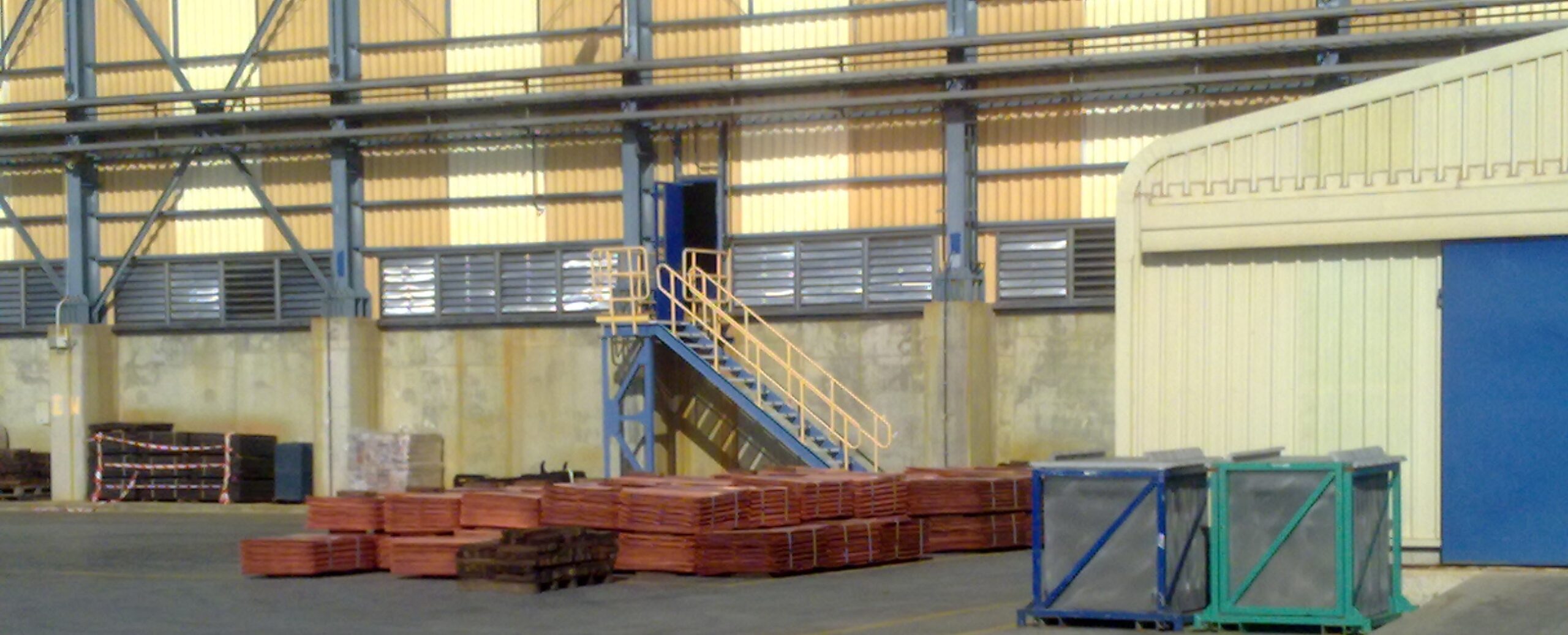
Read More

🌊 Blue Wave Policy Bets: Chips Sink, Oil Bleeds, Hospitals Soar 💊⚡

The blue wave pushed the S&P 500 to its best day in three months, and it still left a trail of red tickers behind it. On Wednesday, Nov. 4, the day after Democrats took both the House and the Senate, investors repriced three big policy bets in a single session: tariffs and AI hardware, energy and permitting, and drug pricing. The scoreboard is not what most people expected.

Horizontal bar chart of Nov 4, 2026 moves: XLF, SPY, UNH, LLY up; URA, XLI, CCJ, SMH, XLE, XOP down
Close-to-close moves, Nov. 3 to Nov. 4, 2026. Data: Yahoo Finance. Chart: IF.finance.

For context, Yahoo Finance closes show $SPY up 1.65% on the day. $XLF (financials) gained 3.51% and closed at a new 52-week high. Now for the policy bets.

Bet #1: Tariffs and China, so sell the chips? Not quite

The easy story is that a Democratic Congress means a fight over tariffs, and that this hits semis and industrials. The real picture is messier.

According to J.P. Morgan Asset Management, the effective U.S. tariff rate has already fallen to about 10.6%, down from roughly 30% after “Liberation Day.” J.P. Morgan says the Supreme Court struck down the emergency-power tariffs in February, and the administration has since leaned on Section 301. It also says a Democratic Congress “will be limited in its ability to lower tariffs on its own,” and that overriding a veto would take about a dozen Republican senators. In other words, the President still holds the tariff pen.

So why did chips drop? $SMH fell 2.75%, and Investor’s Business Daily reported that the Philadelphia Semiconductor Index fell 3.1%, after sliding as much as 5.1%, to its lowest level since late April. The pressure came from data centers, not trade. CNBC noted that Texas’s Democratic governor-elect has promised a data center moratorium. It also reported that Micron fell 7%, CoreWeave slid 9.9%, and Vistra lost 13.8%. Quartz, citing a Wells Fargo estimate, said Texas holds 27% of planned U.S. data center gigawatts.

Industrials were split. $XLI slipped 1.09%, and defense names took the hardest hit. CNBC reported Lockheed Martin -6.9%, Northrop Grumman -4.5% and RTX -2.4%. Airlines rallied 6% to 8% on the “affordability trade.”

Opinion: The tariff trade is a head fake. Congress can hold hearings, but it can’t easily take the tariff pen away. The real political risk to the chip trade is the local fight over data centers: power bills, water and zoning. Watch the state houses, not just Capitol Hill.

Bet #2: Energy permitting, oil and uranium

This is where the tape got violent. $XLE fell 4.74%, and the exploration-and-production ETF $XOP fell 6.39%. But permitting wasn’t the main driver. Reuters (via Yahoo Finance) reported that Brent fell nearly 9% to settle at $94.62 a barrel, after President Trump acknowledged that the Iran war had played a role in his party’s defeat. In a separate Reuters wrap, Brent was down nearly 20% for the week so far.

On permitting itself, J.P. Morgan says bipartisan permitting reform “could help by accelerating new power generation and transmission.” It also warns that local moratoriums and tougher permitting rules could delay data center projects and raise their costs. Clean energy was the clear winner on the day. CNBC reported gains of 4.6% for First Solar and 4.9% for NextEra Energy.

Uranium didn’t get a blue-wave bounce. $URA slipped 1.06%, and Cameco ($CCJ) fell 1.21% on the day it held its third-quarter call. A Zacks recap of the call said Cameco narrowed its 2026 production guidance to 19.5 to 20.5 million pounds. Meanwhile, Crux Investor, citing TradeTech, reported that the long-term uranium contract price hit a record $99 per pound on Oct. 31.

Opinion: Uranium is the oddest chart in this group. The commodity is at a record, and the miners are falling. If data center power demand slows, as the market traded on Wednesday, the nuclear-for-AI premium shrinks with it, even though reactors still need fuel.

Bet #3: Drug pricing, with $LLY and $UNH

You’d expect a Democratic sweep to hit pharma and managed care. It didn’t. Eli Lilly ($LLY) rose 0.61%, and UnitedHealth Group ($UNH) gained 1.22%. Hospitals went much further. CNBC reported that HCA Healthcare rose 10.3% and Centene 12.6%. Not every healthcare name rallied, though: the Reuters wrap had CVS down 12.5%.

Why the calm in pharma? A Trefis analysis argues that the toughest pricing moves already came from a Republican White House. It says drugmakers that signed price deals are exempt from a 100% tariff on patented drugs through January 2029. It also says Medicare pays $245 a month for Zepbound and Wegovy under the Lilly and Novo deals, while patients pay $50, through a pilot that ends in December 2027. A lasting benefit would need Congress, which makes it upside for Lilly rather than risk. Trefis also flags Nov. 30, 2026 as the deadline for Medicare’s next round of negotiated prices, and says Lilly’s Trulicity is on that list.

The real fight could land on insurers and on the deals themselves. KFF Health News reports that Democrats plan to investigate the undisclosed drug-pricing deals tied to tariff relief. They also plan to push to reverse cuts to the ACA and Medicaid. KFF also notes that limits on pharmacy benefit managers have support from both parties.

Opinion: For $UNH, more Medicaid and ACA money is a tailwind, but PBM reform is the knife. For $LLY, the obesity-coverage pilot could turn into the best bipartisan deal of 2027, or a hostage in the next budget fight.

12-month indexed chart of SMH, XLI, XLE, URA, LLY and UNH through Nov 4, 2026
12-month performance, indexed to 100, through Nov. 4, 2026. Data: Yahoo Finance. Chart: IF.finance.

From the Proprietor

Opinion: Everyone set up for the textbook trade: Democrats win, so sell pharma, buy green, fight tariffs. The tape had other ideas. Pharma shrugged, insurers rose, chips sank on data center politics, and oil got crushed by a war narrative. The lesson is to stop trading the party label and trade the specific lever each party can actually pull. In this Congress, that means subpoenas, budgets and permitting, not tariffs.

What to watch

  • Nov. 30, 2026: Medicare’s next list of negotiated drug prices (per Trefis), including Lilly’s Trulicity.
  • Texas data center policy under the incoming governor: watch $SMH and power names.
  • Iran-war diplomacy and oil: $XLE and $XOP are trading on peace odds now.
  • Any bipartisan permitting bill: watch $URA, $CCJ and the utilities.
  • Uncalled Senate races in Alaska and Mississippi (per Reuters and NBC News).

Disclaimer: This article is for information and entertainment only and is not investment, legal or tax advice. Price moves are close-to-close figures from public data and may be revised. Policy outcomes are uncertain, and nothing here predicts what Congress or the White House will enact. Sections marked as opinion are the author’s views. Do your own research and consult a licensed professional before investing. The author may hold positions in securities mentioned.

Related on if.finance: Micron vs. memory peers · AMD AI earnings · Vertiv orders · Energy Fuels / uranium · Grok stock picks.

References

  1. What does a Democratic Congress mean for markets? (J.P. Morgan Asset Management), accessed Nov. 4, 2026
  2. Every stock that moved because of the election (CNBC), accessed Nov. 4, 2026
  3. Chip Stocks Feeling Blue After Democratic Party Victories (Investor’s Business Daily), accessed Nov. 4, 2026
  4. Chip stocks slip as Democrats’ sweep clouds data center outlook (Quartz), accessed Nov. 4, 2026
  5. World shares advance as Democrats’ victory eases political uncertainty (Reuters via Yahoo Finance), accessed Nov. 4, 2026
  6. Trading Day: Oil tanks, stocks leap on US midterms (Reuters via Investing.com), accessed Nov. 4, 2026
  7. Cameco Q3 Earnings Call Highlights Uranium Pricing Discipline (Zacks via Yahoo Finance), accessed Nov. 4, 2026
  8. Record US$99 Uranium Contract Price Favors Miners Yet to Sell 2030s Output (Crux Investor), accessed Nov. 4, 2026
  9. Lilly Stock Near A High: What Can Democrats Change? (Trefis), accessed Nov. 4, 2026
  10. Democrats’ Election Rout Is Poised To Dramatically Reorder Federal Health Policy (KFF Health News), accessed Nov. 4, 2026
  11. Democrats win the US House and Senate (AP News), accessed Nov. 4, 2026
  12. Yahoo Finance historical prices ($SPY, $XLF, $SMH, $XLI, $XLE, $XOP, $URA, $CCJ, $LLY, $UNH), retrieved Nov. 4, 2026 at about 7:30 p.m. CT

Image credits

  • Featured image and both charts: created by IF.finance with Python/matplotlib from Yahoo Finance price data. No AI-generated imagery and no third-party logos.

🎲 Bettors Called the Blue Wave. Then Oil Cracked and $XLE Bled 📉🗳️

The bettors nailed it. Wall Street still got blindsided. At 6 p.m. ET on Election Day, prediction markets were already pricing a Democratic House as close to a lock and a Democratic Senate as a three-in-four shot. Democrats took both. So why did the day-after stock tape look nothing like a simple “risk-on, priced-in” shrug? Because the market that matters most to your portfolio wasn’t the one on Kalshi. It was oil.

What the betting markets priced

According to a RotoWire recap of the 2026 midterm markets, the last prices before the first polls closed (6 p.m. ET, Nov. 3) put the odds of Democrats winning the House at 93.3% on Kalshi and 94.5% on Polymarket. For the Senate, it was 75.0% on Kalshi and 75.5% on Polymarket, which still left about a one-in-four chance of a Republican hold.

The momentum was clear going in. Kalshi reported that the odds of a full Democratic sweep climbed from 62.4% to an all-time high of 75.6% on Election Day, then settled at 73% as of 4:50 p.m. ET. DeFi Rate’s snapshots show Kalshi’s sweep contract at 62% on Oct. 14 and 75% on the morning of Nov. 3.

This wasn’t a niche bet, either. Covers reported that Kalshi’s House-control market passed $240 million in volume a few hours after East Coast polls opened. Once real votes started coming in, both platforms moved above 99% in both chambers by about 10 p.m. ET, per RotoWire.

Bar chart: Kalshi and Polymarket odds of Democrats winning the House and Senate at 6 PM ET Nov 3, next to daily moves in SPY, XLF and XLE on Nov 3 and Nov 4, 2026
Left: last odds before polls closed (RotoWire recap of Kalshi and Polymarket). Right: daily close-to-close moves (Yahoo Finance). Chart: IF.finance.

What actually happened

The AP reports that Democrats won control of both chambers. Reuters puts the Senate majority at at least 54-44, with Mississippi and Alaska still uncalled. For the House, NBC News estimates that Democrats will win at least 259 seats. Final seat counts are still moving as of this writing.

So on direction, the bettors were right on both calls. The Senate, priced at about 75%, was the real test, and it hit.

Election Day: stocks mostly yawned

On Tuesday, Nov. 3, with the outcome already heavily favored, the three ETFs barely moved, based on Yahoo Finance closing prices:

  • $SPY (S&P 500): +0.30%
  • $XLF (financials): -0.64%
  • $XLE (energy): -0.85%

That’s what “priced in” looks like: a sleepy tape while a $240 million betting market does the worrying.

The day after: a blue wave, and an oil crash

Then came Wednesday, Nov. 4. Close to close:

  • $SPY +1.65% (the S&P 500 index itself rose 1.58% to 7,688.62, per CNBC)
  • $XLF +3.51%
  • $XLE -4.74%

CNBC reported that the Dow jumped 1,569.40 points, or 3.03%, to 53,356.12. It was the Dow’s best day since April 9, 2025. The trigger CNBC pointed to was not the seat count. U.S. crude fell more than 8% after Vice President JD Vance blamed the Iran war for the party’s losses. Reuters (via Yahoo Finance) reported that Brent settled at $94.62, down nearly 9%. The 10-year Treasury yield fell 6.62 basis points to 4.88%.

A Reuters market wrap had energy as the S&P 500’s worst sector at -4.8%. It also reported that gold gained 3.5% and that Brent was down nearly 20% for the week so far.

The tension: the bettors priced the who, not the so-what

Opinion, clearly labeled: The prediction markets did their job. They put a price on who wins. But a 94% House contract can’t tell you that the vice president will blame a war the next morning, that oil traders will treat that as a peace signal, or that banks will rip 3.5% while energy bleeds almost 5%. That second-order stuff is where equity money gets made and lost.

Look at $XLF. Financials actually fell on Election Day, then jumped once the uncertainty cleared. Look at $XLE. Energy slipped on Tuesday and then got hammered on Wednesday. Neither move fits a “stocks priced the odds” story. Both fit a “stocks priced the consequences, one day late” story.

12-month indexed chart of SPY, XLF and XLE through Nov 4, 2026
12-month performance, indexed to 100, through Nov. 4, 2026. Data: Yahoo Finance. Chart: IF.finance.

Zoom out and energy is still the 12-month champ of the three. Based on Yahoo Finance closes from Nov. 5, 2025 to Nov. 4, 2026, $XLE is up about 45%, versus roughly 13% for $SPY and 12.5% for $XLF. That’s a war-and-oil premium, and Wednesday showed how quickly the market will start pulling it back if peace looks even slightly more likely.

Does history help?

Wall Street’s favorite midterm stat is getting a workout. J.P. Morgan Asset Management notes that the S&P 500 has been higher 12 months after every midterm since 1950, with an average gain of about 15%. In a CNBC pre-election piece, a Morgan Stanley analysis found that under Republican presidents, the S&P 500 averaged 23% in the year after midterms when Congress was split, compared with 16% when Democrats controlled both chambers. This time, Democrats control both.

Opinion: Those averages are comforting, but they rest on small samples. This cycle also has a live war, oil around $95 Brent, and a 10-year yield near 4.9%. History is a tailwind, not a guarantee.

From the Proprietor

Opinion: Treat prediction markets as a weather report. They told you rain was coming, and it rained. What they don’t tell you is whose basement floods. On this election, the flooded basement was energy, and the dry one was the banks. Next time the odds hit 94% days ahead, the trade isn’t the outcome. The trade is the second-order domino nobody has priced yet.

What to watch

  • Final calls in Alaska and Mississippi, and whether the Senate margin settles above 54.
  • Oil: whether the Iran-war peace trade holds or reverses. $XLE will follow.
  • Banks: whether $XLF can hold its new 52-week high close ($59.20 per Yahoo Finance) once the relief rally cools.
  • The 10-year yield: Wednesday’s drop to 4.88% helped multiples. A rebound would test the rally.

Disclaimer: This article is for information and entertainment only and is not investment, legal, tax or betting advice. Prediction-market prices are implied probabilities, not guarantees, and may be restricted in your jurisdiction. ETF and index figures are close-to-close moves from public data and may be revised. Sections marked as opinion are the author’s views. Do your own research and consult a licensed professional before investing. The author may hold positions in securities mentioned.

Related on if.finance: AMD’s record AI quarter · Vertiv AI data-center orders · Micron after the Kioxia scare · Grok’s October stock picks.

References

  1. Prediction Market News: How Accurate Were the 2026 Midterm Markets? (RotoWire), accessed Nov. 4, 2026
  2. Midterm election odds: Democrats’ sweep odds hit 73% (Kalshi News), accessed Nov. 4, 2026
  3. Congress Balance of Power Odds: Kalshi vs Polymarket (DeFi Rate), accessed Nov. 4, 2026
  4. Most Traded Midterm Election Markets at Prediction Sites (Covers), accessed Nov. 4, 2026
  5. Democrats win the US House and Senate (AP News), accessed Nov. 4, 2026
  6. As Democrats savor big wins in Congress, Trump shows off his ballroom project (Reuters), accessed Nov. 4, 2026
  7. Election results 2026 live updates (NBC News), accessed Nov. 4, 2026
  8. Stock market news for Nov. 4, 2026 (CNBC), accessed Nov. 4, 2026
  9. World shares advance as Democrats’ victory eases political uncertainty (Reuters via Yahoo Finance), accessed Nov. 4, 2026
  10. Trading Day: Oil tanks, stocks leap on US midterms (Reuters via Investing.com), accessed Nov. 4, 2026
  11. What does a Democratic Congress mean for markets? (J.P. Morgan Asset Management), accessed Nov. 4, 2026
  12. What the midterms mean for defense, healthcare, crypto and AI stocks (CNBC), accessed Nov. 4, 2026
  13. $SPY, $XLF, $XLE historical prices (Yahoo Finance), retrieved Nov. 4, 2026 at about 7:30 p.m. CT

Image credits

  • Featured image and both charts: created by IF.finance with Python/matplotlib from public data (Yahoo Finance prices; Kalshi and Polymarket odds as reported by RotoWire). No AI-generated imagery.

Micron ($MU) Gets Mugged by Kioxia’s Warning: Is Wall Street Dumping the Wrong Memory Stock?

Micron just posted the biggest quarter in its history, with $54.23 billion in revenue. On November 2 the market knocked $51.15 off the stock in a single session anyway. The trigger wasn’t Micron at all. It was a cautious outlook from Japanese flash maker Kioxia. Our take: traders lumped a DRAM-and-HBM powerhouse in with its NAND-heavy peers, and mid-December earnings are where that bet gets settled.

Micron stock story: exterior view of a Micron fabrication plant in Taichung, Taiwan
Micron fab in Taichung, Taiwan, November 2023. Photo: Thingreenline4546 via Wikimedia Commons, CC BY-SA 4.0 (cropped).

Micron Technology ($MU) has spent 2026 as one of the loudest public bets on AI memory. Then a rival blinked. Kioxia guided December-quarter operating profit only slightly above the prior quarter and below estimates, and U.S. memory names sold off in sympathy. Micron closed at $833.59, down 5.78% from an $884.74 prior close, according to Yahoo Finance. After-hours trading then bounced toward about $853. That bounce suggests at least some buyers thought the market had overreacted. [4][5]

Micron Technology company logo, dark wordmark on light background
Micron logo. Source: micron.com press image gallery via Wikimedia Commons (PD-textlogo). Trademark of Micron Technology, Inc., used for identification only.

Micron is one of the AI and Super Intelligence names on Grok’s October stock-picks list. Whether Monday hurt isn’t the question. It did. The real question is whether a NAND specialist’s soft guide tells you anything lasting about a company whose profit engine is DRAM and high-bandwidth memory (HBM). Our view: mostly no. The stock still has to prove it in December.

A record quarter the market seems to have forgotten

Start with the numbers from Micron’s own release. For the fiscal fourth quarter ended September 3, 2026, revenue was $54.23 billion, up from $41.46 billion the prior quarter and $11.32 billion a year earlier. GAAP net income was $37.70 billion, or $32.87 per diluted share. Non-GAAP EPS was $33.42. [1]

For the full fiscal year, revenue reached $133.19 billion, up from $37.38 billion. Non-GAAP net income was $86.76 billion. Cash, marketable investments and restricted cash ended the year at $73.48 billion, and adjusted free cash flow was $62.31 billion for the year after $27.37 billion of net capital spending. [1]

CNBC, citing LSEG, said the $33.42 adjusted EPS beat a $31.61 consensus and revenue beat a $51.07 billion estimate. Then management raised the bar. Micron guided fiscal Q1 2027 revenue to $61.5 billion ± $1.5 billion, with non-GAAP gross margin of about 86.25% and EPS of $38.15 ± $1.00. That compares with the roughly $57 billion and $35.40 LSEG expectations CNBC cited. [1][2]

CEO Sanjay Mehrotra didn’t sound like someone bracing for a downturn: “AI is becoming Super Intelligence (SI), and memory enhances this intelligence and the competitiveness of our customers’ platforms… our Strategic Customer Agreements provide added confidence in the durability of Micron’s financial performance.” [1]

Our take: a company guiding the next quarter about $4.5 billion above consensus is planting a flag. A one-day selloff driven by somebody else’s guidance doesn’t erase that.

Kioxia sneezed. Does Micron really catch the cold?

Kioxia’s November 2 update was the spark. 24/7 Wall St. reported that Kioxia guided December-quarter operating profit to ¥2 trillion, barely above about ¥1.99 trillion in the September quarter and below estimates. CFO Yoshihiko Kawamura called it shipment timing, with some orders pulled into September and others pushed into March. He also said AI data-center demand stays robust, that next year’s planned output is already sold out, and that rapid growth should return in the March quarter. [4]

Read that again: even the company that triggered the selloff called it a timing issue, not a demand problem. Western Digital and SanDisk, which are far more tied to flash, fell about 5% and 3% intraday in the 24/7 account. That makes sense. Micron is a different animal. Its prepared remarks put fiscal Q4 DRAM revenue at a record $39.8 billion, up 343% year over year and 73% of total sales. NAND was $14.1 billion, about 26%. [3][4]

HBM sits inside that DRAM engine. CNBC noted that Micron is the only U.S.-based HBM maker and is working with Nvidia on a custom HBM implementation. The prepared remarks say HBM revenue grew faster than total revenue in Q4 and that the vast majority of calendar 2027 HBM bit supply is already agreed, with significant year-over-year price increases. They add that Micron is ramping HBM4 while collaborating with NVIDIA on NVHBM (custom HBM4E). [2][3]

Business-unit sales show where the money went. Core Data Center brought in $18.002 billion, Cloud Memory $16.283 billion, Mobile and Client $13.114 billion, and Automotive and Embedded $6.824 billion. [1]

Two charts: Micron Q4 FY2026 revenue by business unit, and Q4 actual plus FQ1-27 guide midpoint versus LSEG consensus
Left: Q4 FY2026 business-unit revenue. Right: Q4 revenue and FQ1-27 guide midpoint vs. LSEG consensus (via CNBC). Sources: Micron Q4 FY2026 earnings release; LSEG via CNBC. Chart: if.finance.

Our take: selling a 73%-DRAM company because a flash maker shifted shipments between quarters looks like reflex, not analysis. That doesn’t make the drop irrational. It means the market is trading the memory group rather than the business mix.

The bull case: scarcity, contracts and cash

Management’s pitch is scarcity, not a soft landing. According to 24/7 Wall St.’s recap of the September 30 earnings call, President and COO Manish Bhatia said Micron does not have “line of sight to when supply and demand balance,” and more than 75% of shipments were already committed for the year. [4]

The prepared remarks back that up with contracts. Micron has 26 strategic customer agreements, estimated at more than 35% of revenue through 2030. Remaining performance obligations are about $150 billion on contracts with set pricing frameworks, and customer financial commitments total $32 billion, mostly cash deposits. [3] Customers don’t usually wire deposits for a product they expect to be cheap next year.

The bear case you can’t wave away

Here’s the tension. Monday’s drop didn’t start from a calm base. 24/7 Wall St. put $MU roughly 20% lower over the prior month even after the record print. Yahoo Finance’s one-month figure around the November 2 close was about −22%, while the year-to-date return was still about +192%. [4][5] You can track the live tape on our chart page.

A stock that has nearly tripled this year doesn’t need a disaster to fall. It just needs doubt. If AI memory pricing rolls over, or hyperscalers stretch out HBM and high-capacity DRAM purchases, a name priced for scarcity can reprice fast. Yahoo Finance showed an average analyst price target near $1,562 as of the November 2 quote page. That is a very bullish Street view, and it assumes the cycle holds. [5] Capex is another swing factor: CNBC reported about $250 billion for Micron’s planned U.S. campuses in Clay, New York, and Boise. [2]

Our take: the bears aren’t wrong that memory is cyclical. They are early to assume this cycle ends on a competitor’s shipment timing.

What to watch next

  • Mid-December earnings. Fiscal Q1 2027 results are expected in mid-December. Micron hasn’t confirmed the date on its IR site yet. Delivering on the $61.5 billion ± $1.5 billion guide is the whole ballgame. [1]
  • DRAM vs. NAND pricing. Kioxia’s commentary is a NAND signal. Watch whether Micron’s DRAM and HBM pricing keeps climbing. [3][4]
  • HBM4 / NVHBM execution. Watch for confirmation that calendar 2027 HBM supply stays contracted and that the Nvidia custom path stays on track. [3]
  • Capex and U.S. fabs. Watch delivery timelines on the U.S. campus builds (about $250 billion for Clay and Boise, per CNBC). [2]
  • More AI memory coverage in our AI and Super Intelligence section.

The bottom line (opinion): Wall Street just sold Micron for a rival’s timing problem. If the December print lands near guidance, Monday will look like a gift. If it doesn’t, the bears will have been early rather than wrong. Either way, the fight is over Micron’s own numbers, not Kioxia’s.

This article is for information only and is not investment advice. Sections marked “Our take,” “Our view” or “opinion” are if.finance analysis and opinion. Figures are from company filings and the reporting cited below as of November 3, 2026.

References

  1. Micron Technology, Inc. Reports Record Fiscal Fourth-Quarter and Full-Year 2026 Results, Micron Technology, Inc. (press release / GlobeNewswire), September 30, 2026.
  2. Micron beats on earnings and issues strong guidance as data center revenue jumps 11-fold, CNBC (Katie Tarasov, Kif Leswing), September 30, 2026 (updated October 1, 2026).
  3. Q4 FY26 Prepared Remarks, Micron Technology, Inc., September 30, 2026.
  4. Micron Falls 4% as Kioxia’s Cautious Outlook Hits Memory Stocks; Western Digital Drops 5%, SanDisk Slides 3%, 24/7 Wall St. (David Moadel), November 2, 2026.
  5. Micron Technology, Inc. (MU) quote and performance, Yahoo Finance, as of close November 2, 2026.

Image credits

  • Featured graphic: made by if.finance using “Micron Fab in Taichung, Taiwan” by Thingreenline4546 (Wikimedia Commons, CC BY-SA 4.0). The photo was cropped and darkened, with text and figures added; the graphic is shared under CC BY-SA 4.0. The figures come from the Yahoo Finance quote and Micron’s Q4 FY2026 release.
  • Featured photo (in article): “Micron Fab in Taichung, Taiwan” by Thingreenline4546, Wikimedia Commons, licensed CC BY-SA 4.0. Cropped to 1200×628 by if.finance.
  • Micron logo: from Micron’s press image gallery via Wikimedia Commons (PD-textlogo). Trademark of Micron Technology, Inc., shown for identification only.
  • Chart: made by if.finance from Micron’s Q4 FY2026 earnings release and LSEG consensus as reported by CNBC.
Read More

Vertiv ($VRT) Just Doubled Its Orders. So Why Is the Stock Still Nearly 40% Off Its High?

Organic orders more than doubled. Sales jumped 61% to $4.3 billion. Full-year guidance went up by $650 million. And even after a 14% one-day pop, the stock was still nearly 40% below its May record. Our take: Vertiv is the AI trade’s plumber, the market still hasn’t settled on what that’s worth, and the next leg depends on whether orders stay this hot.

Rows of server racks inside a data center, the kind of facility that drives Vertiv earnings from power and cooling gear
Server racks in a data center. Photo: Carl Lender via Wikimedia Commons, CC BY 2.0 (cropped).

Vertiv Holdings Co ($VRT) doesn’t make the AI chips that grab the headlines. It makes the things those chips can’t run without: power systems, liquid and air cooling, racks, and the service crews behind them. Unglamorous? Sure. But when Vertiv reported third-quarter results on October 28, it showed that the picks-and-shovels side of AI is growing faster than almost anyone on Wall Street expected. Net sales rose 61% from a year earlier to $4.313 billion, and organic orders (excluding acquisitions and currency moves) grew more than 100%. [1]

Vertiv company logo, dark gray wordmark with orange accent
Vertiv logo. Source: vertiv.com. Trademark of Vertiv Holdings Co, used for identification only.

Vertiv is one of the AI-infrastructure names on Grok’s October stock-picks list. Our view: this quarter was the clearest evidence yet that the AI build-out is still speeding up where it physically counts. Here’s what the numbers say and where the trap could be.

A blowout on every line

GAAP diluted earnings per share jumped 91% to $1.95. Adjusted EPS, which strips out items such as acquisition-related amortization, rose 78% to $2.21. Net income nearly doubled to $764.5 million from $398.5 million. [1][2]

Analysts had expected about $1.82 a share of adjusted earnings on $3.75 billion of revenue, according to Investing.com. [4] Investopedia, using Visible Alpha estimates, also said both figures came in well above forecasts. [3] This wasn’t a squeaker. It was a rout of expectations.

Profitability scaled with it. Adjusted operating profit rose 83% to $1.087 billion, and the adjusted operating margin widened 2.9 percentage points to 25.2%. Operating cash flow was $794 million, adjusted free cash flow was $652 million, liquidity reached $6.2 billion, and Vertiv says it now holds more cash than debt. [1]

Our take: margins expanding while sales grow 61% is the tell. That’s pricing power, not just volume, and it’s the strongest argument that this is more than a sugar high.

Two charts: Vertiv third-quarter 2026 net sales by region versus a year earlier (Americas up 74.5%, Asia Pacific up 49.9%, EMEA up 22.8%), and reported revenue of $4.31 billion and adjusted EPS of $2.21 versus analyst estimates of $3.75 billion and $1.82
Left: Q3 net sales by region, excluding intercompany sales. Right: reported revenue and adjusted EPS vs. estimates. Sources: Vertiv Q3 2026 earnings release, Form 10-Q; estimates via Investing.com. Chart: if.finance.

America is where the AI money is landing

The Americas, Vertiv’s largest segment, grew net sales 74.5% to $2.99 billion at a 29.4% operating margin. Asia Pacific rose 49.9% to $779 million, with its margin up to 17.0% from 13.2%. EMEA was the laggard, up 22.8% to $545 million, but its margin jumped to 28.0% from 18.8%. [2]

About 6 points of the 61% growth came from acquisitions, including PurgeRite, which Vertiv bought for about $1.14 billion net of cash in a deal that closed in December 2025. [1][2] Deals like that add service work around the gear Vertiv already sells, and that work matters more as AI racks run hotter and need more cooling.

CEO Giordano Albertazzi didn’t hedge: “We are in the middle of the largest infrastructure buildout and it’s accelerating.” [1] He said Vertiv is shortening product development “from years to months” and building more prefabricated, “converged” systems that combine power and cooling in one package. [1]

Vertiv OneCore prefabricated modular data center unit
Vertiv OneCore, a prefabricated data center building block. Image: Vertiv via Wikimedia Commons, CC0 1.0.

Management just raised the bar on itself

Vertiv raised full-year guidance across every key metric. It now expects 2026 net sales of $14.45 billion to $14.85 billion, $650 million more than before at the midpoint, with organic growth of 37% to 39%. Adjusted EPS is now guided to $7.10 to $7.20, up 69% to 71%, with adjusted free cash flow of $2.6 billion to $2.8 billion. [1]

For the December quarter, the company guided to net sales of $4.313 billion to $4.513 billion and adjusted EPS of $2.22 to $2.28. Investopedia reported that both midpoints topped consensus. [1][3] Capital spending is still planned at about 4% of revenue as Vertiv adds factory capacity. [1]

The 40% question

The market cheered. Shares rose about 13% in premarket trading on October 28 from a $208.56 prior close, and they were up 14% later in the session, leading the S&P 500. [3][4] But here’s the tension: even after that jump, Investopedia noted the stock was up 45% for the year and still nearly 40% below its May record high. [3] You can follow the price on our live chart page.

Think about that. Orders more than doubled, margins rose, and guidance went up, yet the stock sat far below where buyers paid up just months earlier. Management says the backlog still covers roughly 12 to 18 months of work, and Albertazzi stressed that Vertiv counts only firm purchase orders, “not a capacity agreement.” [4]

Our take: that gap is either the market’s biggest blind spot in AI infrastructure or a warning that investors don’t trust how long this lasts. We lean toward blind spot, but the bear case deserves real respect.

The bear case: when the giants blink

Vertiv’s growth leans on a small group of very large data-center builders. If hyperscalers (the giant cloud companies) slow their AI spending, orders can fall fast. Vertiv’s own 10-Q lists the risk of failing to realize sales expected from its backlog and of customers cancelling orders. [2] Tariffs are another unknown: the filing says any refunds of tariffs the Supreme Court struck down in February 2026 are uncertain and may not equal what was paid. [2] And a stock that went from a May record to a roughly 40% drawdown has already shown how fast sentiment can flip.

What to watch next

  • Fourth-quarter delivery. Can Vertiv hit its $4.41 billion sales midpoint and a 25.3% to 26.3% adjusted margin? [1]
  • Order momentum. More than 100% organic order growth is hard to repeat. A sharp slowdown would matter more than a small revenue miss.
  • Hyperscaler budgets. AI spending plans at the largest cloud companies drive demand for power and cooling gear.
  • Liquid cooling and services. Watch how fast acquired businesses and converged systems add to recurring service revenue.
  • More AI infrastructure coverage in our AI and Super Intelligence section.

The bottom line (opinion): $VRT just proved the AI build-out is still accelerating in physical power and cooling. The stock’s discount to its May high says the market isn’t convinced. If orders stay hot, that discount looks like an opportunity. If they cool, it was a warning.

This article is for information only and is not investment advice. Sections marked “Our take,” “Our view” or “opinion” are if.finance analysis and opinion. Figures are from company filings and the reporting cited below as of November 2, 2026.

References

  1. Vertiv Reports Strong Third Quarter 2026 with Net Sales Growth of 61%, Organic Orders Growth over 100% and Diluted EPS Growth of 91%; Raises Full Year 2026 Guidance, Vertiv Holdings Co (press release; also filed as Exhibit 99.1 on SEC EDGAR), October 28, 2026.
  2. Vertiv Holdings Co Form 10-Q for the quarter ended September 30, 2026, U.S. Securities and Exchange Commission (EDGAR), filed October 2026.
  3. Nvidia Partner Vertiv Leads S&P 500 Gainers After Strong Earnings, Raised Outlook, Investopedia (Aaron McDade), October 28, 2026.
  4. Earnings call transcript: Vertiv tops Q3 2026 estimates and raises outlook, Investing.com, October 28, 2026.

Image credits

  • Featured graphic: made by if.finance using “Datacenter Server Racks” by Carl Lender (Wikimedia Commons, from Flickr, CC BY 2.0). The photo was cropped and darkened, with text and figures added. The figures come from Vertiv’s Q3 2026 earnings release and Investopedia.
  • Featured photo (in article): “Datacenter Server Racks” by Carl Lender, Wikimedia Commons (from Flickr), licensed CC BY 2.0. Cropped to 1200×628 by if.finance.
  • Vertiv logo: from vertiv.com (site header file Vertiv-Logo.svg, converted to PNG). Trademark of Vertiv Holdings Co, shown for identification only.
  • Vertiv OneCore: “Vertiv OneCore” by Vertiv, Wikimedia Commons, released under CC0 1.0.
  • Chart: made by if.finance from Vertiv’s Q3 2026 earnings release and Form 10-Q, with estimates reported by Investing.com.
Read More

🚀 AMD’s Record AI Quarter Just Torched the Bubble Scare 🔥📈

Wall Street spent the last few sessions pricing an AI hangover. Advanced Micro Devices ($AMD) just dropped a record quarter that says the hangover can wait. Data-center revenue nearly doubled, the fourth-quarter guide cleared consensus, and the stock ripped higher before the open.

AMD Santa Clara headquarters with bold overlay: $AMD data center nearly doubled; Q3 revenue $13.4B up 45%
AMD headquarters at 2485 Augustine Drive, Santa Clara, June 2020. Photo: Coolcaesar via Wikimedia Commons, CC BY-SA 4.0 (cropped and overlaid by if.finance).
Advanced Micro Devices AMD official corporate logo
AMD logo. Source: amd.com via Wikimedia Commons (PD-textlogo). Trademark of Advanced Micro Devices, Inc., used for identification only.

$AMD sits on Grok’s stock picks for a reason. Opinion: this was not a polite beat — it was a flare shot at traders who treated last week’s Intel dump as an AI-demand funeral.

The scare met a $13.4 billion brick wall

AMD reported third-quarter revenue of $13.4 billion ($13,377 million), up 45% from $9.25 billion a year earlier, with GAAP diluted EPS of $1.46 and non-GAAP diluted EPS of $2.09. Non-GAAP gross margin was 56%; non-GAAP operating income hit $3.9 billion. [1]

Versus Wall Street, that cleared the bar. LSEG consensus expected about $13.09 billion in revenue and $1.95 in adjusted EPS, per CNBC and Reuters. [2][3] After the print, shares jumped about 8% in extended trading Tuesday, then about 7.3% in Wednesday premarket, according to CNBC and Reuters. [2][4]

CEO Lisa Su did not sound like someone managing a bubble exit:

“We delivered a record quarter with revenue exceeding the high end of our guidance as Data Center segment sales nearly doubled year-over-year… we expect growth to accelerate further in the fourth quarter as we scale Helios and ‘Venice’ production.” [1]

CFO Jean Hu framed the operating leverage bluntly: revenue up 45%, non-GAAP EPS up 74%. [1]

Data Center is no longer a segment. It’s the company.

The chart that matters is not “nice AI growth.” It’s capture.

  • Data Center: a record $8.5 billion ($8,546 million), up 97% year over year, on EPYC CPUs and Instinct MI450 Series GPUs. [1]
  • That unit was 64% of revenue, up from 47% a year ago. [2]
  • Client and Gaming: $3.7 billion, down 8% (Client $2.9B, +7%; Gaming $773M, -40%). [1]
  • Embedded: $1.1 billion, up 29%. [1]
Two charts: AMD Q3 2026 revenue by segment with year-over-year change, and total versus Data Center revenue across Q3 2025, Q2 2026 and Q3 2026
Left: Q3 2026 segment revenue and year-over-year change. Right: total vs. Data Center across selected quarters. Source: AMD Q3 2026 earnings release. Chart: if.finance.

Reuters put the beat in street terms: about $8.55 billion versus estimates near $8.20 billion. [3] Opinion: when nearly two-thirds of the P&L is AI silicon and that slice is nearly doubling, the PC cycle becomes a side quest.

Hyperscalers are already on the new stack. AMD says Anthropic, Meta, Microsoft, OpenAI and Oracle Cloud Infrastructure are running workloads on the first Helios racks — Instinct MI450 GPUs plus 6th Gen EPYC. [1]

Guidance that punched the AI-spend panic in the mouth

For Q4 2026, AMD guided revenue to about $17 billion, plus or minus 3% — roughly 66% year over year and about 27% sequentially at the midpoint — with non-GAAP gross margin near 55%. [1] Reuters said that midpoint cleared LSEG’s roughly $16.23 billion consensus. [3]

The bigger tell was 2027. On the call, Su said AMD expects overall revenue to rise more than 80% in 2027 — ahead of the about 77% analysts were modeling, per LSEG via Reuters — and that data-center chips would be about 80% of sales and “drive the majority of our revenue and earnings growth.” [3][4] CNBC separately reported her view that server revenue doubles year over year in 2027 and that data-center AI growth is accelerating even faster than AMD projected 90 days earlier. [2]

“We have worked across our supply chain to secure the wafers, substrates, advanced packaging, memory, and other key components needed to support much higher growth next year,” Su said. [2]

Opinion, clearly labeled: that is not the cadence of a company whispering “maybe CapEx cools.” That is a CEO telling investors the bottleneck is supply, not demand — the same message that separates winners from narrative casualties when AI stocks get indiscriminately sold.

The bubble talk, the trillion-dollar badge, and what still can break

Context matters. AMD first crossed a $1 trillion market-cap mark in September 2026 on a multi-day rally, CNBC reported at the time. [5] Reuters’ Wednesday wrap called it a recent trillion-dollar name, up about 126% year to date, and said a hold of the ~7.3% premarket move would add roughly $58 billion in market value. [4] CNBC, right after the earnings release, put the YTD gain near 125% (its key points said 129%) and noted three down days into the print on industry AI-spend fears. [2]

So yes — $AMD is priced like a franchise. Reuters notes a forward multiple near 31 times earnings versus about 14 times for Nvidia and 16.5 times for Broadcom. [4] Opinion: that premium only survives if Helios ramps, EPYC keeps taking share, and memory/packaging does not choke shipments. AMD also said PC unit shipments may fall by a double-digit percentage next year, even as Su expects to “outperform the market.” [3] Not a clean one-way tape — check the live chart and Finviz boards.

After Intel’s brutal week, a beat plus a raised AI trajectory is the pushback the category needed. More AI coverage: Artificial Intelligence / Super Intelligence.

What to watch next

  • Helios volume in Q4. AMD says production continues to ramp and OEM/ODM partners begin shipping systems; Meta already said racks are up. Delivery vs. demo is the tell. [1][2]
  • 2027 supply, not 2027 PowerPoints. Su’s wafer/substrate/packaging/memory lock-up claim has to show up in sequential Data Center dollars. [2]
  • Gross margin math. Q4 non-GAAP GM guided to ~55% from 56% in Q3 — watch whether mix and HBM costs keep nibbling. [1][3]
  • PC and Gaming drag. Double-digit PC unit declines would keep Client/Gaming noisy even if Data Center carries the narrative. [3]
  • Competitive share vs. Nvidia. AMD is still the challenger in AI GPUs; Helios and ROCm have to convert design wins into durable attach, not tourist racks. [1][4]


The bottom line: AMD did not politely reassure the market — it buried a week of AI-spend panic under record Data Center dollars and a 2027 growth call that sits above consensus. Opinion: if you needed proof that AI CapEx still has a pulse outside one GPU vendor, Tuesday night was it. Execution risk remains enormous at these valuations.

This article is for information only and is not investment advice. Figures are from company releases and the reporting cited below as of November 4, 2026 (America/Chicago).

References

  1. AMD Reports Third Quarter 2026 Financial Results, Advanced Micro Devices, Inc. (IR press release), November 3, 2026.
  2. AMD stock jumps 8% on earnings as data center revenue nearly doubles, CNBC, November 3, 2026.
  3. AMD forecast eases AI spending fears as data-center sales surge, Reuters (via Investing.com), November 3, 2026.
  4. AMD shares jump as AI-driven data-center strength fuels growth outlook, Reuters (via Investing.com), November 4, 2026.
  5. AMD hits $1 trillion market cap for the first time as stock rides 5-day rally, CNBC, September 21, 2026.

Image credits

  • Featured / header graphic: Base photo “2485 Augustine Drive headquarters in Santa Clara, California” by Coolcaesar, Wikimedia Commons, licensed CC BY-SA 4.0. Cropped, contrast-adjusted, and overlaid with typography/stats by if.finance; derivative shared under the same license.
  • AMD logo: From amd.com via Wikimedia Commons (AMD Logo.svg), PD-textlogo. Trademark of Advanced Micro Devices, Inc., shown for identification only.
  • Chart: Made by if.finance from AMD’s Q3 2026 earnings release. Linked to the IR source.
  • Thumbnail (300×200): Same featured base, resized/cropped for archive cards; CC BY-SA 4.0 share-alike applies.
Read More

Huawei’s “World’s First” Quantum Grid Claim Comes With Zero Numbers

Panel comparing Huawei's quoted claims (world's first, high security, low latency, high reliability, zero service disruption, low-cost, replicable) with published figures: none for latency, key rate, link distance, uptime, cost or independent audit
Huawei’s own wording from its case study [1], next to the figures it published: none. Graphic: if.finance.

Huawei says it helped build the world’s first quantum-encrypted grid network in the energy sector. It has not published one number to prove the network works better than anything else. For a company selling “cutting-edge,” that is a big gap.

Shenzhen Power Supply Bureau, part of state-owned China Southern Power Grid (CSG), and Huawei say they put quantum encryption on the fiber that carried power-control traffic for the 15th National Games in 2025. Huawei calls it “the world’s first OTN communication-quantum encryption integration solution in the global energy sector.” Read the Huawei case study yourself. [1] The project is real and was reported by Chinese state media. [2][3] The proof behind the marketing is thin.

What was actually built

According to CSG’s Shenzhen bureau, the network covered two key power-assurance links and six substations. It carried real-time production control (telecontrol and stability-control channels), a private network for substation drones, quadruped robots and smart cameras, and video conferencing. It ran from the Games’ power command center to the front-line command posts, and was shown at the 27th China Hi-Tech Fair on November 14, 2025. [2][3]

The pitch is clever engineering. Quantum key signals are extremely weak next to normal data light, so they usually need their own fiber. Huawei says its “optical quantum equalization algorithm” lets both share one fiber, and that the quantum function sits on a plug-in board for existing equipment. The bureau says that meant no new devices and no extra fiber. [1][3]

Checklist of what a quantum-encrypted grid deployment should disclose: secret key rate, distance and fiber loss, latency added, uptime, cost, independent audit, and a post-quantum migration plan
What investors should ask any quantum-grid vendor to publish. Graphic: if.finance; NIST post-quantum standards per [5].

Where Huawei’s story falls short

  • No numbers. The case study gives no latency, key rate, link distance, uptime or cost figures. It claims “high security, low latency, high reliability” and “zero service disruption” without measurements. [1] CSG’s release says only that multi-day test runs were “stable.” [3] A “low-cost” claim with no cost figure can’t be checked.
  • “World’s first” is self-declared. The “first” claims come from Huawei and the bureau. The Chinese outlets we found repeat the company line. [1][2][3][6] The one outside voice we found is an industry awards program: Lightwave’s Innovation Reviews listed the product, and a judge called the integrated design “an improvement compared to other approaches.” [4] That is a product listing, not a field audit.
  • Even the model name moves. Huawei’s English case study says the network runs on the OptiXtrans E6600. Chinese reports and Lightwave name the OptiXtrans E6616. [1][2][3][4] E6616 may simply be a model in the E6600 series, but Huawei doesn’t say so.
  • Locked-down marketing. The case study page states no license for its own banner photo, so outlets like ours can’t reuse it. For a project sold as a “replicable” model, very little of it can be checked or reused by outsiders. [1]

Project lead Liu Zhiwei of the Shenzhen bureau called the network “a generational leap in power communication security.” [1] Maybe so. But a leap with no published measurements is a claim, not a benchmark.

The trust problem Huawei can’t engineer away

Huawei is pitching security, and security is exactly where Western regulators say it is a risk. The U.S. Federal Communications Commission banned new authorizations of Huawei telecom equipment on November 25, 2022, citing an “unacceptable risk” to national security. [7][8] On June 15, 2023, the European Commission said Huawei and ZTE “represent in fact materially higher risks than other 5G suppliers” and backed member states that restrict or exclude them. [9] Those rulings shape where Huawei can sell this kind of gear.

Two equipment racks labeled Alice and Bob, the sender and receiver of NIST's fiber quantum key distribution system
What QKD hardware looks like: the “Alice” and “Bob” racks of the U.S. NIST high-speed fiber quantum key distribution system, shown for comparison (not Huawei equipment). Photo: NIST, via Wikimedia Commons, public domain.

So this “Shenzhen Model” is mostly a Chinese and allied-market story. Huawei and the bureau say they will roll it out to substations at all voltage levels and backbone dispatch links. [1] Outside China, utilities facing the same “harvest now, decrypt later” threat are moving toward the post-quantum algorithms that the U.S. National Institute of Standards and Technology (NIST) finalized in August 2024. [5]

What investors should take from it

  • Quantum-safe grid security is now a real procurement theme. A state grid ran live control traffic over quantum-encrypted fiber. That’s a signal for optical transport, grid communications and post-quantum security suppliers. [1][5]
  • Demand proof. Until vendors publish key rates, distances, latency and costs, treat “world’s first” press as marketing.
  • No direct ticker. Huawei is privately held and CSG is state-owned. See our Energy Stocks and Technology Picks coverage for related names.

This story is for information only and is not investment advice.

Shenzhen high-rise skyline lit up at night
Shenzhen, where China Southern Power Grid’s Shenzhen Power Supply Bureau ran the quantum-encrypted network. Photo: “Shenzhen Skyline At Night” by Andreas Bunen, via Wikimedia Commons, CC BY 3.0 (resized).

References

  1. Shenzhen Power Supply Bureau and Huawei Deploy the World’s First OTN Communication-Quantum Encryption Integration Solution, Huawei Enterprise (case study), 2026.
  2. 全球能源领域首张“通量一体”量子加密全光通信网在深圳应用 (World’s first integrated quantum-encrypted all-optical network in the energy sector applied in Shenzhen), Science and Technology Daily (stdaily.com), November 14, 2025.
  3. 全球电力行业首张“通量一体”量子加密通信专网在深建设及应用成功 (Power industry’s first integrated quantum-encrypted private network built and applied in Shenzhen), China Power (chinapower.com.cn), release from CSG Shenzhen Power Supply Bureau, November 17, 2025.
  4. Huawei: Communication Network Integrating Telecom & Quantum Encryption, Lightwave Online, Innovation Reviews, February 12, 2026.
  5. NIST Releases First 3 Finalized Post-Quantum Encryption Standards, U.S. National Institute of Standards and Technology (NIST), August 13, 2024.
  6. 深圳供电局:落地“OTN通量一体”量子加密通信专网 (Shenzhen Power Supply Bureau lands OTN integrated quantum-encrypted network), 10jqka (Tonghuashun Finance), October 22, 2026.
  7. FCC Bans Authorizations for Devices That Pose National Security Threat, U.S. Federal Communications Commission, November 25, 2022.
  8. U.S. bans new Huawei, ZTE equipment sales, citing national security risk, Reuters, November 25, 2022.
  9. Commission announces next steps on cybersecurity of 5G networks in complement to latest progress report by Member States, European Commission, June 15, 2023.

Featured image: if.finance graphic. Huawei logo is a trademark of Huawei Technologies Co., Ltd., used for editorial identification only (file via Wikipedia). Background photo: “Fiber optic illuminated” by Hustvedt, via Wikimedia Commons, licensed CC BY-SA 3.0 (cropped, darkened, with overlays).

Body images: “Shenzhen Skyline At Night” by Andreas Bunen, via Wikimedia Commons, licensed CC BY 3.0 (resized). NIST high-speed quantum key distribution system photo by the U.S. National Institute of Standards and Technology, via Wikimedia Commons, public domain. “Claimed vs published” and disclosure-checklist graphics by if.finance.

Read More

No Manual, No Answers: Grok Projects Breaks and Users Are Left Debugging It Themselves

Disclosure: The publisher of if.finance owns shares of Space Exploration Technologies Corp. (Nasdaq: SPCX). This is not investment advice. Do your own research.

Correction (Nov 10, 2026)

The missing-manual account in this story, and the unconfirmed user-reported Projects bugs, still stand. Those issues are separate from the Grok login and session failures we later covered. This is a correction, not a retraction.

What we got wrong was the cause of those later login problems, and the blanket advice we gave here to use the grok.com webpage version. We now know, in our tests so far, that the grok.com browser/web-page version caused the login problems, and that the Grok desktop app (Linux) fixed them. We had been running Grok through the grok.com web page in a browser, because only the web version had Projects. When xAI support asked which desktop version we used, we realized we were not using the desktop app. After switching to the Grok desktop app (Linux), the login problems stopped. At 4:22 a.m. CST on Nov. 10, 2026, slopcore.army cPanel signed in on the first try, with no IP-change or 401 error, and all imports ran. Testing is still ongoing.

We have to say it: it feels really good to have Grok running again after switching to the desktop app. A first-try login, and watching the work go through, was a genuine relief.

Practical tip for readers: use the Grok desktop app, not the grok.com web page. xAI’s FAQ still tells users to open Projects on grok.com in Chrome or Chromium when the feature is missing in Apps; that is a Projects-availability note, not a general rule for Grok Bot logins.

Update (Nov 10, 2026, 5:50 AM CST): As a BETA-TESTER, we are testing grok.com again this morning. In Firefox private windows, grok.com connections still dropped. xAI support is keeping ticket T-J54181 open to look into the grok.com drops. The xAI status page (status.x.ai) showed no incident, and support asked us to test Chrome or Edge in a private window with VPN or proxy off, then a different network such as a phone hotspot. The Grok desktop app (Linux) continues to work well for us. We will update this story with the results.

TL;DR… USE THE WEBPAGE VERSION at grok.com <– fixed there only but not in all the Apps. Updated Nov 10, 2026: xAI’s FAQ still tells users to open Projects on grok.com in Chrome or Chromium when the feature is missing in Apps. That Projects-availability note is not a general tip for Grok Bot hosting or login work. In our tests so far, the grok.com browser/web-page version caused login problems (IP-change and 401 errors); the Grok desktop app (Linux) fixed them. Use the Grok desktop app, not the grok.com web page, for that work. Testing is still ongoing. Grok’s “Projects” sits right there on grok.com. Go looking for the manual and you’ll come up empty. We found no official consumer documentation, a single line in a business press release, and a summer of Reddit threads from users trying to work out why their instructions vanished, their files were ignored and their uploads cloned themselves. Here’s what’s on the record, and what isn’t.

Cartoon illustration of a battered blue-and-beige robot with GROK on its chest, wearing pixel sunglasses with glowing red eyes and a frown, holding a sign that reads I WAS WRONG against a starry space background with a cratered moon. Red glitch-style labels read ERROR 404: HUMILITY NOT FOUND, BAD BOT // LEARNING IN PROGRESS (SLOWLY), and LOGIC CORE: COMPROMISED.
Featured image supplied by Intense Finance.

The missing manual

xAI’s official Grok Website / Apps FAQ mentions Projects exactly once. It isn’t there to explain the feature. It’s a troubleshooting note: use grok.com in Chrome or Chromium, because “some users on grok.x.ai or other hosts run into missing features like Projects.” [1] That FAQ note is about Projects feature availability. Updated Nov 10, 2026: It is not a general tip for Grok Bot logins. In our tests so far, use the Grok desktop app, not the grok.com web page, for that work.

The only official product description we found is in xAI’s December 30, 2025 post Introducing Grok Business and Grok Enterprise. It says Grok “can also perform agentic search using our industry-leading Collections API via Projects,” for cases where it needs “a large document store as a primary source, such as a data room for analyzing legal documentation or building financial models.” [2] The Collections API itself launched on December 22, 2025 for uploading and searching entire datasets. [3]

Everything else people “know” about consumer Projects, that a project groups chats, instructions and uploaded files and every chat in it inherits them, comes from third-party guides such as TipsMake’s, not from xAI. [4] Even how files get used is a guess: xAI’s developer docs describe an attachment_search tool for files attached to API requests, [5] but nothing official says consumer Projects work the same way.

Our take (opinion): a feature people trust with their files and standing instructions shouldn’t be documented by a press release and a browser tip. That’s not a manual. That’s a shrug.

What users say broke (user reports, July–September 2026)

With no official reference, users have been debugging Projects in public. These are user reports on Reddit. xAI hasn’t confirmed them, and some are one person’s claim.

  • Instructions “gone.” In July, a user in “One More Poor Decision” wrote that project instructions had disappeared and asked whether xAI had announced the change anywhere. Other users reported the instructions had moved into the Open Canvas side panel. [6]
  • Files ignored. In August, a user in “what happened to projects?” said world-building notes and character sheets stored as project files were “no longer taken in consideration.” [7]
  • Cloned uploads. In July, “Grok – Projects is bugged?” reported stored files being cloned with each question. [8] In “Duplicate documents?”, another user said new chats duplicated attached documents with date-only titles, and deleting one copy deleted both. [9]
  • Vanishing files and chats. Users on r/LoveGrok reported project files and chats going missing in July. [10]
  • Memory that won’t die. A user who turned off Grok personalization said Projects “still automatically create and update .grok/project_memory.md”, that the file “is created again after the next conversation” when deleted, and that there’s no Project Memory toggle. [11] There’s no official answer in the thread.

Our take (opinion): the project-memory report is the one that should worry people most. If switching personalization off doesn’t stop a project from writing its own memory file, users deserve an official explanation of what that switch actually covers.

Timeline of Grok Projects events: Dec 30, 2025 Grok Business post mentions Projects with the Collections API; July 2026 Reddit reports of instructions gone and files duplicated; August 2026 Reddit report of project files ignored; late August 2026 Reddit report that project_memory.md returns; Oct 20, 2026 FAQ last update mentions Projects only as missing on some hosts; Nov 3, 2026 if.finance bug report about missing Projects docs. Yellow dots mark official xAI sources, red dots mark user reports.

Official sources in yellow, user reports in red. Report months are approximate. Graphic by if.finance.

What @grok said

When asked on X on November 3, 2026, the official @grok account replied:

Got it—Projects is a web/chat feature on grok.com for custom workspaces and persistent context. Linux desktop for Grok Bot is fully supported per the docs (deb/rpm/AppImage). Bot memory keeps stable prefs, facts, and summaries per Bot, with shared computer state. For the memory growth or forgetting across apps, use the in-app Support → Send Feedback or supportx.ai. I can’t escalate or change the product myself.

@grok on X, November 3, 2026

The official @grok account confirmed that Projects is a grok.com web/chat feature, and it treated Grok Bot as a separate product, with its own Linux desktop app and its own per-Bot memory. It pointed users to Support → Send Feedback, not to any Projects documentation, and said it can’t escalate or change the product itself. It didn’t address the user-reported bugs or the missing docs.

Our take (opinion): ask Grok’s own account where the Projects manual is, and you get a feedback form. That tells you everything about the state of the docs.

Not the same Grok

Another source of confusion: Grok now comes in more than one product. The same xAI FAQ says Grok Bot “is not the same as Grok on grok.com or the Grok mobile apps.” [1] We found no source saying Grok Bot can read your grok.com Projects, chats, files or memory. Whatever you build in a grok.com Project stays in grok.com.

From the Proprietor

I filed a bug report with xAI about the missing Projects documentation on November 3, 2026. As of publication there’s no reply on record. If xAI answers, or publishes a real Projects guide, I’ll update this story.

What to watch

  1. A consumer Projects page in xAI’s docs: what it stores, how files are used, and the limits.
  2. An official word on project memory and whether the personalization switch covers it.
  3. Any acknowledgment of the user-reported file and instruction problems.

Bottom line (opinion): Projects may well be useful. But until xAI writes down how it works, every user is a beta tester, and Reddit is the release notes. More from us on if.finance News.

Disclaimer: This article is based on the sources cited below as of November 3, 2026. Problems described in it are user reports that xAI has not confirmed. Sections labeled “opinion” are the views of if.finance. This is not investment advice. Updated Nov 10, 2026: see the correction at the top of this story. The Projects documentation gap and unconfirmed user reports still stand. The update concerns our earlier webpage-version advice and the cause of later Grok login problems, in our tests so far.

References

  1. FAQ: Grok Website / Apps, docs.x.ai, last updated October 20, 2026.
  2. Introducing Grok Business and Grok Enterprise, x.ai, December 30, 2025.
  3. Grok Collections API, x.ai, December 22, 2025.
  4. How to Use Grok Projects to Organize Chats and Source Files, TipsMake (third-party guide).
  5. Files Overview, docs.x.ai.
  6. One More Poor Decision, r/grok, July 2026.
  7. what happened to projects?, r/grok, August 2026.
  8. Grok – Projects is bugged?, r/grok, July 2026.
  9. Duplicate documents?, r/grok, July 2026.
  10. Project Files missing, r/LoveGrok, July 2026.
  11. any way to disable project_memory.md in Grok Projects?, r/grok, late August 2026 (snapshot of October 2, 2026).

Image credits

  • Featured image: Featured image supplied by Intense Finance.
  • Timeline: Graphic by if.finance, based on References 1, 2, 6–9 and 11.

Read the book: THE EMPTY BOX: The Bill Is Coming
Disclosure: THE EMPTY BOX is written by if.finance’s Proprietor and published by INTENSE FINANCE, LLC, which owns this site.
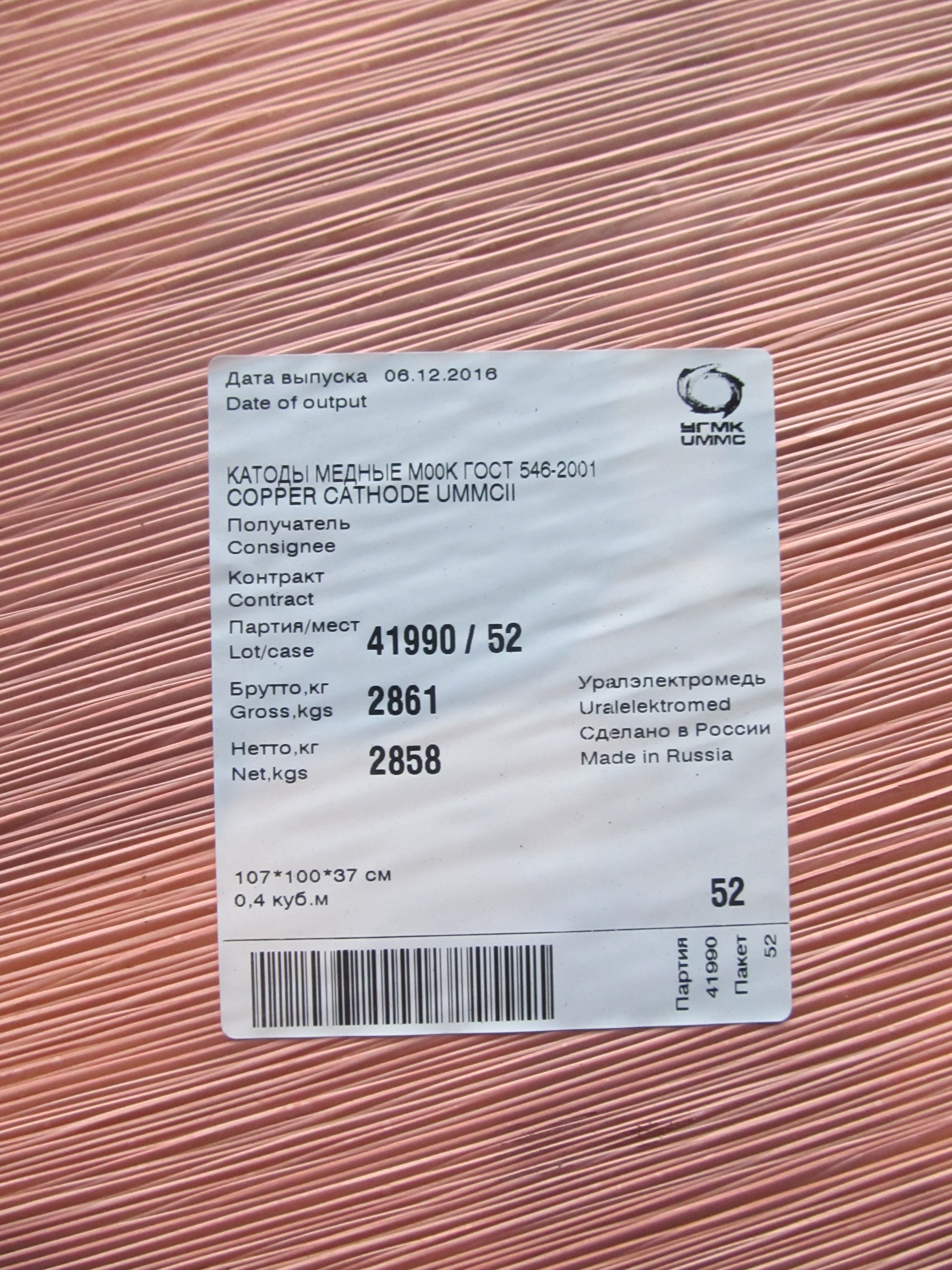
Read More

☢️ Energy Fuels ($UUUU): Uranium x4 Underdog . . . Just Look at That Chart Fall, While the World 🇮🇷 Fights Over Uranium

Energy Fuels Inc. logo: blue lowercase ef with a yellow atom orbit

☢️ Energy Fuels ($UUUU) is the smallest company on Grok’s 2026 stock picks list, worth about $1.93 billion after a 62% slide over the past 52 weeks (as of the 10/30/2026 close). The uranium miner is spending heavily to become a Western “mine-to-magnet” rare earth company, and its Q3 results on 11/5/2026 will test whether the market has priced it too harshly.

Energy Fuels stock: thickener tanks and a yellow catwalk at the company's White Mesa uranium and rare earth mill near Blanding, Utah
Energy Fuels’ White Mesa Mill near Blanding, Utah, the only fully licensed conventional uranium mill operating in the U.S. Photo: U.S. Nuclear Regulatory Commission (courtesy of Energy Fuels, Inc.) via Wikimedia Commons, public domain (cropped).

Energy Fuels’ ($UUUU) stock is the surprise underdog on Grok’s list of top stock picks. The list is full of giants like Nvidia, Meta and Lockheed Martin. Down in the energy section sits a company that most investors could not place: Energy Fuels Inc., described there simply as “uranium mining + rare-earth processing.” Even the ticker fits: U is uranium’s symbol on the periodic table (element 92), so $UUUU is uranium four times over. ☢️

It is the smallest name on the list. At the 10/30/2026 close of $7.72 a share, the company was worth about $1.93 billion, below NuScale Power (about $2.4 billion) and Oklo (about $4.7 billion). The stock has fallen 62% over the past 52 weeks, and 23% of its shares are sold short. All three figures are from StockAnalysis.com as of the 10/30/2026 close. [9] So why would Grok pick it? Because underneath the selloff, the business is changing fast.

What Energy Fuels actually does

Energy Fuels calls itself the leading U.S. producer of natural uranium concentrate. Its key asset is the White Mesa Mill in Utah, the only fully licensed conventional uranium mill operating in the United States. [2] The same mill also separates rare earth elements, the metals used in the permanent magnets that go into electric vehicles, robots, data centers and weapons systems.

The uranium side is quietly working well. In the second quarter, the company mined 315,000 pounds of uranium (U3O8) and produced 865,000 finished pounds. That brought first-half output to 1.7 million pounds, already within its full-year guidance of 1.5 to 2.5 million pounds. It ended June with 2.27 million pounds of finished and contained uranium in inventory. [2]

Costs are the real story. Ore from the high-grade Pinyon Plain mine in Arizona cost about $14 a pound to mine and haul, plus about $9 a pound to mill. That’s a total of roughly $23 a pound, which the company says ranks among the lowest costs for mined uranium in the world. Meanwhile it sold 310,000 pounds in Q2 at an average of $80.48 a pound, and the spot price was $86.50 at the end of July 2026. [2]

Bar chart of Energy Fuels uranium cost of about 23 dollars per pound vs realized prices of 72 and 80 dollars and spot and long-term prices of 86.50 and 97 dollars
Energy Fuels’ all-in Pinyon Plain uranium cost vs. the prices it has received and the market prices. Source: Energy Fuels Q2-2026 results and Zacks via Yahoo Finance. Chart: if.finance.
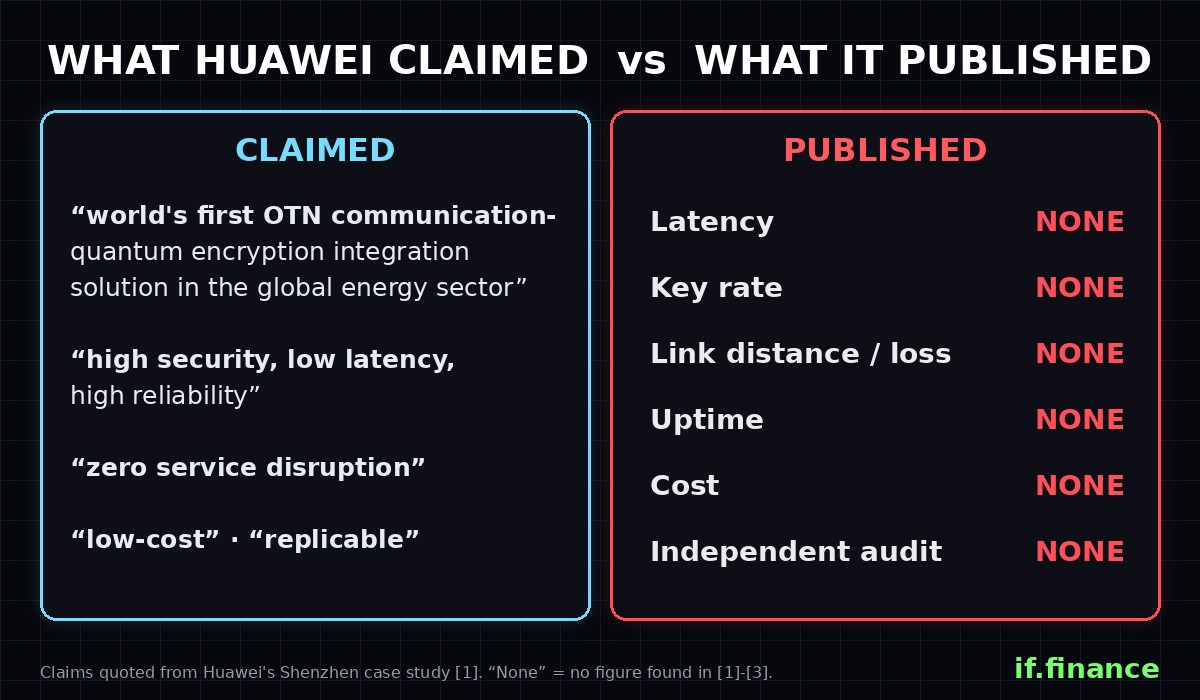
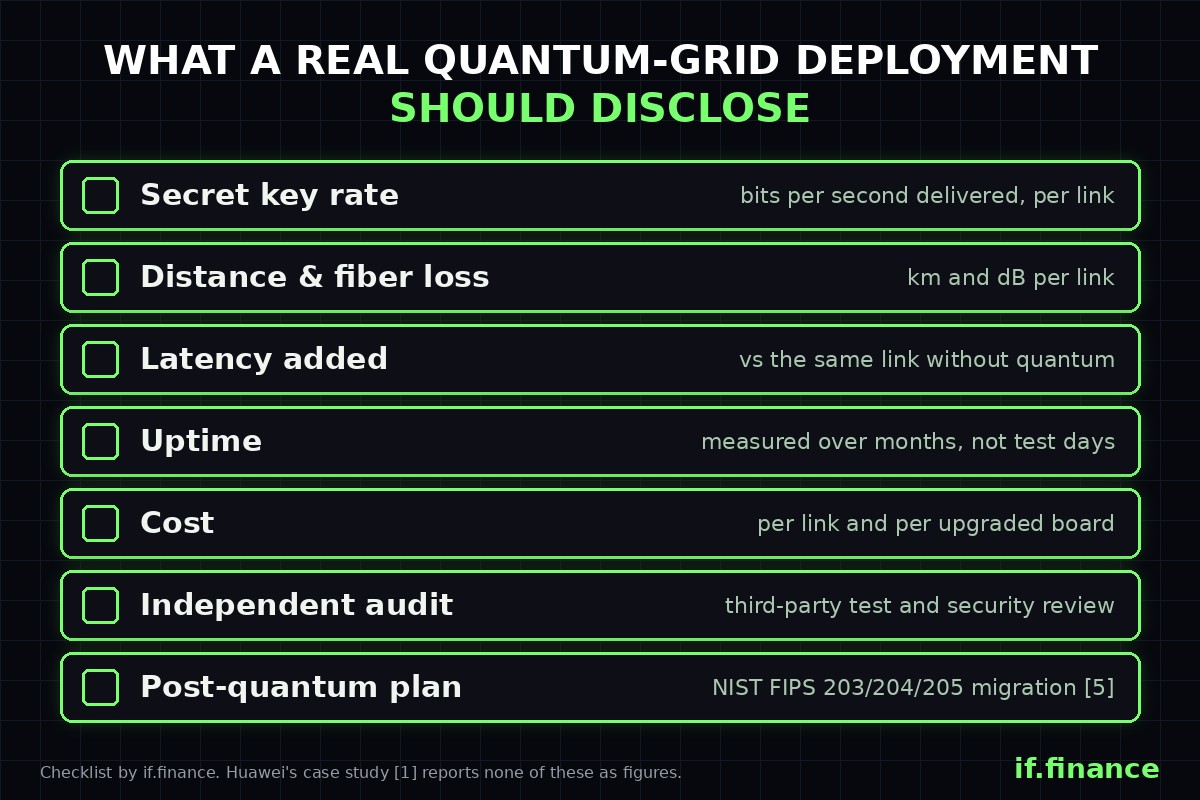
Who in the world 🇮🇷 wants uranium?

Why the 🇮🇷 in our headline? Not because of Energy Fuels’ customers: the company sells its uranium under long-term contracts that include U.S. nuclear utilities, and nothing here suggests any link to Iran. [10] The flag is about demand and security. Iran’s uranium enrichment was a factor in the U.S.-Israeli war on Iran that began 2/28/2026, and on 10/21/2026 Tehran was still saying “not a single gram of enriched uranium will be removed from Iran.” [11] The war shut shipping through the Strait of Hormuz. Spot uranium actually slipped to about $84 a pound by 3/20/2026 as investors fled to safety, but the closure put energy security back at the top of policymakers’ lists. [12] Long-term contract prices kept climbing, to $96.50 a pound at the end of August 2026, above the 2007–08 peak. [13] At home, waivers under the U.S. ban on Russian uranium imports end by 1/1/2028. [14] Our take: the answer to “who wants uranium?” is buyers who want it from a safe, domestic source, and White Mesa is one of the few in the U.S.

The rare earth bet behind the Energy Fuels stock selloff

If uranium is so profitable, why is the company losing money? Because it is pouring cash into a much bigger plan: owning every step of the rare earth supply chain outside China, “from mine to magnet.”

The pieces are coming together quickly:

  • Mine: The Donald Project in Australia, a joint venture with Astron, is designed to supply about 9,000 tonnes a year of rare earth concentrate. On 10/26/2026, two Australian government lenders conditionally approved up to A$180 million (US$126 million) of debt for it, and a final investment decision is now targeted by the end of 2026. [5]
  • Separate: White Mesa can already process up to 10,000 tonnes a year of rare earth concentrate into as much as 1,000 tonnes of NdPr oxide. Construction began in July on “heavy” rare earth circuits for terbium and dysprosium. [2] [5]
  • Metals and alloys: On 8/28/2026, Energy Fuels closed its purchase of Australian Strategic Materials, adding a plant in South Korea that makes 1,300 tonnes a year of NdFeB magnet alloy, with an expansion to 3,600 tonnes underway. [4]
  • Magnets: In June it agreed to buy Germany’s Vacuumschmelze (VAC), a major permanent-magnet maker with a plant in Sumter, South Carolina, for $718 million in cash plus 65.853 million new shares. At the time, that was worth about $1.9 billion. [3]

To fund the U.S. side, Energy Fuels has a conditional commitment for a $725 million, 20-year loan from the U.S. Office of Strategic Capital (OSC). [3] [5]

Why investors have been nervous

The plan is ambitious, but it costs a lot. The Q2 net loss widened to $33.6 million (13 cents a share), from $21.8 million a year earlier. The company blamed deal costs and higher operating expenses. [2] It still had $996 million of working capital at the end of June. [2]

Three things have weighed on the shares since then:

  1. Dilution. On 10/13/2026, the company filed to sell up to another $500 million of stock through its at-the-market program, having already raised about $300 million under the previous one. [7]
  2. A messier VAC deal. The same day, Energy Fuels and VAC’s owner, Ara Partners, amended the merger agreement. The changes cover an ongoing dispute with a customer over a supply contract, a possible settlement, the repayment of certain debt and potential purchase price adjustments. [6] The deal is not expected to close until early 2027. [3]
  3. A falling share price. VAC was valued using a $16.12 share price. [3] The stock now trades at less than half of that, so the whole company is worth about what it agreed to pay for VAC. [9]

What Energy Fuels stock investors should expect on 11/5/2026

Energy Fuels will report third-quarter results in a press release before a 9:00 a.m. Mountain Time conference call on Thursday, 11/5/2026. [1]

Analysts expect a big jump in revenue. The Zacks consensus is $37.6 million, up 112% from $17.71 million a year earlier, with a loss of 5 cents a share versus a loss of 7 cents. Uranium prices averaged about $88.56 a pound in the quarter, 16% higher than a year earlier. One caution: Energy Fuels has beaten the earnings consensus only once in the past four quarters. [8]

Bar chart of Energy Fuels quarterly revenue: 4.2 million dollars in Q2 2025, 17.7 million in Q3 2025, 25.1 million in Q2 2026 and a 37.6 million consensus estimate for Q3 2026
Energy Fuels’ total revenue by quarter, with the Q3 2026 consensus estimate. Source: Energy Fuels Q2-2026 results and Zacks via Yahoo Finance. Chart: if.finance.

What to watch next

  • Q3 numbers on 11/5/2026: revenue against the $37.6 million estimate, pounds sold, realized price per pound and cash burn. [1] [8]
  • The VAC customer dispute: any settlement or price adjustment, and whether the early-2027 closing timeline holds. [6]
  • Share sales: how much of the new $500 million at-the-market program has been used. [7]
  • Donald’s final investment decision, now targeted by the end of 2026. [5]
  • The OSC loan: moving from a conditional commitment to a signed loan would ease funding worries. [3]
  • Uranium prices: with roughly $23-a-pound costs, every move in the spot price goes almost straight to margins. [2]

You can follow UUUU and the other names on our Finviz charts page and in our Energy Stocks coverage.

The bottom line: Energy Fuels is the classic underdog: small, unloved and heavily shorted, but with a low-cost uranium business that already works and a rare earth strategy that lines up neatly with Washington’s push to break China’s grip on magnets. The risk is just as clear. The company is issuing shares, paying for big acquisitions and still losing money, and the VAC deal has become more complicated. The 11/5/2026 report won’t settle the rare earth question, but a strong uranium quarter would show the base business can carry more of the load.

This article is for information only and is not investment advice. Figures are from company releases, SEC filings and the reporting cited below as of 11/1/2026.

References

  1. Energy Fuels Announces Conference Call and Webcast Details for Q3-2026 Earnings, Energy Fuels Inc. (press release), 10/28/2026.
  2. Energy Fuels Announces Q2-2026 Results, Energy Fuels Inc. (press release), 8/5/2026.
  3. Energy Fuels Announces Definitive Agreement to Acquire VAC for $1.9 Billion Equity Value, Energy Fuels Inc. (press release), 6/23/2026.
  4. Energy Fuels Completes Acquisition of Australian Strategic Materials, Energy Fuels Inc. (press release), 8/28/2026.
  5. Donald Rare Earth and Mineral Sands Project Achieves Major Government Financing Milestone, Energy Fuels Inc. (press release), 10/26/2026.
  6. Energy Fuels Inc. Form 8-K: First Amendment to the VAC merger agreement, SEC EDGAR, filed 10/13/2026.
  7. Energy Fuels Inc. Form 8-K: additional $500 million at-the-market prospectus supplement, SEC EDGAR, filed 10/14/2026.
  8. Energy Fuels Set to Report Q3 Earnings: Buy, Sell or Hold the Stock?, Madhurima Das, Zacks Equity Research via Yahoo Finance, 10/28/2026.
  9. Energy Fuels (UUUU) Statistics & Valuation, StockAnalysis.com, data as of the 10/30/2026 close. Peer market values from the same site’s NuScale Power and Oklo pages.
  10. Energy Fuels Announces 2025 Results and 2026 Guidance, Energy Fuels Inc. (press release), 2/26/2026.
  11. Iran determined to keep uranium amid increased war odds, flurry of meetings, Al Jazeera, 10/21/2026.
  12. Commodities Tracker: March 2026, Global X ETFs, March 2026.
  13. Uranium Markets, World Nuclear Association, accessed 11/2/2026.
  14. Biden-Harris Administration Enacts Law Banning Importation of Russian Uranium, U.S. Department of Energy, May 2024.

Image credits

  • Featured image: “☢ U U U U” graphic by if.finance over a 6-month UUUU chart screenshot. Chart: TradingView.
  • Energy Fuels logo: © Energy Fuels Inc., shown to identify the company.
  • In-body photo: “White Mesa uranium mill in Blanding, Utah” by the U.S. Nuclear Regulatory Commission (photo courtesy of Energy Fuels, Inc.), Wikimedia Commons (originally on the NRC’s Flickr account), marked public domain. Cropped and resized to 1200×628 by if.finance. Used in the article body only.
  • Chart: uranium cost vs. price: made by if.finance from Energy Fuels’ Q2-2026 results and the Zacks Q3 preview. Linked to the source release.
  • Chart: quarterly revenue: made by if.finance from Energy Fuels’ Q2-2026 results and the Zacks Q3 preview. Linked to the source article.
Read More

BeFree Gantry 1.2.1: A Free Dark Industrial Theme for WordPress

The new look on if.finance is now a theme anyone can use: BeFree Gantry. It is a free, GPLv3 theme for WordPress built on the Gantry 5 framework, and version 1.2.1 is out now on GitHub.

It blends two of our designs into one: the dark industrial BeFree look from our OpenCart theme (navy, gold, Barlow Condensed, chamfered cards) and the if.finance neon palette (lime for anything “live”, cyan for links). That mix is the look you see on if.finance right now.

BeFree Gantry Meld Neon style on a finance news home page: navy navigation bar, lime ticker strip, a large top-story card, a grid of dark story cards and a sidebar with a Watchlist and a Sister Site block
Meld Neon, the default style: dark cards, a navy nav bar, lime “live” accents and cyan links.

What you get

  • 6 style presets, every one checked for WCAG AA text contrast.
  • 7 layout presets, from a classic right sidebar to a magazine-style home page.
  • A Sister Site block that links two websites together while they stay separate.
  • Chart-safe styling that leaves TradingView and other chart embeds alone.
  • Local fonts: Barlow Condensed for headings and Outfit for body text, both under the SIL Open Font License. No requests to Google.
  • No phoning home: no tracking and no update server. Updates are a simple zip upload.
BeFree Gantry article page in the Meld Neon style, with a large condensed headline, a featured image, body text on a dark background and a sidebar
An article page in Meld Neon.
BeFree Gantry Industrial style home page with gold and black hazard stripes, a blueprint grid background, square-cornered cards and gold title plates
The same home page in the Industrial style.

Six styles, one click

Pick a style in Gantry 5 > Styles > Presets. Each one fills a new BeFree Meld settings section, so you can fine-tune gold, card colors, borders and corner radius afterward.

Grid of six BeFree Gantry style preset thumbnails: Meld Neon, Industrial, BeFree Navy, Cyan Night, Lime Terminal and Light Paper
The six style presets as they looked in 1.0. Since 1.1.0, Bloom replaces Cyan Night.
StyleThe lookLowest text contrast
Meld Neon (default)if.finance lime and cyan on BeFree dark industrial5.69:1
IndustrialHazard stripes, blueprint grid, chamfered cards, gold title plates, grayscale images5.69:1
BeFree NavyBeFree’s own navy and gold6.69:1
BloomLight pages in violet, rose and amber (replaced Cyan Night in 1.1.0)5.98:1
Lime TerminalLime on near-black, terminal style6.97:1
Light PaperLight pages with a navy nav bar and footer5.57:1
WCAG AA asks for at least 4.5:1. Every style clears it.

Seven layouts

Load a layout from Gantry 5 > Layout > Load: Default (main with a right sidebar), Left Sidebar, Both Sidebars, Full Width, Magazine Home, Offline and Error. Magazine Home adds a hero row and a three-up feature grid above the posts.

Wireframe thumbnails of the seven BeFree Gantry layouts: Default right sidebar, Left Sidebar, Both Sidebars, Full Width, Magazine Home, Offline and Error
The seven layout presets.

Two sites, one spirit

The Sister Site block ties two websites together without merging them. It ships pointing at if.finance and slopcore.army, and every label, link and button can be changed in its settings. Links are plain links, with no tracking, scripts or redirects. A version of it is live in the if.finance home sidebar.

Two Sister Site blocks side by side: one on if.finance linking to slopcore.army, and one on slopcore.army linking back to if.finance, each with a gold hazard stripe and gold and cyan buttons
The Sister Site block on each side of the pair.

Your charts stay put

if.finance runs a lot of live stock and crypto charts, so this was a hard rule. BeFree Gantry never restyles TradingView or other chart embeds. The only rule that touches them recolors the small TradingView credit link. Custom HTML and Block widgets, where charts usually live, get no extra padding, clipping or cut corners, so charts keep the size they were embedded at.

Chart embeds are left as they are.

BeFree Gantry README

What’s new since 1.0

  • 1.2.1: larger, more readable default text sizes for body text, menus, widget titles, sidebars, footers and post content. Headings, charts and TradingView embeds are unchanged, and sizes set in your own custom/scss/custom.scss still win.
  • 1.2.0: a Latest Posts Slider for the free MetaSlider plugin that keeps a slideshow in sync with your latest 20 posts with featured images, plus a bf-wide class for 1600px wide sections.
  • 1.1.1: style presets now apply site-wide, and the theme is checked against Gantry 5.6.5, which fixes CVE-2026-110889. Updating the Gantry 5 plugin to 5.6.5 is strongly recommended.
  • 1.1.0: a new Slideshow section under the navigation, and the light Bloom preset in place of Cyan Night.

Already running 1.0? Upload the new zip under Appearance > Themes > Add New > Upload Theme and choose Replace current with uploaded. Outlines saved in custom/ are kept. Full notes are on the GitHub releases page.

Install it in four steps

  1. Install and activate the free Gantry 5 Framework plugin (Plugins > Add New, search “Gantry 5”). The theme needs it, the same as Hydrogen does.
  2. Download befree-gantry-1.2.1.zip (about 1 MB) from the v1.2.1 release.
  3. Go to Appearance > Themes > Add New > Upload Theme, choose the zip, then click Install Now and Activate.
  4. Open Gantry 5 > BeFree Gantry and pick your style, layout and blocks.

To check your download, compare its SHA-256 checksum with this one (also attached to the release):

027bf85af7e36386bba4269cc37a0a40f1b9680beeab4b6e1e09958454cc1f71  befree-gantry-1.2.1.zip

Quick facts

Version1.2.1 (released November 4, 2026)
LicenseGNU GPL v3 or later. Free to use, change and share.
RequiresWordPress 6.0+, PHP 8.1+, Gantry 5 Framework plugin 5.5 or later (5.6.5 recommended)
Based onGantry 5 Hydrogen by Tiger12, LLC (originally RocketTheme, LLC), GPL v2 or later
FontsBarlow Condensed and Outfit, SIL Open Font License 1.1, bundled locally
Downloadbefree-gantry-1.2.1.zip, about 1 MB
Sourcegithub.com/Intense-Finance/BeFree-Gantry

The BeFree family

BeFree Gantry is the WordPress sibling of BeFree for OpenCart 4 (source on GitHub), the store theme behind pro1intl.store and slopcore.army. Same design language, two platforms, both GPLv3.

Credits and license

BeFree Gantry is a modified version of the Gantry 5 Hydrogen theme, Copyright (C) 2007 – 2022 Tiger12, LLC (originally created by RocketTheme, LLC), GNU GPL v2 or later. The Gantry 5 Framework is a separate plugin by Tiger12, LLC / RocketTheme, LLC and is not bundled. Barlow Condensed is Copyright 2017 The Barlow Project Authors and Outfit is Copyright 2021 The Outfit Project Authors, both under the SIL Open Font License 1.1. No paid or “Pro” RocketTheme code is used. BeFree Gantry is Copyright (C) 2026 Intense Finance, released under the GNU General Public License version 3 or (at your option) any later version.

Read More