TNC, The Nuclear Company Wants to Build America’s Next Reactors Like China Does — And They Just Named the First Site
- The Nuclear Company: https://www.thenuclearcompany.com/
- Westinghouse Nuclear (AP1000 technology): https://westinghousenuclear.com/
- Brookfield Asset Management: https://bam.brookfield.com/
- Palantir Technologies (NOS collaboration): https://www.palantir.com/
- Southern Company / Southern Nuclear (Plant Vogtle): https://www.southerncompany.com/ and https://www.southernnuclear.com/
Founders and Team: Serial Operators, Not Nuclear Lifers
The Nuclear Company is a young, ambitious developer trying to force America to build large reactors the way China does: same design, repeated at scale, with better project management and software on top. Founded in 2023 and emerged from stealth in 2024, it styles itself “America’s nuclear infrastructure platform.” It is not inventing a new reactor. It is trying to industrialize the deployment of proven ones—chiefly the Westinghouse AP1000—via a “design-once, build-many” model, a proprietary Nuclear Operating System (NOS) co-developed with Palantir, and a team heavy on Vogtle (electric generating plant) veterans.
CEO Jonathan Webb previously founded and ran AppHarvest, the Kentucky indoor-farming SPAC that raised big money, built large greenhouses in Appalachia, then filed Chapter 11 in 2023 after heavy losses. Co-founders include Kiran Bhatraju (Arcadia) and Patrick Maloney (CIV, chair). They have hired people who actually lived through Vogtle Units 3 and 4—the only new large reactors completed in the U.S. in decades—including Chief Nuclear Officer Joe Klecha and project executive Hernando Madroñero. Other hires include security talent from Tesla Gigafactory and Southern Nuclear, regulatory veterans, and construction leadership. Headcount is in the low-to-mid hundreds. They have opened an engineering/construction office in South Carolina and talk a big game about institutional memory via NOS.
It has raised tens of millions in venture funding (Series A in the ~$46–53 million range led/participated in by Eclipse and others including True Ventures, Goldcrest, MCJ, Wonder Ventures, and CIV). Headcount has grown into the low hundreds; offices include Lexington, Kentucky and Columbia, South Carolina.In short: It is trying to industrialize the construction and delivery of large nuclear plants in the United States by combining experienced nuclear project managers, standardized large-reactor technology, software tools, and fleet-scale ambition.
A venture-backed nuclear infrastructure play that wants to do large-scale reactors the way China does: standardized, repeated, and at fleet volume—while wrapping it in AI software, with Vogtle veterans, and ambitious site announcements. The company came out of stealth in 2024 with a straightforward thesis. Stop obsessing over novel small modular reactors or exotic coolants. Use proven, already-licensed large designs—primarily the Westinghouse AP1000—apply a “design-once, build-many” model, professionalize project delivery, and chase the power demand from data centers, manufacturing, and electrification.

Core Approach
Instead of developing new reactor designs (like many small modular reactor startups), it focuses on a “design-once, build-many” model. The goal is to reduce the chronic cost overruns and delays that have plagued U.S. nuclear construction by standardizing processes, repeating the same design across multiple units and sites, and professionalizing project delivery.Key Elements
- Technology: Primarily Westinghouse AP1000 (Generation III+ large reactors already operating at Plant Vogtle in Georgia).
- Platform: “NOS” (Nuclear Operating System) — an AI-enabled software system intended to serve as a unified operating model, data backbone, and project management tool across development, construction, supply chain, and operations. They have also launched a security module (NOS Security).
- People: Heavy recruitment of veterans from the Vogtle Units 3 & 4 project (the only new large reactors completed in the U.S. in decades), including Chief Nuclear Officer Joe Klecha and other construction and operations leaders.
- Major projects:
- Partnership with Brookfield (majority owner of Westinghouse) to form a joint entity focused on Westinghouse reactor deployment, including project management for the stalled V.C. Summer units in South Carolina.
- Prosperity One: Announced October 2026 — a proposed nuclear campus in Lewis County, Kentucky, that could host up to six AP1000 reactors (≈6.6 GW total). First phase targeted at two units, with site work and licensing aimed at supporting a 2028 construction start.
The thesis is straightforward and, in principle, correct. U.S. nuclear projects have been chronically over-budget and late because each one is treated as a unique artisanal masterpiece. China builds fleets of standardized units and captures learning effects; America mostly does not. TNC’s answer is fleet-scale campuses of large light-water reactors, standardized processes, sequential construction so expertise moves from one unit to the next, digital tools for schedule and supply-chain control, and coalitions of capital, offtakers, and communities. Their first big public swing is Prosperity One: a proposed 6.6 GW campus of up to six AP1000s on the Ohio River in Lewis County, Kentucky—on land previously assembled for a coal plant that never happened. Site control is claimed, local landowners and county leaders are on board, and the company is targeting construction start in 2028 after site work and NRC licensing. If fully built it would be the largest nuclear site in the U.S. They are also involved, via a Brookfield partnership, as project manager for the long-stalled V.C. Summer AP1000 units in South Carolina.

The Pitch and the Platform
America has built almost no new commercial reactors in decades. China has been cranking them out. The Nuclear Company’s answer is scale and repetition rather than reinvention. They talk about sequencing construction expertise across sites, standardizing processes, and using their “Nuclear Operating System” (NOS)—an AI-enabled platform (with Palantir collaboration mentioned in some materials) meant to serve as a single operating model, data backbone, and institutional memory across development, construction, supply chain, quality, and regulatory work. They have also launched NOS Security, a cyber-physical package with drones, sensing, and monitoring aimed at sites and facilities.
In practice this means heavy recruitment of people who actually finished Vogtle Units 3 and 4—the only new U.S. reactors brought online in a generation, and ones that were late and massively over budget. Joe Klecha (Chief Nuclear Officer), Hernando A. Madroñero (Head of Nuclear Deployment), Glen Chick, George Koucheravy, and others with Vogtle or major construction pedigrees have joined, some out of retirement. That is the serious part of the résumé. The software layer and vertical integration story is the startup packaging.
Key Deals and Ambitions
In May 2026 they partnered with Brookfield (which controls a majority of Westinghouse) to form a new entity focused on Westinghouse technology deployment (AP1000 and AP300). That vehicle was selected as project manager for efforts around the partially built V.C. Summer Units 2 and 3 in South Carolina—one of the more execution-ready (if still difficult) large-reactor opportunities in the country.
The headline announcement came on October 21, 2026: Prosperity One, a proposed nuclear campus in Lewis County, Kentucky, along the Ohio River on land previously assembled for a canceled coal plant. The plan is up to six Westinghouse AP1000 units for roughly 6.6 GW total capacity—the largest nuclear generation site in the U.S. if fully built. First phase would be two units. The company says it has site control, is partnering with local landowners, aims to start site work and pursue federal approvals targeting construction start in 2028, and is already talking to offtakers. The site is near major transmission (765 kV into PJM). Kentucky has no operating commercial nuclear plants; local officials have moved toward “nuclear ready” designation.
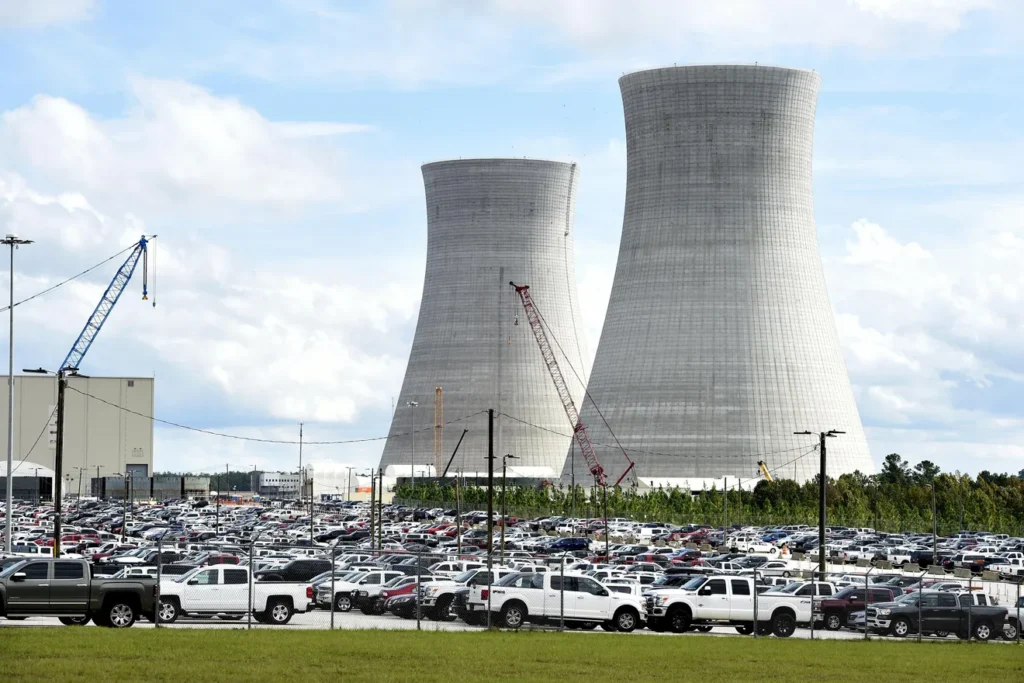
AP1000 is the logical choice on paper: Generation III+ with passive safety features, modular construction elements, operating units at Vogtle, and a recently renewed NRC design certification that incorporates lessons from the Georgia project. Building multiple identical units on one site is how you actually capture learning-curve cost reductions. Vogtle Unit 4 was meaningfully cheaper and faster than Unit 3; the company treats that as a floor for sequential savings.
Realistic Assessment
The ambition is clear and the diagnosis of the problem is mostly correct. One-off nuclear projects in the U.S. and Europe have been disasters of schedule and cost. Standardization, experienced people, and volume are the proven levers elsewhere. Choosing large, already-licensed designs over pure SMR experimentation is more pragmatic than a lot of the nuclear-tech hype cycle. Hiring the people who finished Vogtle and partnering with Brookfield/Westinghouse gives them more institutional knowledge than the average clean-tech deck. Demand for firm, carbon-free power is real and growing.
The gaps are equally obvious. Nuclear projects are capital-intensive at a scale that makes most venture money look like seed funding for the coffee budget. Even with offtake talks and infrastructure partners, financing multi-gigawatt plants remains the central hard problem. Regulatory, environmental, transmission, local acceptance, supply-chain, and workforce realities do not disappear because you have a software platform called NOS. Greenfield sites still require full site-specific licensing. Construction start in 2028 is an aggressive target by historical U.S. standards. Webb’s prior high-profile venture (AppHarvest) raised big money on a vision of Appalachian reinvention and did not deliver commercially—relevant context for evaluating founder-market fit on another complex industrial project in the same general region.
Prosperity One is currently a proposed campus with site control and early stakeholder work, not a shovel-ready project with financing locked and licenses in hand. The Brookfield collaboration is promising for execution capability but does not magically solve the economics of new large reactors. The “Chinese-style” framing is honest about the volume goal and also highlights how different the U.S. institutional environment is.
In short: The Nuclear Company is one of the more coherent large-reactor development platforms to emerge in the recent nuclear revival. It is staffed with people who know how painful the last builds were, focused on the technology that has actually operated in the U.S., and aggressive about sites and scale. Whether that translates into steel in the ground on time and anywhere near budget is the multi-decade, multi-billion-dollar question the entire industry has failed to answer reliably. They have the right diagnosis and some of the right people. Execution at this scale is where most previous efforts have gone to die.
Current status (as of late October 2026)
- Prosperity One (Lewis County, Kentucky) is a proposed nuclear campus announced on October 21, 2026.
- They have site control.
- They plan to start site development work and pursue the necessary federal approvals with the goal of beginning construction in 2028.
- The first phase is intended to be two Westinghouse AP1000 reactors (with room for up to six units total, ~6.6 GW).
- This is still in the early development / diligence / pre-licensing stage — not construction.
- Through their partnership with Brookfield, they have been selected as project manager for potential work on the partially built V.C. Summer Units 2 & 3 in South Carolina, but that project is also not actively under construction by them (or anyone) right now.
They are advancing development and positioning to build, but no steel is in the ground and no reactor construction has started. The earliest targeted construction start they have publicly discussed is 2028.
- The Nuclear Company: https://www.thenuclearcompany.com/
- Westinghouse Nuclear (AP1000 technology): https://westinghousenuclear.com/
- Brookfield Asset Management: https://bam.brookfield.com/
- Palantir Technologies (NOS collaboration): https://www.palantir.com/
- Southern Company / Southern Nuclear (Plant Vogtle): https://www.southerncompany.com/ and https://www.southernnuclear.com/

References
- The Nuclear Company | America’s nuclear infrastructure platform
- News | The Nuclear Company
- The Nuclear Company Announces Prosperity One, a 6.6 Gigawatt Nuclear Power Campus in Lewis County, Kentucky
- The Nuclear Company Unveils a Chinese-Style Reactor Megaproject in Kentucky – Heatmap News
- Brookfield and The Nuclear Company Partner to Form New Company to Accelerate Nuclear Development in the U.S.
- The Nuclear Company 2026 Profile: Valuation, Funding & Investors | PitchBook
- The Nuclear Company – Eclipse
- New startup seeks to make building large nuclear fleets easier – Axios
- Startup brings fresh approach to US nuclear deployment – World Nuclear News
- Nuclear start-up seeks to revitalise project management | Reuters
- The Nuclear Company raises $46M to develop massive reactor sites – TechCrunch
- New US nuclear player emerges – Nuclear Engineering International
- The US nuclear industry is stuck. Can this startup get it rolling again? – Canary Media
- MCJ’s Investment in The Nuclear Company – MCJ Newsletter
- The Nuclear Company Launches NOS Security to Modernize Nuclear Power Infrastructure Protection Across the United States and Allied Nations
- The Nuclear Company Names Project Leader for First Fleet of Nuclear Reactors
- Gov. McMaster Welcomes The Nuclear Company Engineering/Construction Office to South Carolina